
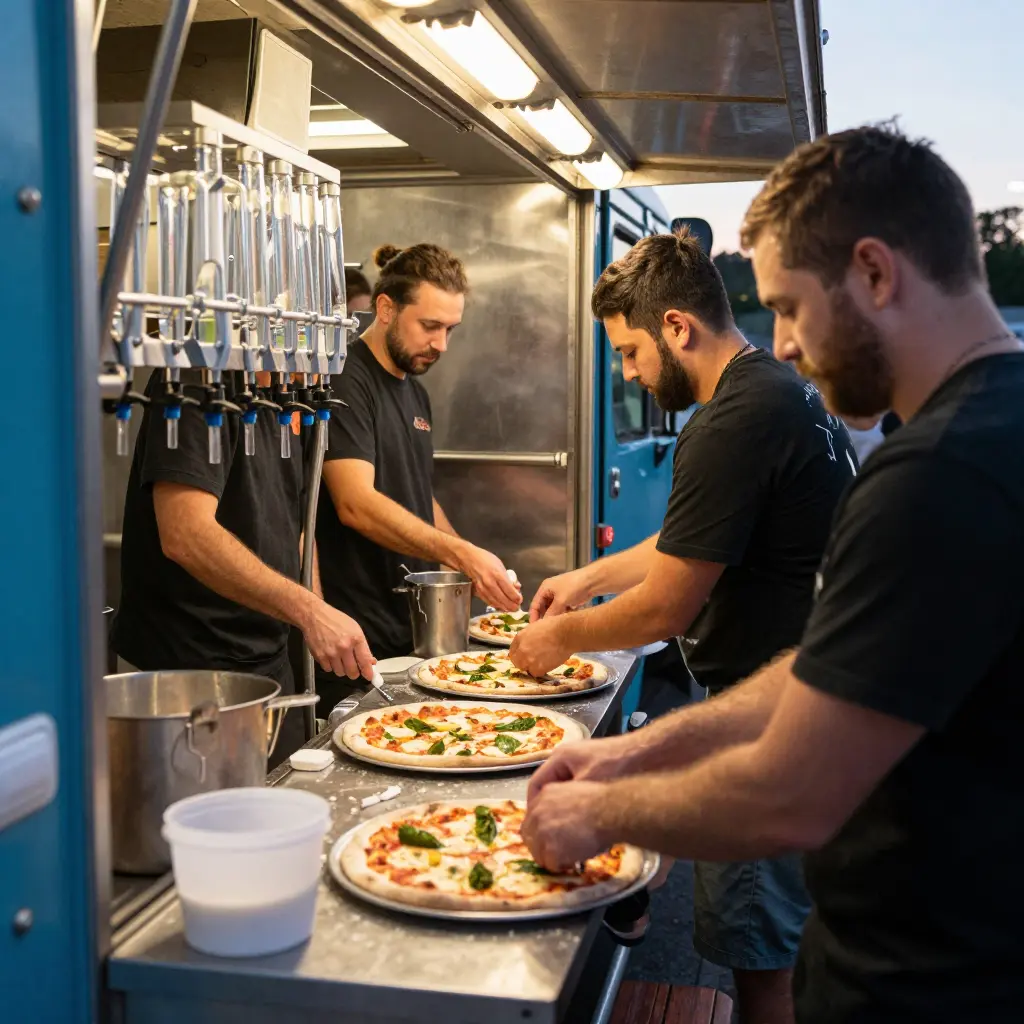
Every pizza truck operator has lived this: the dinner rush starts, the line wraps down the block, and the fresh water tank is already empty. A pizza truck water system is the tank, pump, plumbing, and heater that keep dough hydrated, hands clean, and dishes washed. When it runs dry, service stops. A food truck water tank that empties before peak hours is a planning failure, not bad luck.
The arithmetic is not complicated, and it is worth doing before you buy anything. If you are still speccing a build, the same numbers tell you what size tanks and pump to order, and our guide on how to build a pizza food truck walks through that process end to end.
Why Water Is the Backbone of a Pizza Truck
Every task on board depends on stored water, not a municipal line. Dough comes first: water hydrates the flour and activates the yeast, and without it you cannot mix a single batch. Handwashing comes next, and health codes require clean running water before, during, and after food handling. Prep surfaces — countertops, cutting boards, utensils — need clean water to sanitize between tasks, and mixers, pans, and tools need a real rinse at the end of a shift. Drinks draw from the same tank, one cup at a time.
Unlike a restaurant tied into city plumbing, a mobile kitchen carries every gallon it will use. That constraint shapes the build, from tank size to fixture choice. It is why mobile culinary solutions start with the water plan.
The table below is a representative evening: how a mid-volume truck’s water actually gets spent across a dinner service.
Estimated Water Consumption Per Service Task
| Task | Typical Gallons Per Use | Frequency Per Service | Total Gallons Per Evening |
|---|---|---|---|
| Handwashing | 0.5 | 40 uses | 20 |
| Surface sanitizing | 1.5 | 10 passes | 15 |
| Dough and prep work | 2.0 | 8 batches | 16 |
| Dish and utensil washing | 3.0 | 12 loads | 36 |
| Beverage service | 0.25 | 60 servings | 15 |
| Representative evening total | – | – | 102 |
Representative planning estimates only. Actual use varies with menu, crew size, and service length.
That adds up to 102 gallons in an evening, before the rush peaks. A tank sized for a lighter menu will hit empty mid-service, which is why it is worth building your own pizza food truck around these figures rather than a guess.
Hidden Water Consumers That Drain the Tank Before the Rush
Operators usually size a tank around the obvious jobs — dough prep and dishwashing — then watch the reserve disappear through smaller, constant draws that never made it into the estimate. When you are designing a pizza food truck, mapping these matters as much as choosing the tank.
A recirculating or trickling line, left open to relieve pressure, runs all shift and can take a meaningful share of capacity on its own. Loose hose clamps, worn O-rings, and hairline cracks leak too slowly to notice, and by the time one is found it has passed several gallons. Rinsing every utensil to restaurant standards burns far more than a compact truck can spare, and each pass of the sprayer compounds it. Guest water is easy to overlook until you count the cups.
Add handwashing, sanitizer buckets, and quick wipes, and the supply erodes hour by hour. That is how a tank reaches empty just before the rush.
A Simple Map of How Water Moves Through Your Truck
Before the fixes, it helps to see where the water goes. Nothing vanishes at random; it follows a path, and every stop on that path is a place capacity leaks away.
The diagram above traces the route:
- Fresh water tank — the supply everything else depends on.
- Pump — moves water out of the tank and holds pressure at each fixture.
- Distribution manifold — splits one line into the three points of use.
- Three fixtures — handwash sink, prep sink, beverage station. Each draws independently, so combined use climbs faster than most operators plan for.
- Greywater tank — collects what drains away, filling as the fresh tank empties.
Those last two run against each other. When the greywater tank hits its limit, service stops even if clean water remains, so size both tanks around your busiest shift rather than an average one. That sizing mistake shows up often in our guide on how to build a pizza food truck.
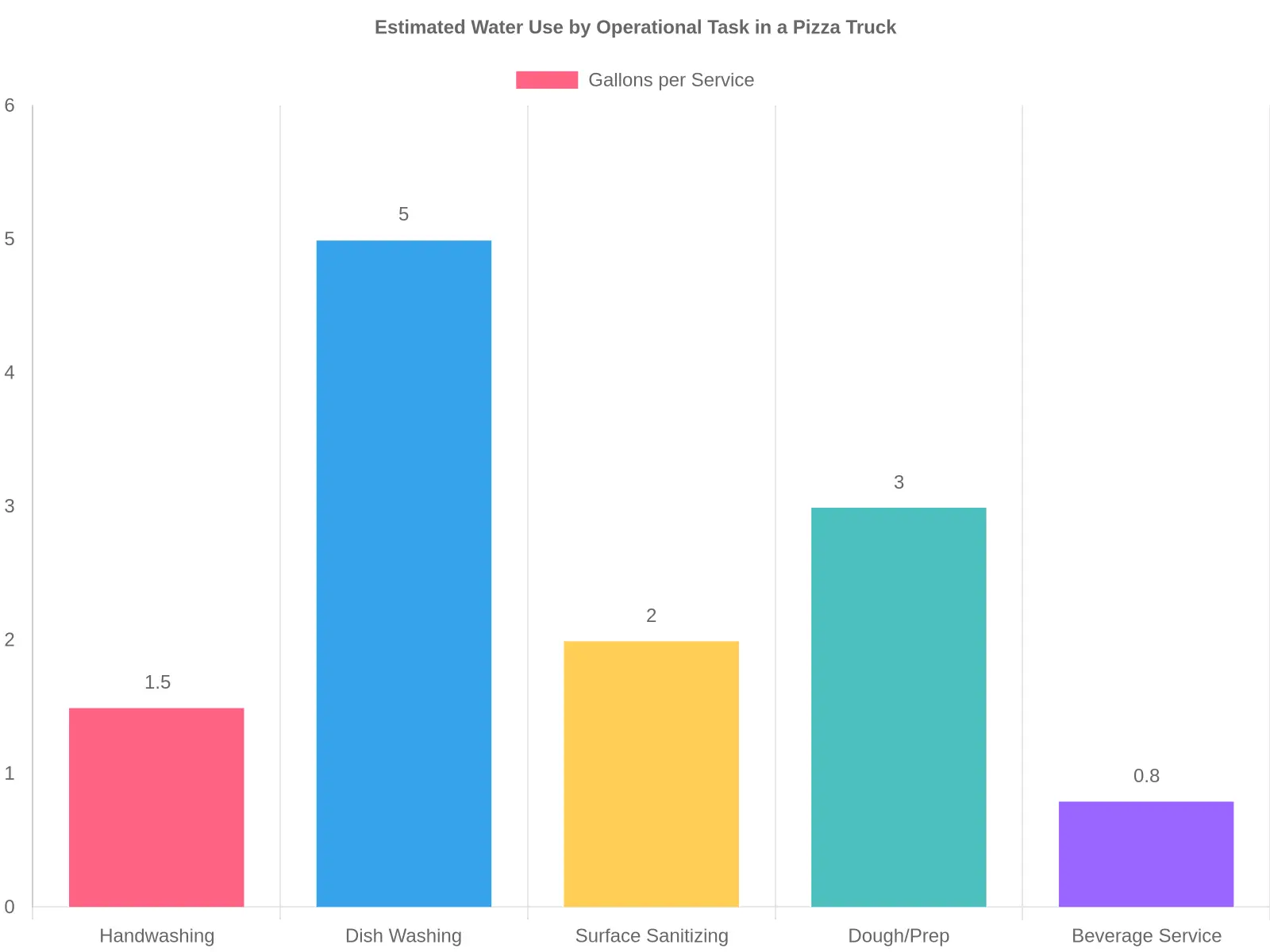
Dish and utensil washing is the largest single draw in the table above: 36 gallons across 12 loads, against 20 for handwashing. That gap is why a tank tends to run dry before the dinner rush rather than after it.
Early Warning Signs Your Tank Is Running Low
Trouble shows up at the fixtures long before the faucets run completely dry.
Weak pump pressure. A steady stream turns soft. The pump is fighting a shrinking supply, and prep and wash stations slow down with it.
Sputtering faucets. Air mixing into the line produces a choppy, spitting flow — the clearest sign the tank is nearly out.
Longer refills. If topping off takes longer than it used to, consumption has outgrown your supply.
Rising greywater. Wastewater climbing faster than expected means a heavier draw than planned: more handwashing, more rinsing, more dough.
Read these together rather than one at a time. Watching pressure, flow, and tank level turns guesswork into scheduling, so you refill between rushes instead of mid-order. For capacity and setup guidance, review how to build a pizza food truck.
Water Conservation Best Practices for Pizza Trucks
Small habits add up when every drop rides along in your food truck water tank.
- Install low-flow aerators on every sink.
- Fix leaks as soon as you find them — a slow drip wastes gallons over a shift.
- Fit trigger-style sprayers so water runs only while you are using it.
- Batch dishwashing into one session instead of rinsing throughout service.
- Measure water for dough rather than eyeballing it and pouring off the extra.
- Check the tank gauge on a schedule.
- Cover conservation in onboarding and revisit it each season.
- Shut off the pump between tasks.
Done consistently, those habits stretch each refill and protect your margin as a profitable pizza food truck.
System Upgrades That Solve the Dry-Tank Problem
A pizza truck water system does not have to run dry by 6 p.m. A few upgrades widen the margin.
Larger or dual fresh water tanks — a bigger unit or a two-tank setup roughly doubles the service window before another refill stop.
Higher-efficiency pumps — a variable-speed pump holds steady pressure while drawing less water and power, so peak orders do not burn through flow.
Tank-level sensors — show how much water is left so you can schedule refills instead of guessing mid-service.
Low-flow fixtures — aerated faucets and spray valves cut use by as much as 50% and keep cleanup thorough.
On-demand water heaters — heat only what you use, instead of keeping a full tank hot all day.
Truckpizza.net builds pizza trucks that support these systems from day one, so you are not retrofitting later. Before you commit, see our breakdown of how much a pizza food truck costs, or work through how to build a pizza food truck and spec a system that lasts a full rush.
Tank Sizing and Refill Logistics
Capacity comes down to two inputs: how complex your menu is and how many guests you expect. A dough-heavy operation with fresh sauces and a handwash sink will use far more water than a slice-only menu.
As a working baseline, budget 0.5 to 1 gallon per guest for prep and handwashing, then add headroom for peak rushes.
Plan refill points before service, not during it. Find potable water sources and greywater disposal sites along your route, and schedule refills for natural lulls. Keep greywater tanks under about 80 percent, since sloshing and sensor drift can trigger messy overflows.
Stagger refills and dumps between rushes, carry a backup jug reserve, and log usage each shift so you learn your real burn rate. A system sized this way rarely runs dry unexpectedly.
Truckpizza.net’s mobile culinary solutions help operators match tank capacity to real demand. For the wider business picture, see how profitable pizza food trucks can be.
Frequently Asked Questions About Pizza Truck Water Systems
How many gallons does a typical pizza truck need per service?
Short services often land between 20 and 40 gallons of fresh water, depending on menu size and dishwashing volume. A compact operation running handwashing and a small three-compartment sink sits at the low end; a high-volume truck through a full dinner service, like the table above, can pass 100 gallons. Build a margin above your daily estimate so you are not caught mid-shift.
Why does the tank run dry before the dinner rush?
Prep, handwashing, and cleanup all peak at once during the rush, and dough mixing, sauce prep, and drink service consume water hours before the first order. Each task looks affordable on its own; together they are not. Tracking use per task shows which ones drain the water tank fastest.
How often should I refill the tank?
That depends on volume, but most operators top up once or twice a day at a licensed commissary or potable water source. Some trucks carry a large food truck water tank to stretch a single fill across several stops. Never fill from an unverified source, since contamination risks your permit.
Does greywater capacity matter as much as fresh water?
Yes. You cannot legally dump wastewater on the ground, and most jurisdictions require the greywater tank to equal or exceed fresh water capacity to prevent overflow. Balance both and the system stays compliant.
How do I know the right tank size?
Estimate peak-day use, then add 20 to 30 percent as a buffer for cleaning and unexpected demand. Confirm local health codes first, since some areas set minimum capacity or equal greywater sizing. A builder working from how to build a pizza food truck can size the tank to your actual menu and service model.
Planning for Water Means Planning for Profit
Water is not a side detail on a pizza truck. It is behind the dough, the cleaning, the handwashing, and every drink you pour, and the tank rarely empties from cooking alone. Cheese prep, sanitizer buckets, and a faucet left running drain the supply long before a pie reaches the oven. The fix is not dramatic: calculate real demand honestly, then match the tank, pump, and heater to that number. Do it well and dry tanks stop deciding when your dinner rush ends.
At truckpizza.net, we build pizza trucks and mobile culinary setups for real service demands, the kind that keep a pizza food truck profitable season after season. Our advice: measure your busiest shift’s usage, then add a 20 percent buffer before you buy anything. That one habit keeps the water flowing.