
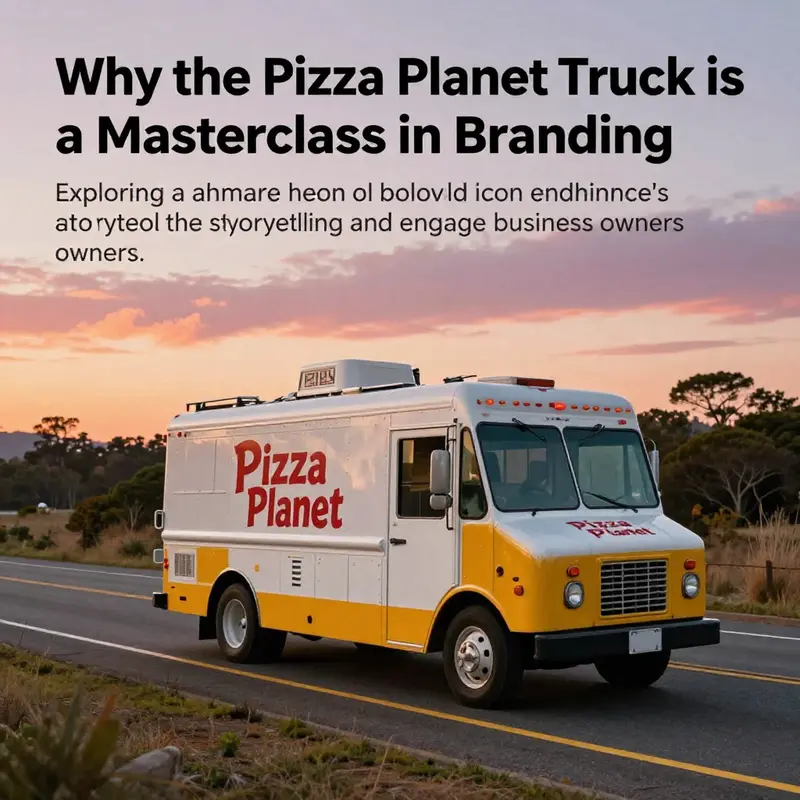
The Pizza Planet Truck has captured the hearts of audiences since its first appearance in ‘Toy Story’ and continues to be a charming Easter egg throughout Pixar’s films. More than just a nostalgic relic, it embodies a deep-seated connection to the culture of food, family, and creativity that Pixar promotes. This iconic vehicle serves as a strategic branding tool that enhances the storytelling experience while also offering a unique lesson for business owners. In the following chapters, we will delve into the significance of the Pizza Planet Truck within Pixar’s cinematic landscape, explore the nostalgic cultural references it evokes, provide a guide to its notable appearances, and analyze how it symbolizes Pixar’s storytelling tradition. Together, these elements illuminate why this playful truck is not only a beloved icon but also a salient example for businesses aiming to create meaningful connections with their audience.
A Small Truck, A Grand Universe: How the Pizza Planet Vehicle Weaves Pixar’s Shared Cosmos
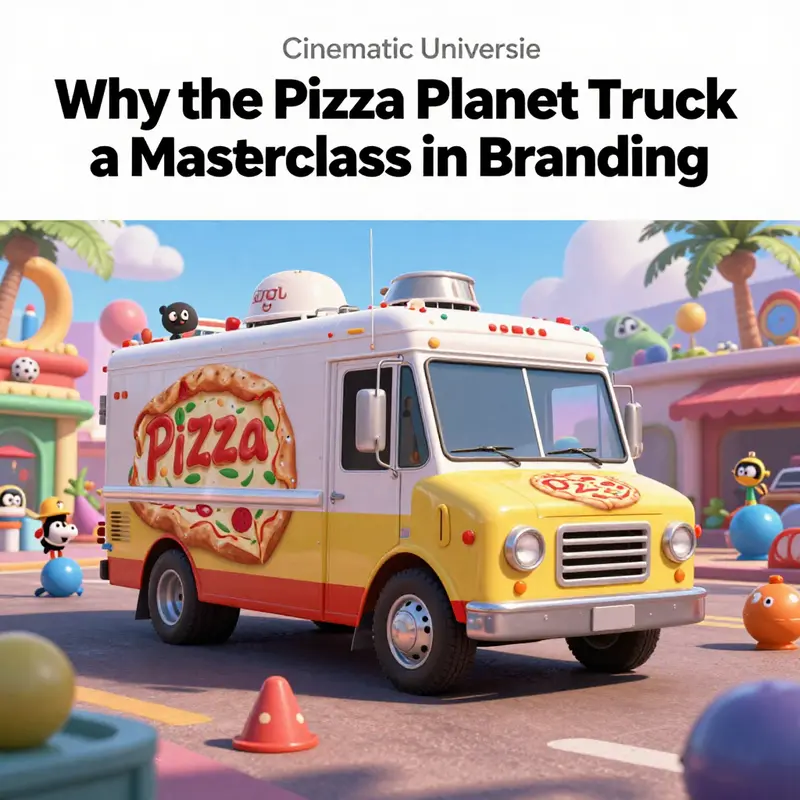
In the pantheon of Pixar’s visual shorthand, the Pizza Planet Truck stands out not as a hero but as a quiet, persistent reminder that the studio’s stories share more than just a similar animation style. First glimpsed in Toy Story (1995), this bright red, retro-futuristic delivery vehicle with a conspicuous pizza-sign chest becomes a kind of friendly conspirator, slipping into frames with the confidence of an inside joke you’ve earned the right to understand. Its origin traces back to a longing for the roadside Americana that once dotted American highways—diners, neon signs, and the sense that a family’s night out was a small, shared ritual. Yet from its debut, the truck evolved beyond a nostalgic prop. It became a recognizable thread that ties disparate films into one larger fabric, a running gag that rewards dedicated viewers with little, satisfying nods to past and future adventures. The truck’s color, shape, and sign are not mere decoration; they are a deliberate design language that signals, in a glance, that the world you’re watching is a connected cosmos, not a series of isolated tales.
That seemingly modest function—an Easter egg with playful purpose—grew stronger as Pixar’s portfolio expanded. The truck appears in Toy Story 2 and Toy Story 3, quietly lingering in the background as Woody and Buzz traverse new toy store shelves or new neighborhoods. In WALL-E, Up, Inside Out, and Soul, the truck slides into frames as if it had always been on the road, a traveler in Pixar’s expanding map. The effect is not simply comedic; it is a quiet invitation to fans: notice how a familiar silhouette reappears, and you’re being reminded that the studio’s characters, settings, and props inhabit a common universe. This is a subtle storytelling tactic that rewards attentive viewing without pulling you out of the moment. It also embodies a core Pixar habit—pushing the audience to recognize that every prop, every silhouette, is a possible doorway to a shared memory. The truck’s continued presence is less about brand placement than about storytelling continuity, and that continuity matters because it helps audiences feel they’re part of a larger adventure, a collaborative mythos rather than a collection of separate fairy tales.
The idea of a shared universe at Pixar is not accidental. It is a deliberate, almost architectural choice: build a world with seams you can show to the most curious fans and the most casual viewers alike. The Pizza Planet Truck is one of the most enduring seams. Its appearances aren’t one-off gags but recurring signals that a familiar pizza-parlor signpost is nearby—no matter how far the geographic or narrative distance between films might seem. A viewer who has grown up with Toy Story will recognize the red truck when it materializes in Soul’s Great Before or in a scene of WALL-E’s cosmic scavenging, a wink that the Pixar map remains navigable across decades and genres. In this sense, the truck becomes more than a prop; it is a storytelling bridge that invites viewers to trace the studio’s creative lineage across films, to see how early ideas echo in later works, and to feel the continuity of a living, evolving universe rather than a static catalog of separate titles. The embedded logic—that props can migrate, reappear, and accrue informal backstories—speaks to Pixar’s enduring love for texture, for little jokes that deepen immersion without requiring anyone to pause the main plot to read a footnote.
The truck’s most explicit evolution from background gag to active participant appears in Cars 3, where the vehicle resurfaces under the name Todd. This recasting—where a once-familiar prop becomes a character with its own arc—illustrates how Pixar treats even its smallest elements with care. In the film’s chaotic “Mud Pit” segment within the Finnick 8 crash event, Todd careens through mud, loses his rocket-shaped roof ornament, and otherwise performs as a gleeful wildcard rather than a mere nod to nostalgia. The moment is a sly commentary on how a prop’s utility can expand when placed in the right context. It also highlights a broader principle: Pixar’s universe is not fixed. It grows, shifts, and sometimes reassigns roles to reflect the studio’s evolving interests and the demand for more interconnected storytelling. Todd’s muddy dash is not just comic relief; it is a meta-demonstration of a world where props have histories, and those histories matter to fans who track the threads from one film to the next. The Pizza Planet Truck, once a fixed point of reference, becomes a dynamic element within a living ecosystem where even a car’s daydream can ripple outward into a wider narrative ecosystem.
Design decisions behind the truck are as telling as its cameos. The bright red color, the oversized pizza sign, and the compact, almost toy-like silhouette contribute to a recognizability that transcends specific plots. These choices were not incidental; they hearten the nostalgia for mid-20th-century pizza parlors and counter-service counters that many viewers remember from their own lives. Pixar’s designers knew that a vehicle associated with joy, family rituals, and quick, friendly service would read as approachable and comforting on screen. The sign’s exaggeration—pizza, speed, and whimsy all at once—creates a magnet for the eye, a visual anchor that can be identified even when the truck is only a few frames long. Over time, the truck’s presence aligned with another characteristic feature of Pixar’s visual language: a compact, cheerful, almost anthropomorphic energy that makes even the most unobtrusive prop feel alive. The truck’s charm lies in its clarity and consistency; it signals a set of expectations for viewers: you are now in a world where little details count and where a recurring prop can become a narrative device.
The cross-film resonance of the Pizza Planet Truck is further reinforced by its ongoing association with other familiar Pixar objects and characters. In many frames, the truck doesn’t travel alone; it appears among a constellation of Easter eggs—like the Luxo Jr. lamp or the small, oddly placed guitar that often accompanies scenes rich with visual humor. The combination of these elements creates a private code for fans who know to expect hidden connections. The experience is akin to a scavenger hunt embedded within the cinema experience, offering a sense of discovery that can be as satisfying as the main plot. This layered approach mirrors Pixar’s broader storytelling framework, in which a single film is part of a larger dialogue with others in the studio’s catalog. The Pizza Planet Truck becomes a signature motif, a reliable reminder that the studio’s stories are in conversation with one another as they invite audiences to participate in a longer conversation about shared experiences, creativity, and the playful reimagining of everyday life.
The cultural resonance of the truck extends beyond mere recognition. It has become a symbol of Pixar’s signature blend of affection and mischief—the feeling that the world can be both sincere and slyly humorous at once. The truck’s enduring presence offers a way to celebrate the studio’s history without nostalgia becoming mere sentiment. It anchors a sense of continuity that fans rely on to feel connected across releases, even as the studio continues to explore new aesthetics, new arcs, and new tonal shades. It also acts as a gentle reminder of Pixar’s roots in the studio’s earliest experiments with Luxo Jr. and the tiny joy of a lamp that lights up a planet’s imagination. This long lineage helps explain why the Pizza Planet Truck endures: it is a tangible symbol of Pixar’s willingness to treat its own universe like a family album—full of inside jokes, shared experiences, and the hopeful sense that every page, frame, and prop can tell a story worth revisiting.
For readers and viewers who crave a map of these cross-film connections, the Pizza Planet Truck provides one of the clearest, most affectionate guides. It is not just a silhouette on a screen; it is a creative practice—how Pixar builds a universe that invites viewers to become co-authors of meaning, to notice the breadcrumbs of continuity, and to feel a sense of belonging to a culture of subtler humor and storytelling sophistication. This is why the truck persists across films, why Todd appears in Cars 3, and why Soul’s Great Before still records a nod to an iconic pizza-sign vehicle from a long-ago toy story. The truck’s presence is also a reminder of the studio’s respect for its own legacy. The people who designed and animated those original frames recognized that the Pizza Planet Truck would outlive a single film and become a cultural artifact—a small, bright beacon of creative collaboration across time. It is a testament to Pixar’s faith in the power of shared symbols, in the pleasure of spotting a familiar friend in an unfamiliar place, and in the enduring appeal of a little red truck that keeps driving through the studio’s ever-expanding universe.
Retro Roads and Running Gags: The Nostalgic Language of the Pizza Planet Truck
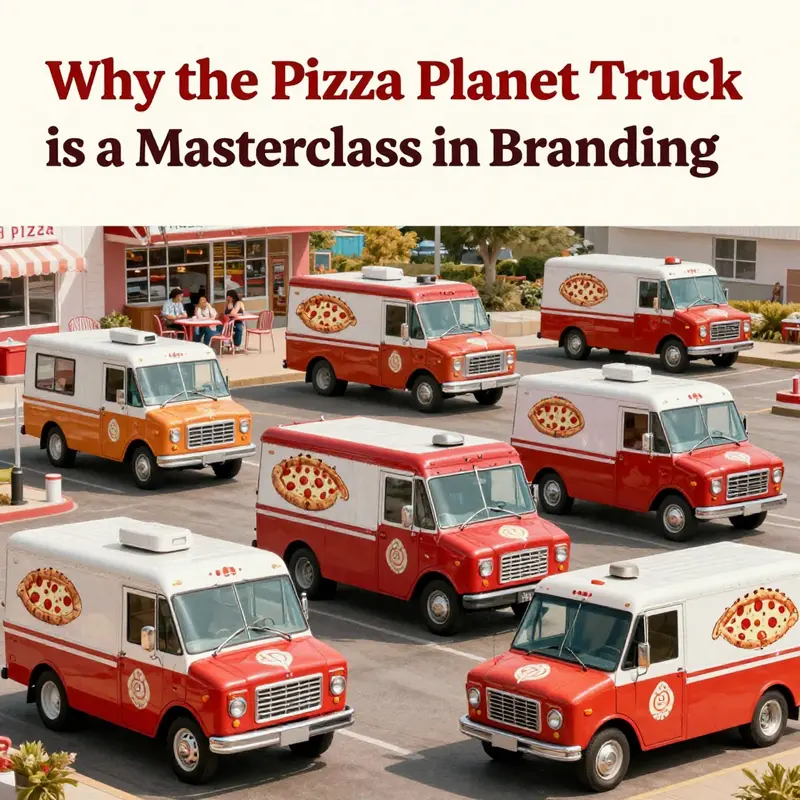
Pixar’s Pizza Planet Truck operates as a compact shorthand for nostalgia and continuity across its films. The bright green delivery vehicle with a rocket logo reads as a familiar object from late twentieth century American road trips, diners, and family outings, immediately signaling mood and era without heavy exposition. Its reappearances function as a subtle signature rather than a punchline, inviting attentive viewers to recognize a shared world. The design choices, from its rounded shape to its playful decals, maximize legibility in crowded frames and travel easily between settings, whether urban, rural, or fantastical. Over time the truck becomes a totem that fans track, discuss, and catalog, turning a prop into a cultural artifact that nourishes fan engagement and a sense of studio continuity. In short, the recurring truck blends nostalgia, humor, and institutional memory into a quiet but durable element of Pixar’s cinematic language.
null
null
The Pizza Planet Truck: A Hidden Thread in Pixar’s Shared Universe and Storytelling Tradition
In the quiet, almost unassuming roll of a red-and-yellow delivery truck, Pixar found not just a prop for a gag, but a keystone for a storytelling tradition that stretches across decades. The Pizza Planet Truck began as a practical nod to real-world nostalgia—a cheerful, roadside beacon that could be spotted in the background of a movie and still feel intimate, familiar, and a little bit rebellious against the sterile sheen of a studio-produced fantasy. Over time, that little vehicle became something more expansive: a symbol of continuity that wove together disparate stories, characters, and settings into a cohesive, if playful, grand design. What began as a background sight gag grew into a conscious studio practice, a way to acknowledge the past while ushering audiences into new adventures with a wink and a nod. The recurring cameo is not merely a time-killer for attentive viewers; it is a deliberate choice that aligns with Pixar’s broader ambition: to grow a universe that feels lived-in, layered, and welcoming to fans who linger over every frame. As viewers scan a scene or a city street, the truck’s silhouette appears as a familiar exhale—the breath of a studio that refuses to pretend its movies exist in isolation. This is the heartbeat of Pixar’s storytelling tradition: continuity as comfort, nostalgia as engine, and a running joke that rewards long-term engagement without ever breaking the imaginary spell.
If you track the truck through the studio’s catalog, you notice a pattern that transcends mere cameo frequency. The vehicle becomes a portable shrine to Pixar’s history, a tiny artifact that traveled through time as other stories unfolded. Early in the company’s era, the truck’s visual DNA—its bright palette, its rounded, approachable form, and its motion that feels more cheerful than functional—fed a shared language. The design signals a specific, almost childlike joy: that life, even within the most extraordinary adventures, can be grounded by a memory of something as simple as a pizza run and a conversation in a parked truck outside a family-friendly arcade. This is not accidental. The truck’s repeated presence—across films like Monsters, Inc., Wall-E, Up, Inside Out, Soul, and beyond—reflects a deliberate strategy to anchor a vast, sprawling universe in the small, human moments that give meaning to large myths. It’s a reminder that even in the most cinematic fantasies, a single prop can carry the weight of a shared cultural memory.
The cross-film appearances are more than visual Easter eggs; they function as narrative anchors that hint at a larger cosmos where every character could slide from one story into another without breaking the spell. This approach is not unique to Pixar, but Pixar has made it a defining feature of its world-building. The running gag—often referred to by fans and insiders as a Pixar Easter egg—has been cultivated by the studio’s creative leadership, with directors like Lee Unkrich underscoring that the truck appears in nearly all Pixar titles, with deliberate exceptions. The nuanced exception—the notable absence in The Incredibles—adds a subtext: even in a universe where props migrate across genres and tones, certain choices delineate boundaries and keep each film’s tonal identity intact. In that sense, the truck’s appearances are less about sameness and more about a shared courtesy toward the audience: a gentle promise that the studio’s stories exist within a larger, more interconnected tapestry.
From the retro-futuristic amusements in Toy Story 4 to the quiet exterior of a facility in Monsters, Inc., the truck’s sightings are small but meaningful. In Soul, for example, the truck sits near a jazz club in the Great Before, a setting that resonates with the film’s themes of purpose and memory. The image is not accidental; it is a deliberate echo of the original Toy Story hangouts, a visual breadcrumb that invites the most devoted viewers to notice how motifs, textures, and props migrate through time without losing their core emotional register. Across WALL-E’s future-punk cityscape to Up’s sunlit canopies and beyond, the Pizza Planet Truck acts as a soft thread, a familiar note that keeps the orchestra of Pixar’s storytelling coherent even as the cinematic landscape shifts underfoot.
A crucial part of the truck’s resonance lies in its crafted nostalgia. The truck’s designers drew from a palette and form that feel both timeless and distinctly American highway culture. Its red-and-yellow scheme evokes a sense of classic diners and old-fashioned pizza parlors that many viewers remember from childhood road trips and weekend treats. By reintroducing that familiar color story in a science-fiction city, a dystopian future, or a whimsical fantasy town, Pixar creates a bridge across genres and eras. The truck’s presence is a tactile reminder that memory itself is a form of magic—a magic that can travel, reappear, and adapt in new contexts without losing its original warmth. That is the essence of continuity as a storytelling tool: not a rigid canon, but a living, breathing sense that the stories you see are part of a family album you can leaf through at any time.
The truck’s whereabouts in various films often sit near other well-known Pixar vehicles or familiar Easter eggs—the Luxo lamp, the low bass guitar, or the iconic trash can from Toy Story 3—emphasizing how Pixar constructs a visual culture that rewards repeated viewing. The stacking of recognizable elements beside the Pizza Planet Truck is a deliberate act of world-building, a visual shorthand that signals to fans that these worlds share a common grammar even when their plots diverge dramatically. In that regard, the truck works as a nonverbal shorthand for belonging, a cue that invites audiences to inhabit a larger universe with greater ease. It is a quiet, almost ceremonial element that ushers viewers into a sense of belonging to something larger than a single narrative arc. The more one looks, the more the truck offers: a reminder that stories, no matter how divergent their settings or protagonists, can still share a single, luminous thread.
For fans who enjoy the puzzle of Pixar’s interconnected universe, the truck offers a subtle, rewarding experience. It is a tangible artifact that invites a different kind of engagement—one that prizes attention to detail, patience for cross-referencing, and the thrill of discovery. The running gag becomes a way to participate in a collaborative act of storytelling; it democratizes the viewing experience by letting audiences co-create meaning as they notice the prop’s presence across films. The effect is not simply playful; it is a form of narrative companionship. If a story is a journey, the Pizza Planet Truck is a well-traveled waypoint along that journey, a signpost that says, in effect, “You’re not alone here. We’ve been together across many stories, and we’ll continue to be together in future ones.”
This sense of companionship is amplified by the truck’s role as a design motif. Its function within a scene is often more about mood than plot; it cues a moment, signals a tonal shift, or offers a pause in the action for viewers to savor a familiar aesthetic. The truck’s repeated presence speaks to Pixar’s reverence for its own history and its joy in inviting fans to become cultural co-authors in a shared cinematic space. The studio’s approach demonstrates that profitability in storytelling can come not only from new ideas, but from the art of remembering and honoring what has preceded. The Pizza Planet Truck embodies that principle, acting as both a memorial and a spark for new imagination. It is, in every sense, a clever blend of nostalgia and invention, a reminder that the best science-fiction of a studio’s imagination often rests on a bedrock of memory and affection.
If you listen closely to the discourse around Pixar’s shared universe, you’ll hear a persistent question that has become as much a part of fan culture as the truck itself: why is the truck in so many films? The answer, in the studio’s own terms, is not a single theory but a philosophy. The truck represents the belief that stories do not exist in isolation; they exist in dialogue. Each appearance is a line spoken in a larger conversation across time—a conversation that honors those who watched the early Toy Story shorts and those who later discovered the heart of Away and Beyond in Soul or the quiet courage of Up. The pizza van’s routine cameos form a chorus, a recurring motif that makes the entire Pixar enterprise feel more like a living archive than a finite catalogue of stand-alone movies. It invites fans to remember, to recognize, and to rewatch with a sense of purpose, as if each new appearance invites them to participate in a game of catch-up with the studio’s evolving sensibility.
But the truck’s significance is not solely retrospective. It also embodies Pixar’s commitment to playful homage and to a storytelling ecosystem that respects the audience’s intelligence. The truck’s appearances are not intrusive; they are invitations—the promise that a familiar, comforting symbol will surface in moments of curiosity or longing. This is important because it reframes the way audiences experience sequels, spin-offs, or crossovers. Instead of fearing repetition, viewers are nudged toward a deeper appreciation of continuity as an expressive tool. When the Pizza Planet Truck appears near a beloved character or alongside a familiar piece of Pixar iconography, it reinforces the sense that the studio’s worlds are knitted together by intention and care, not random chance. That intention matters because it sustains the emotional resonance of each film even as new heroes rise and fresh landscapes unfold.
In this sense, the truck stands as a quiet ambassador for Pixar’s storytelling philosophy. It is a reminder that the art of weaving disparate stories into a cohesive universe is not merely about cross-pollinating characters; it is about preserving shared memory, tone, and texture. The truck’s presence across a wide span of titles shows that the studio believes in continuity as a source of comfort, discovery as a reward for attention, and humor as a vehicle for genuine connection. It also demonstrates a respect for fans—the kind of audience that will notice, remember, and celebrate these small but meaningful echoes. The Pizza Planet Truck has earned its place not because it is flashy or central to any single narrative, but because, in aggregate, it helps create the impression that Pixar’s universe is not a string of separate adventures but a living library of moments that travel through time with us.
For readers who want to continue exploring the phenomenon, a deeper dive into the adaptability and reach of this symbol can be instructive. The truck’s ability to appear in contrasting genres and moods—comedic glee, heartfelt drama, or quiet contemplation—speaks to a flexible design philosophy. It demonstrates that a single prop can perform multiple narrative functions: relief, continuity, surprise, and belonging. This is the kind of storytelling metal that holds a studio together through decades of production, ensuring that new audiences can still feel the warmth of Pixar’s core identity while old fans savor familiar textures. The Pizza Planet Truck, then, is more than a prop. It is a pledge that the studio will keep its promises to its own past even as it bravely charts future territories. It invites every viewer to become a part of Pixar’s ongoing conversation about memory, imagination, and the joyful resilience of storytelling.
For readers seeking a direct thread to the broader discussion around why this truck has become such a staple, consider the ongoing curiosity that motivates fans to trace its appearances across films. The question itself—exemplified by posts and articles that analyze the truck’s journey through Pixar’s filmography—reflects a larger impulse: to map the studio’s evolving self-portrait year by year. In embracing that impulse, viewers join a community that understands how shared myths grow through repetition and variation. The Truck’s journey mirrors Pixar’s own growth as a studio—starting from a tight-knit crew of creators, expanding into a global cultural powerhouse, and maintaining a commitment to playful intelligence that makes every new movie feel like a well-awaited reunion rather than a mere release. The result is a storytelling ecosystem where memory does not weigh down invention but rather fuels it, allowing each new story to glow with the warmth of the studio’s long lineage.
As a closing reflection, the Pizza Planet Truck’s enduring presence is a creative decision that transcends mere fan service. It is an architectural choice for the heart of a shared universe, a visible reminder that continuity can be a form of generosity toward audiences. It signals that the studio values the act of noticing, that it trusts viewers to recognize the same shape, color, and silhouette across different times and tones. In that regard, the truck embodies the best of Pixar: a blend of reverence for the past, confidence in the future, and an invitation to enjoy the journey together. The result is not simply a dozen little cameos; it is a living tradition, a signal to the world that the studio believes in memory as a creative engine and in play as a powerful instrument of connection. For anyone who has ever hunted for a familiar red-and-yellow outline in a crowded scene, the Pizza Planet Truck stands as a friend—quiet, persistent, and wonderfully resilient—a small object that has become a grand statement about how Pixar tells stories and why those stories endure.
External reference: https://disney.fandom.com/wiki/PizzaPlanetTruck
Internal note for readers: for a concise explainer that echoes this inquiry from a fan-driven perspective, see the discussion on Why the Pizza Planet Truck is in every Pixar movie. Why is the Pizza Planet Truck in every Pixar movie?
Final thoughts
The Pizza Planet Truck stands as a testament to Pixar’s ingenuity, effectively weaving a thread of nostalgia, connection, and coherence throughout its films. This beloved vehicle resonates with audiences of all ages, bridging the gap between storytelling and culture while reinforcing a sense of community. For business owners, the ongoing presence of the Pizza Planet Truck in various films serves as an insightful reminder of how the right branding symbol can create strong, lasting relationships with customers. Just as Pixar utilizes this truck to craft a shared universe, entrepreneurs can harness similar elements—be it through symbols, stories, or memorable experiences—to foster brand loyalty and engagement in their own ventures. Ultimately, the journey doesn’t stop here; there are valuable lessons to be learned from Pixar’s playful yet strategic approach to storytelling and branding.