
The Pizza Planet truck has become a hallmark of the Pixar film universe, beloved by fans and representing the brand’s signature storytelling style. Appearing in numerous films since its debut in ‘Toy Story’ in 1995, this truck is more than just an Easter egg; it serves as a vibrant thread that ties the Pixar narrative together. In this exploration, we will dive into the notable appearances of the Pizza Planet truck, tracing its journey from ‘Toy Story’ to ‘Brave’ and reflecting on the significance of its recurring role in the Pixar universe.
Hidden in Plain Sight: The Pizza Planet Truck as a Narrative Anchor in Toy Story (1995) and Toy Story 2 (1999)
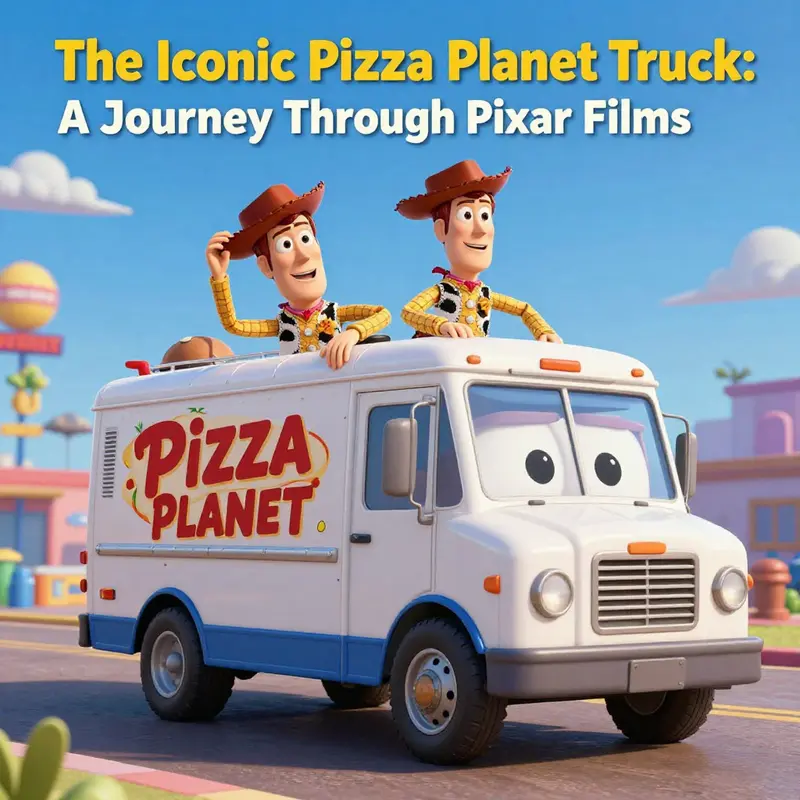
In the long arc that binds Pixar’s early oeuvres into a single, living universe, few recurring motifs are as quietly influential as the Pizza Planet truck. It first rolls onto the screen in Toy Story, bearing the trademark retro charm and a whisper of whimsy that would become a touchstone for fans. Beyond its literal function as a delivery vehicle, the truck operates as a deliberate easter egg, a little wink from the studio that invites attentive viewers to participate in a shared game of recognition. The design work around the truck is more than surface-level nostalgia; it is a physical thread that links scenes across a landscape of toys, aliens, monsters, and pilots. In Toy Story 2, the same truck resurfaces in a different mood and setting, reinforcing a continuity that fans had already begun to map in their minds. The truck’s presence in both films rests on a delicate balance of background visibility and foreground significance, a balance that Pixar has refined into a subtle craft over the decades.
In Toy Story (1995), the truck makes its debut not as a central prop but as a deliberate, almost conspiratorial background detail. It travels through the frame in a way that feels planned yet unforced, as if the world itself is busy with logistics, even when the main action is focused on Woody, Buzz, and their escalating chase. The truck’s design is telling: a fictionalized, retro-styled 1978 Gyoza Mark VII Lite Hauler pickup that instantly signals a particular era of American auto culture. Its color palette and chrome accents give the impression of a vehicle that could have existed in a time when pizza was a novelty and street corners wore the glow of neon. This is not just a decorative choice; it is a signal of the film’s affection for the everyday, for the ordinary objects that become extraordinary within a child’s imaginative space. The Pizza Planet ride music—snappy, playful, and endlessly hummable—serves as an auditory anchor, a sonic reminder that the truck belongs to a place where childhood adventures are hatched and launched. The truck’s appearance during the climactic chase, when Woody and Buzz are maneuvering through Sid’s house and its wreckage, is particularly emblematic. It is a moment when the film demands that viewers notice small details while being carried along by a larger, more urgent conflict. In this moment, the truck’s presence feels like a beacon of return—an emblem of the world that exists beyond the immediate beat of the scene and a sign that the Pixar universe is watching, winking, and quietly recording its own mythology.
Toy Story 2 (1999) takes the Easter egg concept a step further by recasting the Pizza Planet truck as a key piece of Woody’s backstory and sense of belonging. When Woody is pulled into the ordeal of being stolen by a collector and whisked into a museum, the truck reappears as part of the “Toyland” display—a subtle yet emotionally potent reminder of the toy’s origins and its first, more intimate home operation: the world of Andy and the family who loves their toys. The truck’s role in this installment is less about the chase and more about memory. Seeing the vehicle in a museum display transforms it from a mere prop into a symbol of Woody’s identity and history. Woody’s journey back toward Andy’s room is a journey back to a sense of place, and the truck’s cameo becomes a thread that ties Woody’s evolving perception of himself to the larger question of what it means to be a toy with a life beyond the child who owns it. The museum setting—an artificial, curated environment that nonetheless feels authentic—emphasizes how memory itself can become a stage on which a character rehearses who they are. The truck, finally, acts as a quiet anchor for Woody’s emotional arc, reminding viewers that a beloved playmate’s place is not merely in the hands of a child but in the shared history that binds family, friendship, and a community of toys.
The truck’s two appearances thus function as a compact debriefing on continuity and character. In Toy Story, it introduces the idea that the world of toys is not isolated but connected to a broader, almost urban landscape of human life. The truck’s background presence, with its distinctive silhouette and musical cue, becomes a signature moment the audience learns to recognize—an anchor for the idea that this is not just a standalone adventure, but a chapter in a larger, interconnected narrative. In Toy Story 2, that sense of connectivity expands. The truck becomes a repository of meaning, carrying the weight of Woody’s origin story and offering a visual cue for viewers who have followed the franchise from its earliest pages. The dual role—acting as both object and symbol—helps knit the films together, reinforcing Pixar’s larger ambition: to craft a universe where familiar objects, places, and even vehicles contribute to a cohesive storytelling ecosystem. The careful placement of the truck in both movies invites audiences to notice, to reflect, and to remember the subtle, recurring language of the studio’s world-building.
One consequence of this approach is a heightened sense of immersion. Viewers, especially those who have grown up with Pixar’s releases, begin to track the Pizza Planet truck with a practiced eye. It becomes a game of recognition, a reward for viewers who notice a familiar shape tucked away in a crowd scene or a quiet corner of a background shot. Yet the appeal is not merely fan service. The truck’s appearances illustrate a conscious design choice: to build a shared universe through the repetition of small, meaningful details. This is not simply about cameo culture; it is about the sense that the world these films inhabit is not a string of isolated stories but a tapestry. Each thread—no matter how small—adds texture to the fabric of the universe. The truck’s recurring presence demonstrates Pixar’s commitment to creating a world that rewards repeat viewing and invites conversations about how different films relate to one another. In that sense, Toy Story 1995 and Toy Story 2 1999 become chapters in a longer, ongoing dialogue about memory, place, and belonging, with the Pizza Planet truck acting as a patient narrator who remains consistent even as its stories evolve.
Moreover, the truck’s appearances echo a broader philosophy behind Pixar’s approach to storytelling. The insistence on embedding recognizable, seemingly quotidian elements—like a pizza-delivery truck—speaks to a core belief in the power of shared details to create emotional resonance. These details persist across films, enabling audiences to sense a continuity that transcends a single plot line. The truck’s presence is not designed to dominate the scene, but to participate in it, to become part of the background texture that gives depth to the on-screen action. It invites viewers to linger on the frame, to notice, and to feel that the world is bigger and more interconnected than a single narrative moment would suggest. That sense of scale—an ordinary object carrying extraordinary significance—helps explain why the Pizza Planet truck remains one of Pixar’s most beloved visual motifs. In each appearance, it offers a gentle reminder that joy can be found in the small, recurring elements that accompany a story, and that those elements can gain significance as a story expands around them.
What starts as a visual joke becomes a storytelling strategy. The truck’s ongoing presence across Toy Story and Toy Story 2 signals to audiences that the films are part of a deliberate, grand design. It is a subtle art, but it matters: viewers learn to read the background as carefully as the foreground, to trust that a studio’s visual language will consistently reward a careful eye. In this way, the Pizza Planet truck does more than hitch a ride through two films. It acts as a quiet curator of memory, a small but persuasive sign that the playground of Andy’s world and the larger Pixar cosmos are inseparable. Each time the truck appears, it invites a new round of recognition and a deeper sense of connection to the stories we love. The result is a richer, more satisfying viewing experience, and a testament to the power of cinema to weave together separate adventures into a coherent, enduring panorama. For readers who want to explore this thread further, a broader look at the Pizza Planet truck across Pixar movies can be found here: Pizza Planet Truck across Pixar movies.
To round out the sense of legacy, consider how Toy Story 1995 and Toy Story 2 1999 sit within the studio’s early trajectory. These films were among Pixar’s foundational successes, helping to establish the practice of reusing visual motifs and background cues to build a shared world. The truck’s two appearances—one in a chaotic, action-driven moment inside a suburban nightmare and one in a contemplative, museum-bound moment that revisits origins—demonstrate the range of narrative functions a single prop can serve. In the first case, the truck acts as a touchstone of everyday life, a reminder that even in the heat of escape, the ordinary world is still present. In the second, it becomes a vessel for memory, a tangible link to Woody’s past that enriches the emotional arc of the character. Taken together, they illustrate how Pixar’s early films used a simple prop to orchestrate a deeper, more intricate sense of world-building. The consistency across these early years foreshadows the studio’s later mastery of integrating Easter eggs with character development, allowing the audience to uncover new layers with each rewatch.
External resource: https://disney.fandom.com/wiki/PizzaPlanetTruck
Beyond the Background: Tracing the Pizza Planet Truck’s Quiet Appearances in A Bug’s Life and Monsters, Inc.
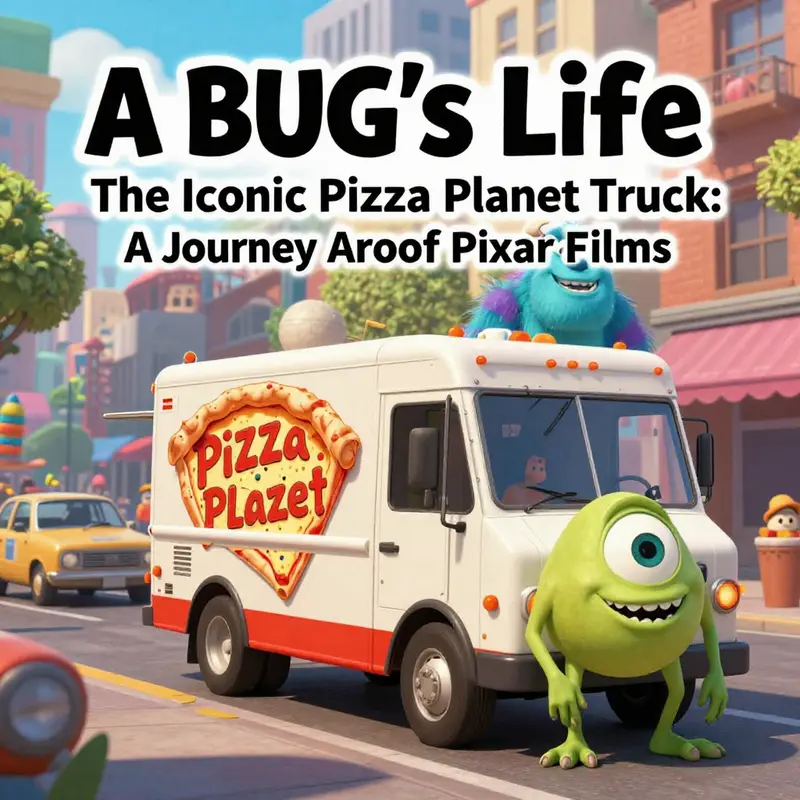
In the grand tapestry of Pixar’s storytelling, some threads do more than decorate a frame. They travel from film to film, quietly linking worlds and inviting fans to spot something familiar in the most unlikely places. The Pizza Planet truck is one of those threads. It began as a simple, brick-red vehicle in Toy Story, but its role has evolved into a recurring Easter egg that rewards attentive viewers with a sense of shared space across diverse films. This chapter narrows its focus to two specific appearances that have long intrigued fans: the brief presence of the truck in A Bug’s Life (1998) and its more explicit cameo in Monsters, Inc. (2001). Together, these moments show how Pixar builds a cohesive universe by threading familiar props through different geographies, genres, and character ensembles, turning a background prop into a symbol of continuity that transcends individual stories.
A Bug’s Life situates Flik and his band of ant colleagues in a world that is at once intimate and sprawling. The film trades the bright, high-ceilinged toy showroom of Toy Story for the microcosm of an insect city, where the wonders of human artifacts become part of the ants’ daily reality. Within this shifting backdrop, the Pizza Planet truck appears in a way that is almost architectural: parked near the edge of the cityscape, it sits as a bright, metallic reminder of a world beyond the ant hills and leaf-canopied streets. The scene is brief, almost offhand, but its placement matters. It is not a foreground star or a plot engine; it is a nod to the larger universe that Pixar has been quietly assembling since its earliest days. The truck’s presence adds texture to the world, a deliberate wink that says the filmmakers are playing in a shared sandbox, where human elements float, in disguise, through the lives of tiny creatures.
From a production design perspective, the appearance in A Bug’s Life is a study in how visual motifs travel across films. The truck’s silhouette—a rounded cab, a boxy cargo area, and that unmistakable color—reads as a touchstone for viewers who recognize it from Toy Story. Yet in this insect-kingdom setting, it also becomes a sort of anachronistic artifact, a hint of the human world that generated Pixar’s larger mythos. The background placement matters: it doesn’t demand the audience’s attention, but it offers a reward to the vigilant eye. The effect aligns with Pixar’s broader strategy of embedding continuity through environment, not exposition. These are the tiny breadcrumbs that seasoned fans chase, and they enrich the sense of watching a living universe rather than a string of isolated stories.
Monsters, Inc., by contrast, leans more directly into the idea of a shared brand and a cross-film presence. Here the truck is not merely a backdrop prop but part of a larger fictional economy—the Pizza Planet restaurant chain that recurs in the studio’s storytelling. The setting of Monsters, Inc. centers on a different world, one of scare-collecting monsters who inhabit a human-scale corporate landscape. Yet the Pizza Planet truck reappears outside the Monsters, Inc. building, positioned deliberately to signal a connection to the human world that shapes this universe. In this film, the truck’s role moves from a whisper of continuity to a more explicit cross-film nod. It becomes a visual cue for fans: the same emblematic vehicle exists beyond the confines of a single story, a shared sign that even a monster metropolis and an ant city can coexist within the same cinematic ecosystem.
This dual appearance—the understated cameo in A Bug’s Life and the more overt presence in Monsters, Inc.—illustrates Pixar’s deft use of visual continuity to create a sense of place that transcends individual plots. The truck’s quick shows are not about plot mechanics; they are about reaffirming a world where toys, insects, monsters, and humans inhabit a single, interconnected cinematic landscape. In this sense, the truck functions as a storytelling device that bridges genres and scales: from the intimate microcosm of a Bug’s Life’s ant society to the sprawling corporate corridors of Monsters, Inc. The subtlety of the A Bug’s Life moment invites a second look, while the Monsters, Inc. appearance offers a resonant reminder that the same prop can anchor multiple stories without collapsing their distinct cinematic rules.
For fans, these moments become smaller rituals within the broader ritual of cinema viewing. The Truck, as fans lovingly call it, acts as a shared signifier that invites rewatching, theorizing, and communal storytelling. Its appearances in A Bug’s Life and Monsters, Inc. are not supposed to steal scenes away from the film’s central characters; they coax viewers to remember that these stories do not exist in isolation. Rather, they underscore Pixar’s philosophy of a living, breathing universe where props can drift from one narrative to another, offering familiarity amid novelty. It is a deliberate craft—one that rewards careful attention with a sense of belonging to something larger than the individual film’s trajectory.
From a narrative standpoint, the juxtaposition of these two appearances also contributes to the idea of a cross-film geography. In A Bug’s Life, the truck’s location near the city’s edge plays with scale and perspective. It invites audiences to imagine how a human world intersects with an insect metropolis, a reminder that size and distance are malleable in cinema. The setting serves as a playful reminder that the human world, with its recognizable artifacts, continues to intrude, or perhaps to be welcomed, into different species’ stories. In Monsters, Inc., the same vehicle anchors a scene that emphasizes collaboration and ingenuity. Mike Wazowski and Sulley’s effort to deliver pizza—an ordinary, everyday human gesture—takes on cinematic significance when framed against the truck’s constant presence. The prop becomes a touchstone that ties together human whimsy with monster persistence, a thematic convergence that resonates with audiences who relish the idea that ordinary objects can carry extraordinary meaning across worlds.
If we consider the broader question of why these particular appearances matter, the answer lies in Pixar’s insistence on a shared imagination rather than a series of solitary fables. The truck is a convenient, almost alchemical symbol of that belief. It travels with the company’s films, not as a product placement but as a badge of belonging. Each time it reappears, it invites viewers to recall Toy Story while recognizing that the universe has grown, matured, and become more inclusive of different beings and locales. The appearances in A Bug’s Life and Monsters, Inc. thus function as more than Easter eggs; they are markers of continuity, proof that the Pixar world is bigger than any single narrative. They encourage fans to track, over time, which other films might host the familiar red truck in the background, or perhaps, in some future work, bring it to the foreground again in a new context.
For readers who want a closer look at these particular moments, one can find dedicated explorations that dissect the truck’s placements and the interpretations they invite. A dedicated article on A Bug’s Life’s Pizza Planet truck delves into the ant-city setting and the scene’s framing, highlighting how the truck’s silhouette punctures the visual language of the movie’s geography. You can explore that deeper dive here: A Bug’s Life Pizza Planet truck. The link provides a richer sense of how a background object can carry multilayered meaning across films, a recurrent pattern in Pixar’s approach to world-building.
What follows in the larger arc of Pixar’s storytelling is not a single cameo but a tradition. Each appearance—the quiet cameo in A Bug’s Life and the more explicit presence in Monsters, Inc.—reinforces a belief in a shared cultural landscape. The truck’s continuity signals that these tales do not exist in isolation but in a continuum where familiar props become cultural touchstones. This approach deepens audience engagement and invites rewatchability, because the more films you connect, the more the world expands. It is a quiet, patient form of storytelling, and it rewards fans who cultivate a habit of looking for the familiar in the unfamiliar.
In sum, the Pizza Planet truck’s appearances in A Bug’s Life and Monsters, Inc. are not mere curiosities. They are deliberate design choices that help knit Pixar’s cinematic universe together. The ant city’s edge and the monsters’ day-lit exterior both accommodate a human artifact, allowing viewers to sense a broader, shared space. This is the essence of Pixar’s evolving mythos: a universe where a single prop can anchor multiple narratives, where cross-film references become conversation starters, and where watching becomes a collaborative act of recognizing patterns across time. The truck’s presence in these two films helps answer a broader question that animates this article: what movies has the Pizza Planet truck been in? The answer, emerging from A Bug’s Life and Monsters, Inc., is not simply a list. It is a demonstration of Pixar’s commitment to a living, interconnected world, a universe built not just from stories but from the small, recognizable objects that travel between them.
External resources can offer further context for readers curious about Pixar’s broader approach to shared props and Easter eggs. For a wider lens on how this specific truck threads through multiple narratives, see the official Pixar resource on their interconnected universe. This broader overview helps situate the A Bug’s Life and Monsters, Inc. appearances within a larger pattern that fans have long celebrated.
External resource: Pixar Official Site
Finding Nemo (2003) and The Incredibles (2004): The Pizza Planet Truck’s Quiet Journey Across Pixar’s Shared Universe
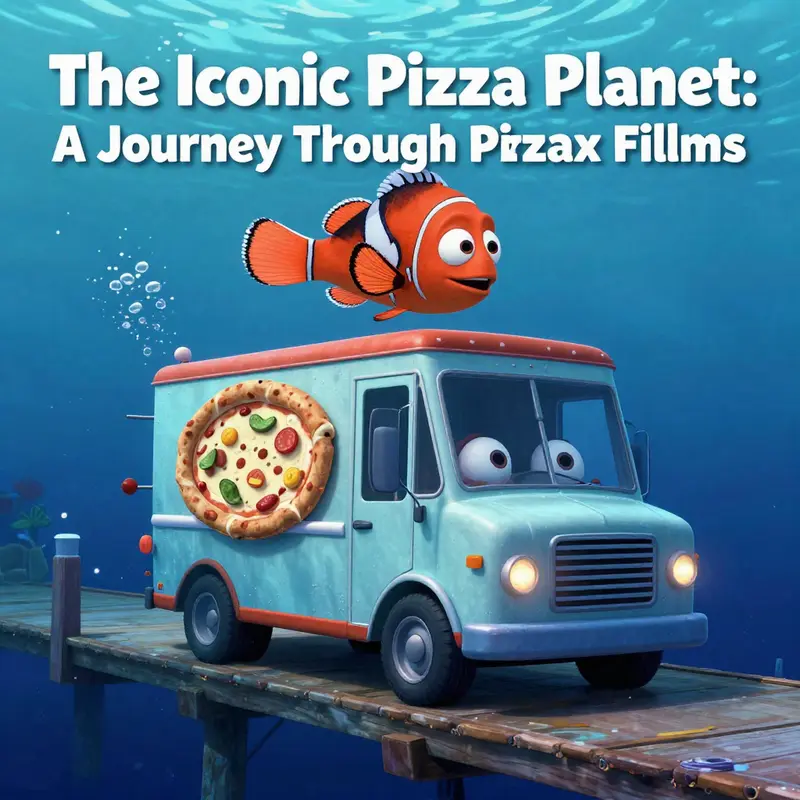
In the span of two consecutive Pixar releases, the company staged a quiet, almost conspiratorial shift in how audiences perceive its cinematic universe. Finding Nemo (2003) and The Incredibles (2004) sit at opposite ends of the spectrum—one dives into the peril and tenderness of a father’s quest beneath the waves, the other surges through a world of super-powered suburban drama. Yet both films welcome a small, familiar presence into their frames: the Pizza Planet truck. Hidden in the margins, hovering in the background, or slipping into a busy city street, this yellow-green cargo courier with a turquoise stripe becomes a gentle connective thread. It is not a plot device, nor a blatant wink to the fan base; it is a visual oath that Pixar’s worlds, while diverse, share a common vocabulary. This chapter looks at how the two films use that truck to reinforce core themes—family, courage, and the everyday heroism that threads through moments both buoyant and terrifying—and how this tiny vehicle helps shape a larger, cohesive Pixar mythos.
In Finding Nemo, the ocean is the primary stage for risk, resilience, and reconciliation. Marlin—the overprotective, endearing father—embarks on a Pacific crossing to retrieve his son Nemo after a human moment irreversibly fractures their family’s routine. The film’s emotional arc follows Marlin’s growth from fear-driven protector to a partner in Nemo’s own adventurous self-discovery. Along this journey, the visuals are as meticulous as the emotional beats. The sea is a living map of danger and hope, painted with textures that feel tactile, almost navigable. Against this deep, luminous backdrop, a Pizza Planet truck briefly appears in the background as Marlin and Dory glide near a pier, a fleeting silhouette that does not affect the action but enlarges the sense of continuity. It is a childlike shorthand for a world where familiar textures exist across films, a reminder that the universe of these stories is not a series of unrelated adventures but a shared landscape where objects, shapes, and colors carry memory. The truck’s cameo is not about product placement or fan service; it is about trust—trust that viewers will recognize a symbol and savor what it implies about place and belonging.
ThatTrust is amplified in The Incredibles, where the frame shifts from sea to suburb, yet the same quietness of recognition returns. The Parr family’s Manhattan-like skyline and its surrounding streets pulse with the electricity of a superhero family trying to live a life that demands normalcy even as it invites danger. The truck shows up again, not as a protagonist, but as a whisper of the wider world in which the Parrs move. There is a resonance to the scene in which a truck becomes part of the urban rhythm, blending with the traffic, blending with the night lights, blending with the idea that even extraordinary people must navigate the mundane. Pixar’s choice to place the Pizza Planet truck in a suburban, everyday moment in The Incredibles underscores the studio’s confidence in their world-building: no matter how remarkable the protagonists, the ordinary remains the stage upon which their extraordinary acts play out. The truck’s presence in this context is a gentle reminder that the extraordinary does not erase the ordinary; it exists alongside it, sometimes peeking out from behind a billboard, sometimes tucked into a street corner as a driver scans the route ahead.
When we consider these appearances side by side, a simple pattern emerges. The truck is never the focal point. It does not alter what the characters feel or how the plot advances. Instead, it deepens the texture of the world, giving the viewer a shared memory that nothing about the story needs to explain verbally. It is a symbol of continuity, a visual shorthand that invites the audience to feel part of Pixar’s evolving map. The effect is subtle but powerful: the same truck that appears behind Woody and Buzz at Sid’s house in Toy Story, or near the bustling streets of a city in Monsters, Inc., or gliding along a Sydney pier in Nemo, becomes a thread that binds disparate stories into a larger, communal experience. In Nemo, the truck’s glancing presence near the pier evokes human world, travel, and the possibility of connection beyond the reef; in The Incredibles, the truck anchors the family’s life in a city that can be both glittering and treacherous, a reminder that heroism often happens in the margins of daily life.
From a storytelling perspective, these two films present complementary angles on the same core concerns Pixar has long explored: what happens when a family members together, when courage becomes a practice rather than a glittering moment, and how personal growth often means stepping beyond one’s own safe harbor. Marlin’s voyage is a study in trust—trust in friends, trust in his son’s resilience, trust that the world still holds beauty and purpose despite previous losses. The truck’s quiet background presence invites viewers to inhabit a larger space, one where the sea’s vastness is mirrored by the boundless possibilities of the human-made world that lies beyond the water’s edge. On the other side of the spectrum, The Incredibles treats courage as a daily discipline—balancing the thrill of danger with the ordinary demands of a family life that must be sustained by love, cooperation, and mutual respect. The truck’s appearance within this context reinforces the idea that heroism is not about dramatic, singular moments alone; it is woven into the fabric of everyday mobility, a practical symbol of how a family navigates both the city’s traffic and the city’s shadows.
The truck’s appearances across these two films also illuminate Pixar’s broader philosophical stance on storytelling: that audiences are partners in constructing a universe. When the Pizza Planet truck sits in the background, the audience instinctively registers a small, classically Pixar motif—a nod to the studio’s earliest audience love and memory. These nods accumulate into what fans feel as a sense of belonging to a shared canvas. It is a subtle, almost ecological approach to world-building: you do not need a map on screen for audiences to know where they are, because they know the map by heart through the repetition of small, consistent details. The background truck acts like a quiet breadcrumb trail across films, a reminder that the same creative mind, and the same playful attention to detail, threads a family of stories together. In this way, the truck is less a cameo and more a guarantee—an assurance that the Pixar universe is a cohesive place where the everyday and the extraordinary live in close proximity.
In practical terms, the truck’s presence in Nemo and The Incredibles works as a form of visual memory that resonates with viewers who have followed Pixar since its early days. It rewards repeated viewing and encourages fans to rewatch scenes with a newly sharpened eye for the fabric of the world. The effect is not merely nostalgic; it is thematic. The recurring object becomes a symbol of continuity and belonging, reinforcing the idea that the universe of these films is not a loose collection of separate tales but a connected ecosystem in which values—care, resilience, and family—move through each frame as reliably as the truck itself moves through a city street or past a harbor. This is not incidental artistry; it is a deliberate craft, a choice to embed the audience in a shared visual language that grows richer with every new release.
As these films stretch across different kinds of stakes—the ocean’s perils in Nemo and the urban, personal perils in The Incredibles—the Pizza Planet truck remains a steady, almost ceremonial presence. It invites viewers to slow down and notice the world-building that makes Pixar’s films feel like a long-running, interconnected saga rather than a sequence of one-off stories. In Nemo, Marlin’s journey is a reminder that courage often begins with a single step into the unknown, and that safety lies not in dominance over danger, but in the willingness to trust others. The truck’s quiet cameo in the background of this journey mirrors the idea that a shared universe can quietly support personal transformation. In The Incredibles, the truck’s appearance during a highway chase and its placement in a suburb below the neon glow of city life echo the dualities the film plays with: power and vulnerability, spectacle and intimacy, the extraordinary and the ordinary. These contrasts are precisely what the Pizza Planet truck’s presence helps to illuminate. It doesn’t resolve the story’s conflicts; it enriches their context and invites viewers to see beyond the immediate action into the larger, cultivated mythos Pixar has spent decades constructing.
For readers who crave a deeper map of where this little vehicle has wandered, there is a growing compendium of sightings that fans have gathered over the years. Such catalogs do not diminish the mystery; they build it, turning a background gag into a shared treasure hunt that spans decades and multiple films. If you want to explore the broader landscape of Pizza Planet truck appearances, a dedicated guide offers a detailed catalog of where and when this truck appears across the Pixar canon. The cross-film visibility is not random; it is a deliberate editorial choice that strengthens the sense of a universe with its own internal logic and memory. See the guide that traces every instance across the studio’s output for a fuller sense of how these tiny visual echoes accumulate into a powerful sense of continuity. What Pixar Movies Have the Pizza Planet Truck.
Beyond the playful thrill of spotting the truck, the two films jointly offer a meditation on what it means to be a family in motion. Nemo centers a father’s devotion to a son, an echo of parental love that persists even when the world is riddled with peril. The Incredibles shifts that focus to a family’s collective resilience, insisting that strength is a shared discipline enacted through daily life. Both narratives celebrate the quiet heroism of ordinary moments—the careful navigation of traffic, the patient listening on a long voyage, the decision to turn away from fear long enough to take a brave step forward. The pizza truck, gliding through their frames, becomes a gentle emblem of that heroism, a sign that the world Pixar builds is one where the mundane and the magnificent are not corollaries but collaborators. It is no accident that the truck appears in backdrops that have nothing to do with the main action; it is precisely in those pauses—the intervals between the leap and the landing—that the franchise’s larger philosophy takes shape.
In sum, the coexistence of Nemo and The Incredibles within Pixar’s broader universe, and the quiet but persistent appearance of the Pizza Planet truck in both, offers a layered portrait of what makes these films so enduring. They insist that a family’s heart can survive an ocean’s breadth or a city’s maze of streets, that courage often wears the mask of everyday routines, and that even a small, passing vehicle can carry the weight of memory. The truck’s presence is a reminder that Pixar’s films are not isolated adventures; they are chapters in a larger, ongoing conversation about why stories matter and how small details can anchor a grand, shared vision. The invisible thread that ties these two films—Marlin’s tenderness, the Parrs’ unity, and the truck that keeps showing up in the margins—animates a narrative about belonging: belonging to family, to a world that invites imagination, and to a studio that quietly builds a universe where such belonging feels earned, inevitable, and worth revisiting again and again. External references, like the IMDb page that chronicles Nemo’s journey and the craft behind its release, offer a deeper dive into the film’s achievement and its place within the history of animation. For a broader view of Nemo’s production and reception, you can consult the film’s official audience reception and critical analysis resources. External resource: https://www.imdb.com/title/tt0126029/.
Pizza Planet’s Traveling Signpost: Tracing the Truck’s Cross-Film Journey from Ratatouille to Brave Across Pixar’s Shared Universe
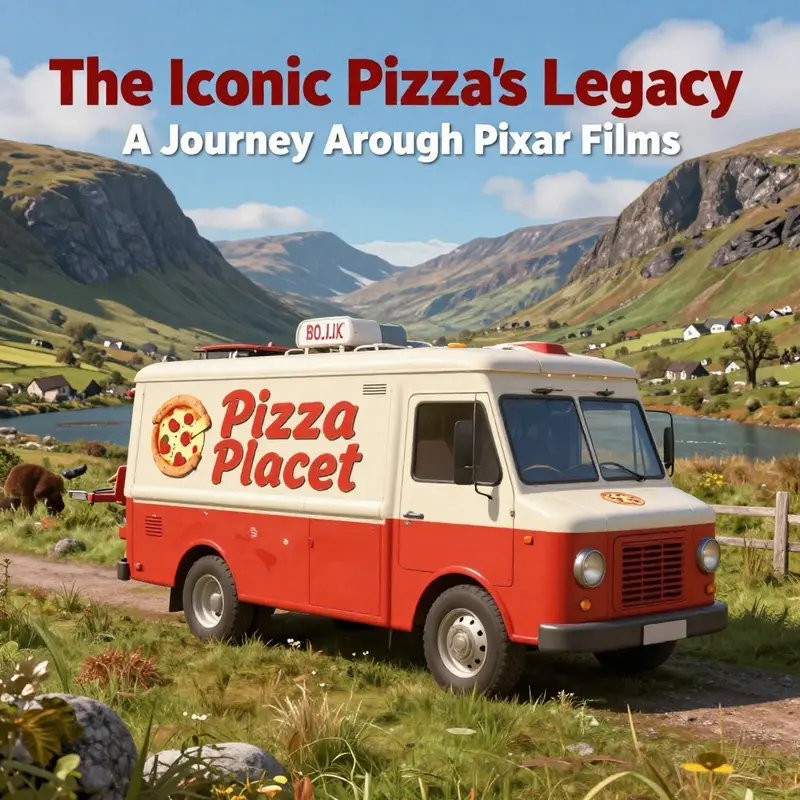
In the vast map of Pixar’s animated worlds, the Pizza Planet truck functions like a quiet, steady beacon. It does not shout its presence with a roar or a marquee; it hides in plain sight, a small, bright green beacon of a pizza joint that fans recognize as a wink from the studio itself. From its first appearance in Toy Story in 1995, the truck has drifted through the company’s films as a recurring Easter egg, a comforting reminder that these stories exist inside a single, interconnected universe. Its appearances are not random cameos but deliberate, playful nods that invite viewers to notice how the studio’s characters, environments, and even the shapes of its props echo across disparate narratives. Over time, the truck has become less a vehicle for a quick gag and more a symbol of Pixar’s evolving approach to world-building: a shared texture that binds a century of storytelling into a cohesive, fan-friendly tapestry.
The earliest moment of recognition comes from the original Toy Story, where the truck’s silhouette glides into the background during a crucial sequence as Woody and Buzz Lightyear improvise a frantic attempt to slip out of Sid’s house. It is not the focal object in the frame, yet it lingers in memory because it signals something larger—a studio self-awareness, a promise that these films operate within a shared ecosystem, even when their primary conflicts are intimate and character-driven. That brief presence becomes a quiet signature, a promise to devoted viewers that Pixar’s world isn’t a loose collection of standalone tales but a steadily expanding map with familiar waypoints. In Toy Story 2, the truck reappears behind the action at a toy convention, reinforcing this idea of continuity. The repeated background cameo emphasizes more than nostalgia; it becomes a thread stitching together the studio’s early and late eras, a reminder that the same company that built Buzz and Woody can, with a single flicker of green, invite audiences to track the larger geometry of its creations.
A broader sense of Pixar’s interconnected universe emerges as the truck surfaces in A Bug’s Life, where it appears quietly in a town scene. The image is not a dramatic reveal but a deliberate placement that says the world of Ant Island exists in the same cinematic cosmos as the worlds of Woody, Sulley, and Nemo. The truck’s presence in Monsters, Inc.—seen as Sulley and Mike walk through a cityscape—further cements this idea. Each appearance functions as a subtle curatorial act: a visual reference that signals the audience to recognize a shared provenance, a studio with a consistent set of playful habits. The movement from one film to another happens without a formal proclamation; instead, it occurs through the viewer’s practiced eye, rewarded by the sense that these films belong to a common cultural project.
Finding Nemo adds another layer to this cross-pollination. The truck briefly appears in the background near a pier, a tiny tableau that keeps the link alive between Pixar’s aquatic epic and the more terrestrial, urban comedies that orbit it. The moment is not designed to steal focus from Marlin and Dory’s voyage; rather, it provides a tactile reminder of the studio’s habit of embedding continuity within its visuals. In The Incredibles, the truck resurfaces during a suburban street scene, presenting a similar function: a visual echo crisscrossing across the superhero family’s high-stakes world. The truck’s presence in a setting so saturated with stylized whimsy underscores Pixar’s ability to weave its motifs into the texture of everyday life, suggesting that heroism and humor inhabit the same commonplace spaces as a city street where a Pizza Planet truck might appear at any moment.
Ratatouille offers a particularly resonant moment for readers interested in the truck’s narrative significance. On a bridge in Paris, the vehicle appears as a subtle nod to the studio’s global reach and its character-driven ethos. Ratatouille’s environment—a city famous for culinary artistry and chance encounters—feels like a natural stage for the truck’s quiet cameo. That appearance is more than a fleeting sight gag; it’s a reminder that Pixar’s characters traverse not just physical distances but thematic ones as well. The bridge scene frames the truck as a kind of cultural ambassador, a symbol of a shared Pixar language that travels as freely as Remy through the winding streets of Paris. The continued presence of the truck across films adds up to something deeper: a visual shorthand that the studio has built to reward attentive viewers with a threaded, evolving sense of belonging to a larger cinematic family.
By the time WALL-E arrives, the truck’s function shifts again. In the derelict world the film depicts, the bright green vehicle becomes a counterpoint to the desolate future, a reminder of the vibrant, human-centered past in a world that has moved far beyond it. The juxtaposition of the truck with the film’s stark, reclaimed landscapes dramatizes Pixar’s ongoing fascination with time, memory, and continuity. When Up follows, the truck appears once more in the city’s street grid, its familiar silhouette anchoring a new suite of adventures in an atmosphere that blends whimsy with the melancholy of aging and memory. The appearance in Brave, set in the Scottish countryside, demonstrates that the truck’s trajectory continues even as the studio shifts its storytelling focus toward myth and transformation. In Brave, the truck’s cameo is less pronounced than in Toy Story or Ratatouille, yet its presence still functions as a connective tissue, a reminder that the Pixar universe remains a living archive of motifs and which, in turn, respects the viewer’s habit of looking for familiar shapes in unfamiliar places.
What makes these appearances meaningful extends beyond their decorative appeal. They are strategic, almost diplomatic acts of continuity that invite fans to map a cinematic geography where a pizza parlor’s delivery truck becomes a common thread, present in many of Pixar’s most iconic films. The truck’s ongoing appearance is an invitation to rewatch and reconsider, to notice how a sunlit street in one film might echo a Parisian bridge in another, or how a cityscape in a superhero epic might contain a tiny slice of nostalgia for a movie released years earlier. It is this deliberate, patient curation that transforms what could be mere inside jokes into a more sophisticated storytelling device. Over the years, the Pizza Planet truck has become a surrogate for the studio’s self-portrait: a small vehicle that, by existing across plots and geographies, reveals Pixar’s enduring interest in continuity as a feature rather than a gimmick.
This cross-film practice also helps cement a sense of audience participation. Fans learn to spot the truck; they trade sightings, debates, and interpretations about where else it could appear. The discovery becomes a form of shared literacy, a way for viewers to engage with the studio’s creative temperament. The very act of seeking out the truck encourages viewers to rewatch beloved films with fresh eyes, attentive to the way a familiar prop can travel across space and time while preserving its essence. In this sense, the Pizza Planet truck is not just a prop but a narrative instrument, a quiet testament to Pixar’s faith in its own mythos and in the viewers’ willingness to become co-authors of that mythos through attentive viewing.
For readers curious to see a catalog of these appearances, a consolidated resource offers a handy reference point that traces the truck’s trajectory through the studio’s output. This collection captures the essence of the truck’s role as a persistent emblem—an Easter egg that becomes a storytelling habit rather than a one-off joke. It’s a reminder that Pixar, as a studio, treats its body of work as a coherent, interwoven map rather than a mere series of titles. The truck’s journey—from Toy Story’s studio-grounded background to Brave’s more lyrical, painterly frame—maps an evolving studio ideology: one that values continuity, memory, and the joy of revisiting shared worlds.
For a broader look at how these appearances knit together in Pixar’s ongoing cinema project, see the overview at the Pizza Planet truck in Pixar movies. Pizza Planet truck in Pixar movies.
External resources continue to illuminate this tradition. The official Pixar site remains a valuable reference for understanding the studio’s broader approach to cross-film continuity and its evolving visual language. You can explore more about Pixar’s storytelling universe there: Pixar official site.
Final thoughts
The Pizza Planet truck stands as a testament to Pixar’s storytelling genius and has left a lasting impact across various films. Its appearances weave a narrative thread that links diverse films and cultures while engaging audiences with familiar visuals. As we continue to look forward to Pixar’s future endeavors, the enduring presence of the Pizza Planet truck promises to bring nostalgia, excitement, and continuity to our viewing experience. For business owners looking to capture that same spirit, it’s essential to understand how recognizable brand symbols can enhance audience connection.