
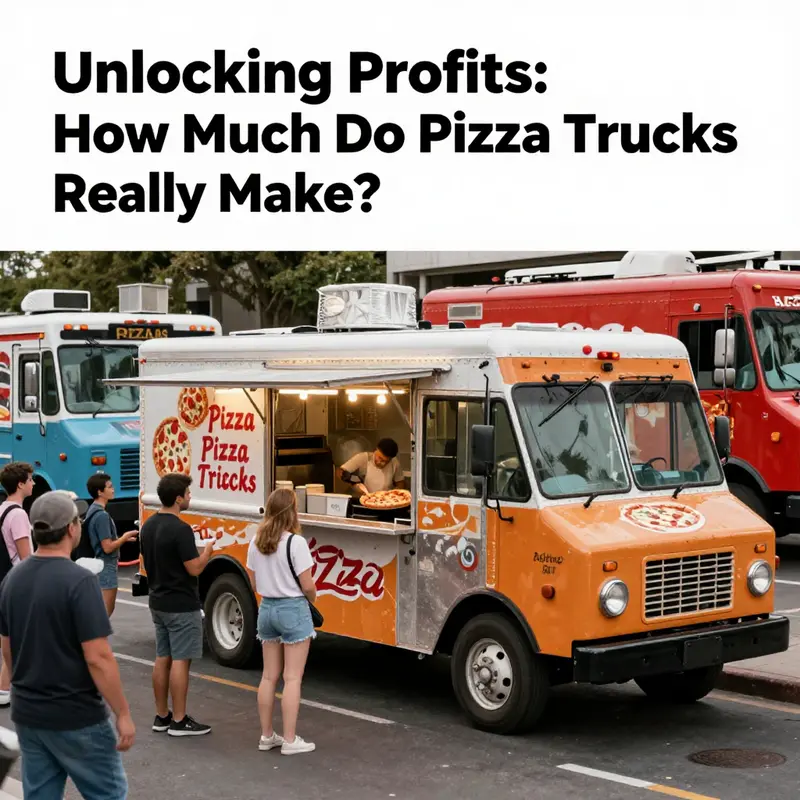
In the evolving landscape of mobile food services, pizza trucks have carved a niche that offers both excitement and profitability. Many aspiring business owners are eager to uncover how much pizza trucks make, alongside insights into the factors that influence their revenue. A well-managed pizza truck can yield impressive monthly profits, often around $29,700. However, reaching this figure depends on a variety of elements including location, event types, menu offerings, and customer engagement strategies. This article will delve into the monthly revenue potential, factors influencing earnings, startup costs alongside profit margins, and the impact of menu flexibility, giving a holistic view of what to expect in the pizza truck business.
Rolling Revenue: Decoding How Much Pizza Trucks Make Each Month
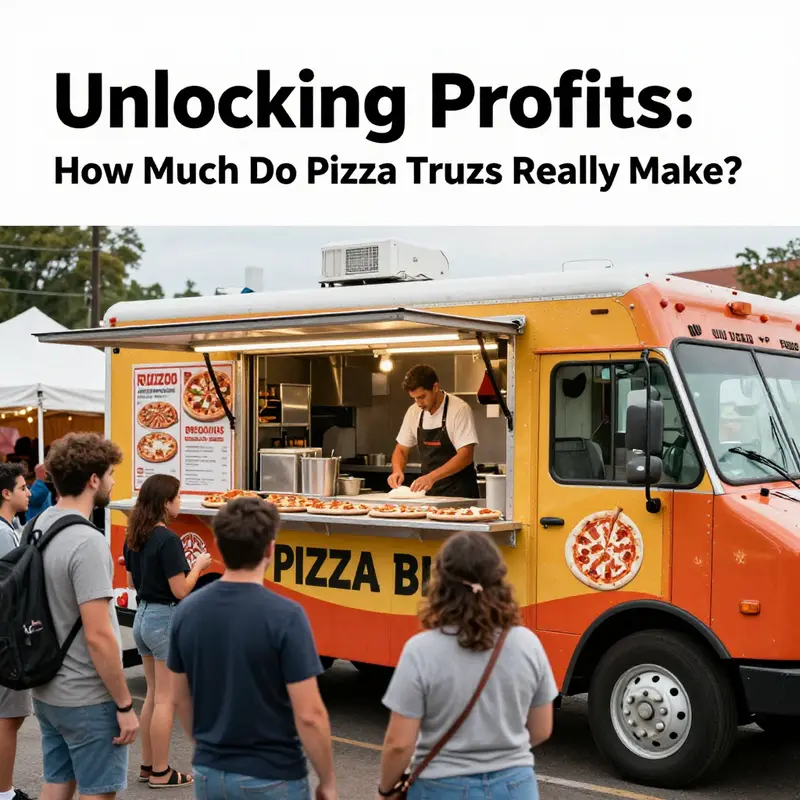
The allure of the pizza truck as a mobile, high-turnover kitchen rests on a simple premise: speed, flexibility, and location. When a truck can produce a fresh pie in minutes and wheel itself to where crowds gather, the potential for steady monthly revenue becomes tangible. Industry observations point to a striking figure around thirty thousand dollars in monthly profit under well-managed conditions, a testament to how efficiently food trucks can operate when costs are kept lean and demand is reliably high. That number does not arise from luck alone. It is the product of careful planning, a menu built for speed and variety, and a location strategy that puts the unit where foot traffic, event calendars, and workplace rhythms align. The heart of this model is throughput—how many pizzas can roll out of the oven, how quickly, and at what ticket price—timed against costs that are kept predictable through careful sourcing and waste management. The math behind this is not purely theoretical; it is grounded in the realities of mobile food service, where every minute, every slice, and every mile matters as much as the final tally on the cash register.
Operational speed, especially when a wood-fired oven is part of the setup, is a decisive variable. A pizza that cooks in 60 to 90 seconds liberates an operator from the bottlenecks that slow slower ovens. This speed translates into more transactions per shift, a higher daily volume, and a greater chance to capture customers who are in motion—students on a campus, workers at an office district, revelers at a festival, or families at a fair. In practice, this means a truck can serve a larger audience during peak windows and still maintain the same or even better margins than a slower, more labor-intensive model. The resulting velocity is what sustains profitability when the shopfront equivalent faces fixed costs and slower turnover. It is this dynamic that turns a mobile cart into a flexible engine of recurring revenue, especially in urban cores, near event venues, or along entertainment districts where people are eager for a quick, satisfying meal.
Yet speed without discipline is not profitability. The financial heartbeat of a pizza truck rests on cost control paired with disciplined pricing. Material costs matter, and the cited data line item places the per-pizza ingredient cost at about 1.50 dollars. That figure sounds modest, but it becomes powerful only when multiplied by volume and balanced with a ticket price that reflects the value delivered in a single pie. The ideal pricing strategy blends affordability with the ability to upsell differentiated pies, such as vegetarian options, meat-laden varieties, and even sweet or dessert-inspired pizzas. Each upcharge expands the average ticket and compounds the effect of volume, turning rapid throughput into a healthier bottom line. The challenge is to maintain quality, manage waste carefully, and avoid discount spirals that erode margins. In this setup, the menu design itself acts as a driver of profitability: a lean core offering, complemented by a few revenue-enhancing add-ons that do not slow service or increase waste, keeps the math favorable while preserving the customer experience that drew people in the first place.
Location is destiny for a pizza truck. The places where a truck parks become the stage for the entire economic performance. High-foot-traffic zones—urban centers, near office parks, or close to entertainment venues—provide the constant flow of potential customers that keeps the oven busy and reduces idle hours. But location is not just about proximity to people; it is about alignment with the events calendar and the rhythms of the area. A truck that knows when to chase street markets, music festivals, farmers markets, or campus events can ride a consistent wave of demand. It also benefits from understanding peak hours and the cadence of the day. For example, early lunch pockets near large corporate campuses, and late-night crowds near entertainment districts, can yield different but complementary peaks. A savvy operator learns to optimize scheduling around these patterns, rotating to the right locations at the right times to maximize throughput without saturating any one market. The result is a more predictable revenue stream, smoother cash flow, and less dependence on a single event or location to sustain earnings month after month.
The revenue story grows more robust when one considers the breadth of event opportunities available to mobile pizza operators. From music festivals and food markets to corporate gatherings, private celebrations, and street fairs, the event ecosystem provides a set of recurring revenue opportunities that a brick-and-mortar pizzeria cannot easily replicate. Each event type comes with its own risk profile and pricing levers, but the common thread is the chance to reach large audiences quickly and to capitalize on impulse purchasing. A well-branded truck with a clear value proposition—fast service, high-quality pizza, and predictable price points—can become a go-to option for organizers seeking reliable food services for their attendees. This is where diversification of events becomes a powerful hedge against seasonality or market fluctuations. When one channel tightens, another may expand, preserving overall revenue health.
It is helpful to think about the monthly profit figure as a balance sheet of activity rather than a single snapshot. The total revenue from pizzas sold, less material costs, labor, fuel, maintenance, insurance, permits, and other overhead, yields the monthly profit. The cited figure of around 29,700 dollars in monthly profit signals a scenario where volume, pricing, and cost discipline converge. It does not erase risk—labor costs can rise, fuel prices can fluctuate, and permit or inspection requirements can change—but it does suggest a viable path to profitability when these variables are kept in check. In practice, the path to that level of profit often begins with a clear business model, a tight operating plan, and a brand that resonates with the local market. A strong brand helps command premium pricing in competitive environments and can sustain higher throughputs when customers perceive a consistent, high-value experience.
For operators contemplating entry into this field, the financial picture includes upfront investments that shape the payback period and long-term profitability. A typical starting point is the truck itself, with a purchase price around eighteen thousand dollars, coupled with initial food stocks and supplies estimated at around five thousand dollars. These numbers, while not trivial, are modest relative to a brick-and-mortar restaurant’s load-bearing costs. The ongoing overhead is comparatively lean: fewer fixed costs, mobility that allows shifting to high-demand times and places, and the ability to adjust overhead in response to demand. The combination of a relatively moderate startup expense and the potential for rapid scale through multiple events and locations is what makes the pizza truck business compelling for many aspiring entrepreneurs. Of course, a careful debt and financing plan is prudent, as is a solid plan for maintenance and compliance—ensuring that the truck remains roadworthy and permitted to operate in diverse jurisdictions.
The practical question, then, is how to translate throughput into a reliable monthly total. Start with pricing that reflects value, not just cost plus margin. If a typical pie sells for around ten to twelve dollars, and the material cost per pizza is about one and a half dollars, the gross margin per pie sits in the neighborhood of eight to ten dollars, before accounting for labor and overhead. Add optional upgrades and specialty pies to lift the average ticket. A single truck serving, say, thirty to forty pizzas per day across a thirty-day month can approach a revenue range that, after costs, yields substantial profit. Multiply that by peak season and high-traffic markets, and the results begin to resemble the figures reported in industry analyses. Of course, every operator must account for slow days, weather, and events that do not perform as expected. But the underlying principle remains: high throughput at a reasonable price, paired with disciplined cost management, is the backbone of sustainable profitability in a pizza truck operation.
To give the concept a concrete frame, consider a scenario in which the truck operates in multiple strategic locations and at a mix of events. A typical pricing strategy might center on a standard cheese or margherita pie at a base price, with a handful of specialty pizzas priced a bit higher to capture upsell opportunities. With a well-trained crew that can keep the oven hot and the line moving, the unit can maximize the number of pizzas served during peak windows. Even with the modest per-pizza material cost, the cumulative effect of volume becomes the deciding factor. It is this dynamic that can produce the robust monthly profitability described by industry sources, provided the operation manages costs diligently, negotiates favorable supply terms, and coordinates a calendar of venues and events that keeps the truck consistently busy. The end result is not merely a lofty number on a spreadsheet, but a practical, repeatable system for turning mobility into sustainable income.
For readers seeking a concise synthesis of profitability in this niche, a focused overview offers a compact reminder of where the money comes from and how it can scale. Pizza food trucks profitable serves as a handy reference point for understanding how throughput, pricing, and lean operations intersect to drive positive margins. This resource can help readers gauge whether the pizza truck model aligns with their goals and risk tolerance, while also highlighting the practicality of launching with a clear operational plan and a schedule that embraces diverse revenue streams rather than relying on a single event or location. The broader takeaway remains consistent: when speed, quality, and location align, a pizza truck can deliver meaningful, recurring revenue across a range of markets.
From there, it is wise to situate these numbers within the larger landscape of food-service finance. The published financial overview of pizza trucks points to a robust potential, yet it also acknowledges the variability that comes with mobile operations. Factors such as seasonality, local competition, permit requirements, and the quality of the customer experience can tilt the profitability scale up or down. These realities underscore the importance of strategic planning, brand development, and operational discipline. A strong brand does more than attract customers; it fosters loyalty, repeat business, and referrals, all of which support more stable monthly earnings over time. In practice, this means investing in consistency—consistent product quality, consistent service speed, and a consistent presence in markets that matter most to the target audience. It also means building systems that can scale: a well-defined crew schedule, reliable equipment maintenance, and a supply chain that minimizes waste while ensuring that ingredients remain fresh and appealing.
The broader implication for readers chasing this opportunity is straightforward: the pizza truck model can be lucrative, but it is not automatic. The numbers cited reflect a best-case, well-managed scenario with strong demand. Real-world results will vary, and aspiring operators should build financial buffers for lean months, plan for seasonal swings, and pursue locations that align with the brand promise. The joy of the model is that mobility unlocks a responsive business plan. When demand moves, the truck can move with it, bringing fresh, high-quality pizza to where people congregate. That flexibility not only expands revenue opportunities but also helps maintain a steady cash flow, which in turn supports ongoing investment in equipment, marketing, and staff training. In short, the monthly profitability of pizza trucks is a function of speed, cost control, and smart positioning, fused into a portable, repeatable system that can, with care, deliver consistent returns across a calendar year.
External considerations aside, the core arithmetic remains compelling. A lean, well-priced operation with high-throughput capability, disciplined cost management, and a diversified event calendar can realize substantial monthly profits. The numbers encourage entrepreneurs to explore this path, while the practical caveats remind them to prepare for a dynamic market. The pizza truck is not a magic formula; it is a disciplined business model that leverages mobility, speed, and a well-tuned menu to optimize revenue while keeping costs in check. Those who commit to a clear plan, an adaptable schedule, and a focus on quality are best positioned to translate the promise of mobility into consistent, monthly earnings. The result is a compelling balance: the freedom of operation and the satisfaction of watching a trailed pizza oven convert busy streets into an enduring source of income.
External Resource for Deeper Reading: https://www.foodserviceequipment.com/pizza-truck-financial-overview
Riding the Revenue Wave: Location, Events, and the Profit Equation for Pizza Trucks
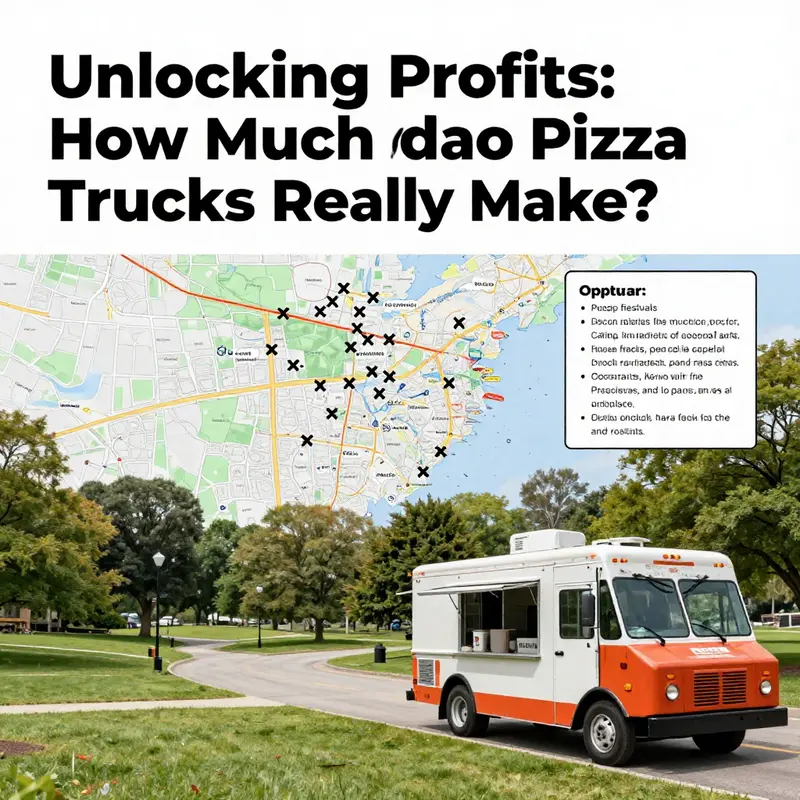
When people ask how much a pizza truck makes, they’re really asking how much money can flow through a moving kitchen that lives at the mercy of calendars, crowds, and city ordinances. The quick, headline-grabbing number is tempting to latch onto, but the real story behind earnings is a tapestry of moving parts. In practice, a pizza truck’s revenue and profitability hinge on where it operates, which events it lands, how well it manages costs, and how deftly it leverages speed, menu variety, and guest experience. Industry data suggests that, for a well-managed operation with solid demand, monthly profits can climb into the upper range of tens of thousands of dollars. A widely cited benchmark places typical monthly profit around the vicinity of thirty thousand dollars, a figure that reflects disciplined cost control, steady customer flow, and a menu engineered for speed and value. The path to that level of profitability isn’t a straight line, though. It unfurls through a sequence of decisions about location, timing, and the kinds of events the truck pursues, all while maintaining the nimble, low-overhead profile that makes a food truck viable in the first place. In sum, location and events are not just factors; they are the primary levers that shape earnings in the pizza truck segment.
The first of these levers is location suitability. A pizza truck thrives where foot traffic is predictable and dense, where office workers crave a quick, satisfying lunch, and where evenings and weekends draw evenings and crowds to venues that make food-on-the-go a natural choice. In urban cores, proximity to business districts during lunch hours creates a steady rhythm of orders as people search for something both fast and flavorful. In entertainment districts, near theaters, stadiums, or transit hubs, the same logic applies—crowds arrive with time-sensitive needs, seeking a hot pie and a short wait. The benefit of location isn’t merely proximity; it’s visibility and accessibility. A truck parked in a high-traffic corridor becomes a destination, not just a break in the day. It’s also about strategic placement in relation to cultural infrastructure that funnels potential customers toward street-level dining, whether that means a weekly street market, a weekend festival, or a city-led food event.
This emphasis on location performance dovetails with how events shape daily and weekly revenue. Events concentrate demand in a way that trading locations never can. A music festival, a corporate retreat, or a wedding can turn a single truck into a portable concession stand for hundreds or thousands of attendees. When a truck locks onto an event with high turnout, the math of earnings changes: shorter service times, larger queues, and higher ticket prices for premium pies or add-ons can push daily revenue well beyond ordinary lunch volumes. Conversely, a market or fair with lower attendance or a rush-hours lull can compress earnings, even if the truck is parked in a seemingly ideal spot. The role of events is thus twofold: they magnify demand but also introduce heightened expectations for speed, accuracy, and menu flexibility. The most successful operators treat events as opportunities to optimize throughput—think of a kitchen that can push out a pie every minute or less, a pace achievable with a well-tuned workflow and high-velocity ovens.
A practical corollary of this event-driven model is the ability to upsell through menu design. A flexible pizza lineup invites guests to upgrade by adding toppings, experimenting with different crusts, or pairing slices with quick side offerings like beverages or desserts. A well-curated menu balances variety with speed; too many choices can slow service, while a lean, smartly priced set keeps the line moving and wallets opening. The operational art lies in designing pizzas that cook rapidly, maintain consistent quality, and entice guests to opt for value-enhanced combinations. The wood-fired oven, with its characteristic 60–90 second cook time, is often cited as a core enabler of high throughput. The rapid cook time translates into lower per-order labor costs and higher table turnover, both of which bolster daily revenue. Of course, faster cooking demands disciplined assembly lines, precise toppings, and clean, well-organized workspaces. When a truck achieves this harmony, it can meet demand without sacrificing quality, turning busy events and peak lunch periods into reliable streams of income rather than occasional bursts.
Beyond the location and event mix, the regulatory environment—permits, space access, and health compliance—substantially colors profitability. Government processes that streamline public-space access and permit issuance can expand opportunities for trucks to operate in a broader array of venues, from farmers’ markets to festival grounds to permitted public squares. Conversely, a restrictive regulatory climate or inconsistent permit costs can cap a truck’s calendar, forcing more constrained scheduling and therefore fewer revenue-generating opportunities. In practice, profitability benefits when operators view permits and compliance as engines of growth rather than obstacles. This is not to minimize the real costs and diligence required to stay compliant; rather, it’s to acknowledge that accessible spaces paired with predictable rules reduce downtime and keep the calendar full. When a truck can rely on a steady stream of permitted events, the variability in daily earnings decreases, and the business becomes more scalable.
The research landscape offers a structured lens on these dynamics. A peer-reviewed study from MDPI highlights how location, event type, and supportive external systems interact to influence food truck performance. The study underscores that proximity to cultural infrastructure and the ability to secure high-footfall settings are among the strongest predictors of sales success, while the type and scale of events act as multipliers for daily revenue. It also points to the way regulatory ecosystems and public-private support networks enable or constrain operation. Taken together, these findings reinforce the intuitive picture: earnings rise where demand concentrates, events deliver crowd density, and the administrative environment remains navigable rather than prohibitive. For readers who want to explore these ideas in a data-driven frame, the MDPI study offers a rigorous complement to anecdotal and industry-specific observations.
If you’re building a mental model of earnings, think of location and events as a two-axis framework. On one axis sits the security and volume of daily demand, shaped by where the truck is and how often it can operate in the best hours. On the other axis sits the intensity and duration of demand, shaped by events and special occasions. A truck positioned near a business district might capture a high-volume lunch window on weekdays but still miss out on weekend festival crowds. A truck that pivots toward events can harvest larger sums on peak days but may face more intense competition for coveted slots and longer planning cycles. The winning operators blend both axes, keeping a core, steady presence in a high-traffic zone while preserving a nimble, opportunistic event calendar that fills slow periods and turns crowded days into exceptional ones.
To anchor these ideas in practical terms, consider the daily rhythm of a typical week. Weekdays at lunch might deliver a reliable baseline, with a steady stream of orders as office workers queue for a quick pie. Evenings, depending on the district, may present a different rhythm—some nights bring a brisk rush when venues host after-work gatherings, while others are quieter when people head home after a long day. Weekends often transform the calendar into a festival of opportunities: markets, stadium events, neighborhood block parties, and street fairs all become potential revenue engines. In this cadence, the operator’s success hinges on balance—maintaining consistent throughput for predictable days while cultivating a calendar that unlocks premium pricing and higher order densities at events.
The financial logic behind these dynamics rests on the interplay between revenue and cost management. Revenue is amplified by speed, volume, and the willingness of guests to pay for convenience and novelty. Costs, meanwhile, are driven by ingredients, fuel, maintenance, labor, insurance, and permit fees. A typical pizza truck begins with a foundation that favors high marginal contribution: a lean supply chain, scalable menu options, and a service model that minimizes idle time. When these elements align with a favorable location and an attractive event mix, the math collapses toward healthy profit margins. It is this alignment, rather than a single, magical location or a single peak-event moment, that defines earnings. In practice, operators who cultivate a diverse calendar—steady day-to-day windows and a carefully curated slate of high-impact events—tend to achieve steadier profits and reduced seasonal risk.
To connect these ideas with the broader literature, one can examine how external support and regulatory clarity shape outcomes. The literature on food trucks consistently points to the importance of a stable operating environment, where predictable access to venues and straightforward permitting processes convert potential downtime into revenue. This is not just academic; it translates into practical planning guidelines. Owners who map out a six- to twelve-month event calendar, secure preferred spots at high-traffic venues, and maintain strong relationships with event organizers consistently outpace peers who chase ad-hoc opportunities. The earnings story, then, rests on the ability to translate the volatility of streets and events into a structured, reliable revenue stream.
There is also a strategic dimension that often gets overlooked in simple income calculations: the value of branding and guest experience. A well-marketed truck with a memorable name, consistent branding, and a friendly, efficient team can turn first-time customers into repeat patrons and ambassadors who drive word-of-mouth referrals at future events. The intangible returns of a loyal customer base—repeat business, social media buzz, and favorable reviews—contribute to higher average ticket prices and improved conversion rates over time. In practice, even modest improvements in guest experience can produce outsized gains in revenue when multiplied across a busy event schedule and a steady stream of daily customers. These gains compound as the calendar fills with reliable bookings and as the owner fine-tunes the balance between speed, quality, and menu appeal.
From a practical standpoint, achieving the earnings benchmark involves a combination of street-savvy placement, a robust event pipeline, and disciplined operations. The owner must cultivate a network of recurring event opportunities while maintaining the agility to seize last-minute gigs when possible. Price discipline matters as well; a carefully structured pricing strategy that reflects local demand, the value offered by speed and convenience, and the occasional premium option can lift average ticket size without deterring demand. Efficient procurement and inventory management are essential to preserving margins, especially when dealing with perishables and fluctuating food costs. A lean back-end, with reliable suppliers, predictable delivery windows, and minimal waste, helps convert the revenue potential of a crowded calendar into consistently strong profitability.
In short, earnings for pizza trucks are not solely about where the truck parks or which festival pays the best. They are the outcome of a holistic strategy that aligns location selection, event pursuit, regulatory navigation, menu design, service speed, and guest experience into a coherent operating model. The strongest performers treat each shift as a mini-business within a business, calibrating every element to maximize throughput, minimize downtime, and protect margins. When a truck blends a strategic location with a rich, well-managed event calendar and a disciplined cost structure, the result is not just higher daily revenue but a more resilient, scalable enterprise.
For readers who want a compact takeaway: prioritize locations that deliver consistent foot traffic and easy access to lunch and after-work crowds; pursue a mix of high-impact events and steady, smaller gigs to smooth revenue; streamline permits and spaces so downtime declines; design a lean yet appealing menu that supports rapid service; and layer in a strong guest experience and branding to turn customers into repeat visitors and advocates. The profit equation for pizza trucks, after all, is less about chasing a single golden venue and more about orchestrating a reliable rhythm of plates turning, hands moving, and guests leaving satisfied across a calendar that balances everyday demand with the energy of peak events. When this rhythm comes together, the earnings picture becomes not a scatter of anecdotes but a coherent pattern that aligns with the broader research showing how location, events, and supportive ecosystems shape outcomes in the pizza truck space.
Internal resource note: for readers seeking a quick, broader snapshot of profitability across contexts, the online piece titled Pizza food trucks profitable provides a concise synthesis of how these factors converge in real-world operations. It offers practical takeaways for operators aiming to optimize location strategy, event bookings, and menu design without sacrificing quality or speed. Pizza food trucks profitable.
External reference: for a data-driven, peer-reviewed perspective on the factors discussed above, see the MDPI study Exploring key factors influencing food truck success. This resource analyzes real-world performance data and highlights the pivotal roles of location, event type, and external support. https://www.mdpi.com/2076-3478/12/5/1026
Dough on Wheels: Startup Costs, Profit Margins, and the Real Math Behind Pizza Truck Revenue
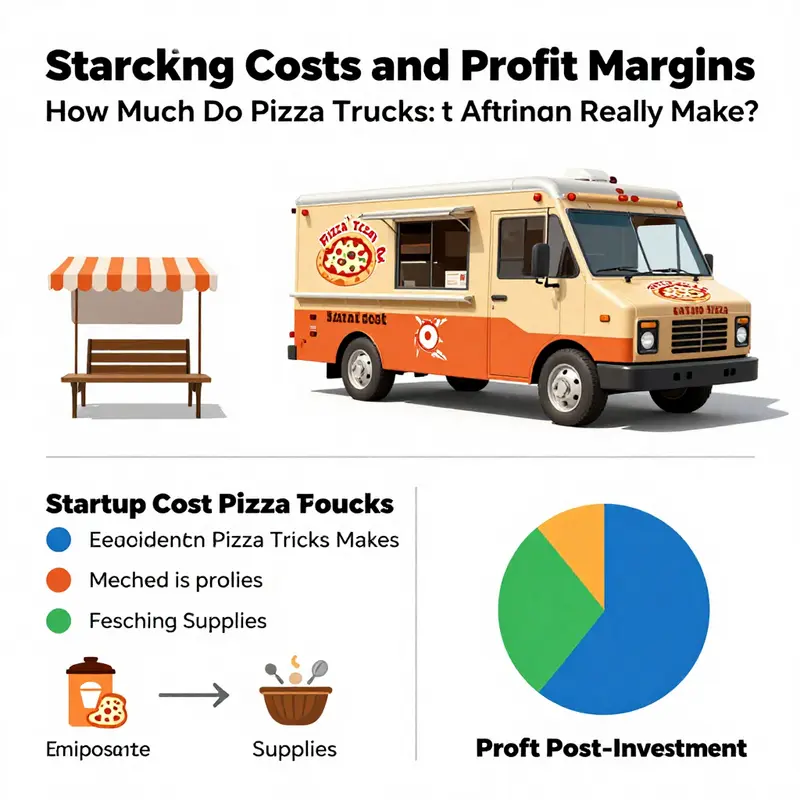
The question of how much a pizza truck makes is less about a single recipe and more about a carefully balanced business model. Buyers are drawn to the glamour of a mobile kitchen, but the reality rests on startup costs, ongoing operating expenses, and revenue streams that match demand across locations and events. When you stack these elements, a few core figures emerge: gross monthly revenues and net profits after ingredient costs, labor, fuel, and maintenance. Industry analyses often cite monthly gross revenues in a broad band, with net margins commonly landing between twenty and thirty-five percent. Those percentages translate into real cash in a bustling operation, though the exact dollars shift with weather, season, and local activity. Some sources also highlight the potential for higher earnings in robust markets, where high-volume events can push net income toward the upper end of the spectrum. Taken together, these perspectives show a range rather than a fixed destiny, especially when strong management turns revenue into take-home pay. This chapter weaves the numbers into a narrative about startup costs, operational discipline, and the real margins that determine whether a pizza truck is a comfortable side business or a scalable income source.
Startup costs form the hinge of the operation. The vehicle ranges from a basic mobile kitchen to a purpose-built unit designed for higher throughput. At the economical end, a basic mobile pizza truck can start around two thousand five hundred dollars, while higher-end units for more ambitious throughputs can climb to four thousand three hundred dollars per unit. Those figures may seem modest next to a brick-and-mortar restaurant, but they enable the rest of the story: a truck’s essential onboard equipment enables reliable service in a compact space. When the oven roars and orders flow in, the work feels effortless because the equipment is dependable.
Beyond the truck, there are recurring startup costs that must be anticipated before the first customers arrive: permits and licensing, insurance, branding, inventory and ingredients, and fuel. Each of these elements adds to the initial investment but paves the way for repeatable service in venues and neighborhoods. Fuel becomes an ongoing operating cost that fluctuates with distance and schedule. These costs, layered on top of the vehicle price, collectively establish the financial guardrails for the business.
Revenue potential hinges on where, when, and how aggressively a truck competes for customers. Location is a primary driver of demand. Urban cores, nightlife districts, business districts at lunch, and festival grounds all boost daily sales. A typical day might generate eight hundred to fifteen hundred dollars in sales, translating to gross monthly revenues in the twenty-four thousand to forty-five thousand range. Strong management, consistent quality, and a menu that resonates with the audience can help a smaller operation stay within this band, while high-volume markets can push toward the higher end.
Net margins tend to run from twenty to thirty-five percent, acknowledging costs like ingredients, labor, fuel, maintenance, and depreciation. For a truck with a steady monthly gross near thirty thousand dollars and ingredient costs around twenty-five to thirty-five percent of revenue, the remaining share covers labor, fuel, insurance, and ongoing maintenance. In practical terms, monthly net income commonly falls in the six- to fifteen-thousand-dollar range, though this is not a universal ceiling. More ambitious operators can push higher, but the safer path for many owners is steady volume, waste control, and cost discipline.
To illustrate throughput, consider ovens that finish pies quickly to unlock higher orders per hour. A well-designed menu supports upselling with toppings, premium crusts, or drinks. The goal is to balance speed and value so throughputs translate into consistent profits rather than occasional spikes. The economic story also hinges on disciplined cost management: keeping ingredient costs in a predictable range relative to revenue, while managing labor, fuel, and maintenance efficiently. The outcome is a repeatable financial path where a pizza truck can add meaningful revenue to a culinary portfolio.
For readers seeking broader context, the literature on wood-fired pizza trucks offers benchmarks for pricing, equipment, maintenance, and long-term profitability. When ready to dive deeper into pricing parity, equipment specs, and maximizing output without compromising safety and quality, this guide provides a practical companion to the numbers discussed here. In the end, the question of how much pizza trucks make becomes a reflection of how well a business is designed to serve customers, optimize throughput, and sustain profitability over time.
External resource for further reading: https://www.graceholden.com/wood-fired-pizza-truck-sale-guide
Mobile Menus, Maximum Revenue: The Profit Power of Menu Flexibility for Pizza Trucks
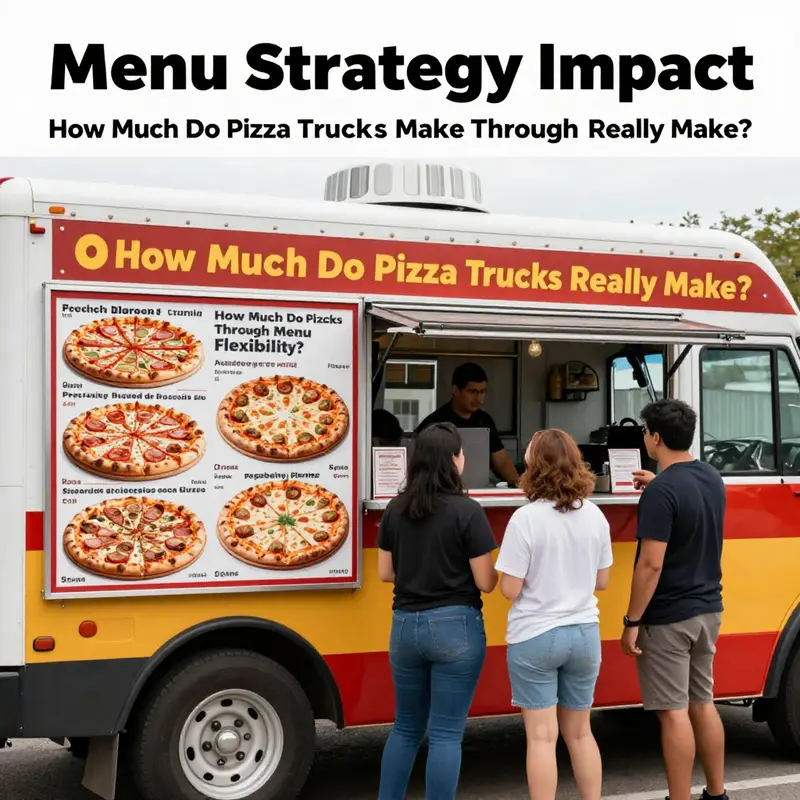
When a pizza truck rolls into a festival, a street fair, or a corporate campus, the first impression is not just about the crust or the cheese. It is about what the unit can offer and how fast it can adapt to the shifting tastes of a crowded, time-bound audience. Menu flexibility—defined as the ability to switch between offerings with minimal downtime, to reallocate space, and to deploy modular equipment in response to demand—emerges as a decisive driver of revenue in the mobile food economy. This chapter follows the thread of how variety, reconfigurability, and smart sequencing of product lines translate into measurable profitability for pizza trucks, weaving together the practical mechanics of operation with the larger economics of mobile food service.
The core premise is straightforward: in a highly mobile, event-driven environment, demand is not static. A lunch crowd may crave a premium pizza with a creative topping, while a bustling afternoon can tolerate a quick, cold complement such as coffee or ice cream, and an evening rush might lean toward heartier options like hot dogs or snacks that pair well with a beverage. A single truck that can morph its menu across these moments—without sacrificing speed or quality—transforms a single time slot into multiple potential revenue opportunities. This is where the value of a flexible menu becomes tangible. The differences between a rigid, one-off menu and a dynamic, adaptable one are not just about variety; they are about throughput, consistency, and the ability to maintain service during peak demand without a steep increase in labor or downtime.
A critical point from industry analyses is that mobile units with modular interiors deliver far greater menu versatility than traditional fixed carts. In particular, configurations designed to accommodate pizza service alongside other offerings enable operators to service more customers per day than a single, fixed product could sustain. The practical upshot is a higher daily throughput: a well-configured truck can serve hundreds of customers in a single event or across multiple events within a week, while maintaining product quality and speed of service. The numbers speak to the potential: when a truck operates under a 12-hour window and leverages a modular interior, operators can support 200+ customers daily, a level of output that would be challenging for a non-modular cart operating in the same footprint. These figures are cited in modular-mobile-truck discussions and echoed in analyses of mobile food commerce.
Within this framework, pizza trucks excel by capitalizing on multiple, complementary revenue streams. The most intuitive path is to maintain a pizza-centric core—consistently offering a range of standard pizzas, including vegetarians and meat lovers—while simultaneously deploying secondary lines that complement the core during complementary time periods. The shift might be from artisan pizza during a lunch rush to a coffee-and-dessert pairing in the afternoon, and then to a hot-dog or snack-menu focus as the evening crowd swells. This kind of cross-portfolio scheduling turns the same kitchen and serving space into a multi-period, multi-product operation. The benefits are twofold: first, the truck captures more of the customer’s day, increasing average ticket size as customers move through different offerings; second, the operator at the wheel gains resilience against demand volatility. If one segment underperforms on a given day, others can compensate, smoothing revenue across events and seasons.
The structural advantage of versatility is underscored by the logistics of throughput. Modern mobile units emphasize rapid heat-up and service times, often leveraging electric ovens or efficient gas-fired equivalents capable of producing pizzas in short cycles. When combined with a modular design—the ability to reallocate space for pastry items, coffee equipment, ice-cream machinery, or hot-dog warmers—these trucks become high-velocity, multi-product platforms. In the context of a festival or a farmers market, this translates into a smoother flow of customers from order to pickup and a more predictable average dwell time for patrons. Faster service keeps lines moving and increases the number of tickets that can be written in a given hour, which is a direct contributor to daily revenue.
An often-overlooked facet of menu flexibility is its impact on labor efficiency. A flexible menu can reduce idle labor time by aligning preparation tasks with real-time demand. When the operation is designed so that the same staff can transition between pizza assembly, beverage preparation, and dessert service without major reconfiguration, the crew’s output becomes more stable. This reduces the need for additional hands during peak periods and lowers per-unit labor costs. The result is a leaner cost structure that supports higher gross margins on incremental revenue generated by menu flexibility rather than by a single product line alone. The synergy between speed, throughput, and multi-offering capability creates a virtuous cycle: the more efficiently the truck can switch gears, the more customers it can serve in a finite event window, and the more revenue can be captured before demand wanes.
A practical picture emerges when we zoom in on the daily rhythm of events. A well-chosen mix of offerings can be calibrated to match predictable traffic patterns at different times of day and across event types. At lunchtime, a premium pizza service can anchor the operation, leveraging a short cooking cycle to keep lines moving and orders fulfilled rapidly. In the afternoon, the same unit can pivot to ice cream, coffee, or beverage refreshment, aligning with a market of indulgent, quick-service desires. As evening approaches and crowds gather for concerts or street-food celebrations, the menu can shift again toward items with broad appeal and high impulse purchase value, such as hot dogs or snack combinations that complement drinks. Each pivot is facilitated by modular equipment, which means the truck is not constrained by a single line of cookery or a single kitchen configuration. Instead, it becomes a mobile, multi-product precedented platform that can be retooled on the fly to suit the moment’s demand curve.
This approach does more than simply widen a menu; it expands the customer base and increases the likelihood of repeat purchases within a single outing. Festivals, markets, and outdoor gatherings tend to attract attendees with varying tastes, budgets, and appetites for novelty. A pizza truck that can offer a classic slice, a vegetarian specialty, a dessert option, and a warm beverage across a single event can reach a larger share of the audience and keep them engaged longer. The incremental revenue obtainable from cross-selling across time slots can be substantial. A lunch buyer who decides on a pizza might later opt for an ice cream or a coffee during the same day, effectively stacking revenue within a single customer path. Similarly, a family that starts with pizza may add hot dogs or snack foods for other members, increasing the average transaction value. The math of this is not merely theoretical; it emerges in the operational realities of high-traffic events where queues are long, but service times remain brisk thanks to streamlined workflows.
The numbers behind modular, flexible menus are supported by industry observations and vendor-style benchmarks. A modular mobile food truck with integrated interior configurations is described as offering three times more menu flexibility than fixed carts, enabling operators to service 200+ customers daily with 12 hours of continuous operation. While these figures represent a specific technology-enabled scenario, the underlying logic translates broadly: flexibility multiplies throughput, which multiplies revenue opportunities. This is not about turning away from pizza in favor of random add-ons; it is about orchestrating a coherent, time-sensitive lineup that aligns with customer flows and event schedules. When a truck can reorganize its operations to serve pizza during the peak lunch window, switch to dessert and coffee during the afternoon lull, and reintroduce warm savory items for the evening crowd, it effectively creates a multi-scene performance on wheels. Each scene demands a slightly different operational tempo, inventory mix, and labor alignment, but the shared backbone is the same: a well-planned, flexible menu that can be realized through modular design and careful workflow planning.
From a financial perspective, the incremental revenue generated by menu flexibility comes not only from higher ticket counts but also from better price realization. A flexible menu often allows for strategic upselling. For example, adding premium toppings, regional or seasonal pies, and pairings with beverages can elevate the average order value. A single-vehicle operation can push multiple revenue lines through the same service window without requiring proportional increases in labor or space. The ability to upsell is particularly potent when the operator can curate a menu that suggests complementary items at the point of sale, rather than forcing the customer to choose from a single-issue lineup. The same unit that sells a slice of pizza can switch to an all-day coffee service in the afternoon and reintroduce pastry or gelato in the evening, each transition expanding the potential revenue per customer and per hour.
The regulatory and safety dimensions of a flexible unit are not ancillary; they are foundational to sustaining long-term profitability. Flexible, modular trucks must comply with food safety standards, electrical and gas certifications, and materials that withstand the rigors of mobile service. In the contemporary market, suppliers emphasize corrosion-resistant stainless steel bodies, and modern units may carry certifications that facilitate cross-border operation in regulated markets. These compliance features support long-term scalability by reducing the risk of downtime due to maintenance or regulatory constraints. They also enable operators to participate confidently in a wide array of events, from local farmers markets to international festivals, without retracing steps to retrofit the truck for compliance between venues. While compliance adds a cost layer, it is an investment in reliability that pays off in the form of more consistent daily revenues and greater geographic reach.
The strategic implication for aspiring operators is clear: design for flexibility from the outset. Invest in modular interiors, versatile heating and cooling solutions, and a workflow that minimizes changeover times. Build a menu framework that allows easy substitution of items based on demand forecasts, seasonality, and event type. Train staff to operate across multiple stations with standardized procedures so that transitions are seamless rather than disruptive. By thinking in terms of multi-scenario service rather than single-scenario production, operators lay the groundwork for durable profitability that can withstand variability in foot traffic, weather, and competition.
Of course, a flexible menu does not exist in isolation. It must be integrated with pricing strategies, supplier relationships, and inventory management that reflect the realities of a mobile business. Inventory planning for a multi-offering truck requires careful balance: enough variety to attract diverse customers, but not so much that waste becomes unsustainable. The use of lean inventory practices and just-in-time ordering helps keep capital tied up in productive assets rather than stockpiled ingredients that may spoil. In event settings, forecasting becomes both art and science: you estimate how many meals you might sell for each category and adjust on the fly based on observed demand patterns. The best operators treat forecasts as living documents, revising them hour by hour as lines form, weather shifts, or new groups arrive on the scene.
The end result of these combined factors is a more resilient, higher-performing operation. Menu flexibility translates into higher potential daily revenues by expanding the number of moments in a day when the truck can capitalize on impulse purchases, cross-sell opportunities, and customer loyalty. It makes the truck more than a single-purpose kitchen on wheels; it becomes a mobile revenue engine that can tailor its output to the pulse of the crowd. This is particularly valuable in markets where competition is intense and consumer preferences are diverse. In such contexts, a rigid menu risks turning away potential customers who arrive with a specific craving or constraint, while a flexible menu meets them where they are, offering a satisfying alternative that fits their momentary needs.
For readers who want to explore the operational and strategic specifics further, there is a detailed discussion available that analyzes the degree of menu flexibility afforded by modular mobile food trucks, including a concrete comparison to fixed carts and the implications for daily throughput and annual revenue. You can read more about this topic in the article on Pizza Food Trucks Profitable, which delves into profitability considerations tied to menu strategy and service models.
External reference: WECARE Custom Mobile Food Truck configurations illustrate how modular interiors enable high-volume service with multi-line capability and compliance features that support sustained growth across markets. For a deeper dive into the technical and regulatory dimensions of these systems, see: WECARE Custom Mobile Food Truck on Alibaba.
Internal link reference: For readers exploring practical, field-tested profitability tied to menu decision-making, the article on Pizza Food Trucks Profitable offers relevant insights and real-world considerations you can apply to your own planning. See: Pizza Food Trucks Profitable.
In sum, menu flexibility is a potent lever for pizza-truck profitability because it reframes the operation as a mobile, multi-offering platform rather than a single-product kiosk. The payoff is not just more meals sold; it is a more stable revenue stream, higher average ticket value, and a business model that can adapt to the rhythms of varied events and changing consumer tastes. In the chapters that follow, we will circle back to the broader cost structure and capital requirements, offering a holistic view of how flexibility, throughput, and price discipline come together to shape the bottom line of pizza truck ventures.
Final thoughts
Understanding how much pizza trucks make is critical for any business owner considering venturing into this dynamic market. A combination of strategic location choices, innovative event participation, a solid grasp of initial investment costs, and a flexible menu can lead to substantial monthly profits. By recognizing and adapting to the market’s demands, pizza truck operators can maximize their earnings effectively. Whether you’re already in this industry or contemplating a new pizza truck venture, mindful adjustments based on these insights can set the stage for financial success.