
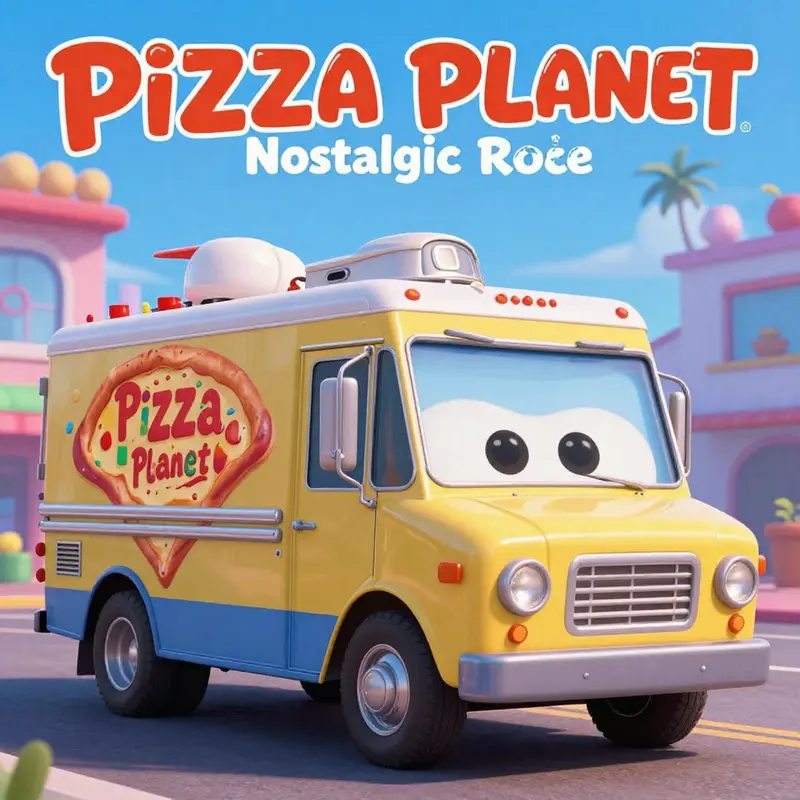
The Pizza Planet truck has long been a beloved hallmark of Pixar’s animated films, serving as a hidden gem that delights audiences with its appearances. In Onward (2020), this iconic truck makes a nostalgic cameo that further embeds it into the hearts of Pixar fans. This article delves into the details of its appearance in Onward, examines its role as an Easter egg within Pixar’s filmography, analyzes the significance of its presence, and discusses the enthusiastic fan reactions it has garnered. Through these chapters, we aim to uncover how this simple nod to long-standing tradition continues to resonate with audiences and what it means for both fans and business owners who recognize the significance of brand loyalty and recognition.
From Toy Story to Onward: The Pizza Planet Truck as a Nostalgic Thread in Pixar’s Shared Universe
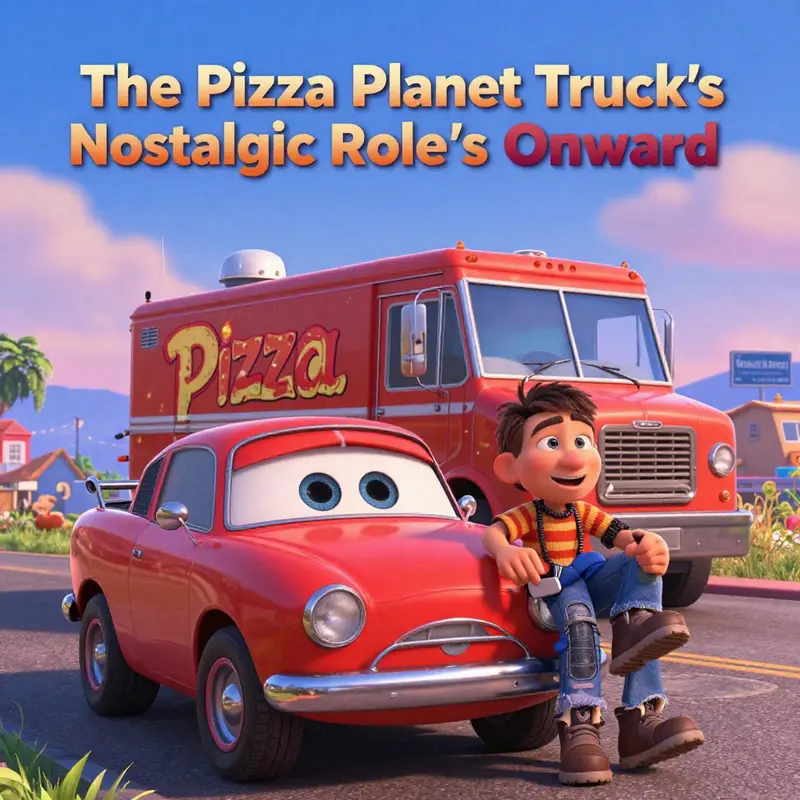
Across the arc of Pixar’s storytelling, certain motifs travel not as clumsy Easter eggs but as quiet motifs, seeding continuity and memory into new adventures. The cameo of the Pizza Planet truck in Onward does exactly that. It arrives not as a loud wink, but as a familiar outline that readers can recognize while watching a fresh fantasy unfold. The moment is brief, almost incidental—a scene where Barley and Ian roll through a sun-washed countryside and a toll booth frames a red and yellow silhouette in the background. Yet that silhouette is loaded with decades of emotional resonance. The truck, redesigned in Onward with its characteristic blue rocket on top and the Pizza Planet emblem glinting under the sun, is more than a prop. It is a deliberately placed breadcrumb along Pixar’s path, inviting viewers to trace the studio’s long lineage from Toy Story to present-day adventures. In that sense, Onward participates in a larger project of memory-building, one that invites audiences to recall the first time they saw the yellow cab-like vehicle hauling itself through a realm of talking toys and later a world of magic and modern suburbia. The truck’s color, the geometry of its compact body, and the iconic emblem become a shared shorthand for memory itself, a single frame capable of summoning a tidal wave of nostalgia without hijacking the scene’s forward momentum.
What makes the cameo resonate so deeply is not just the visual cue but the context in which it appears. Onward is a film rooted in family, loss, and the stubborn, sometimes painful, persistence of memory. Ian and Barley’s quest begins with what they cannot reclaim—a father who vanished before they could truly know him. The narrative freight of grief sits beside the living, bustling world of their countryside drive. In this space, the Pizza Planet truck becomes a symbolic anchor. It signals that the world of Pixar is not a static museum of past glories but a living, breathing universe that remembers its origins even as it moves forward. The designer’s decision to place the truck outside a suburban diner at the opening establishes a deliberate dialogue between comfort and change. Diners, highways, and toll booths evoke a universal language of road trips and family plans. The mere presence of the Truck—bright, brisk, almost comic in its crisp silhouette—softens a moment that could otherwise tilt toward melancholy. It makes room for a shared chuckle, a breath of recognition in the middle of an emotional journey.
In that quiet recognition lies an essential part of Pixar’s storytelling ethic: continuity not as a heavy-handed cross-reference, but as a thread that weaves different films into a single, coherent tapestry. The Pizza Planet truck has become a cultural touchstone, a symbol that transcends individual titles. Its repeated appearances across the studio’s oeuvre—each version of the truck carrying its own version of nostalgia—signal a conscious strategy to bind audiences across time. When viewers glimpse that familiar logo, they are invited to engage in a conversation with the studio’s history, to measure how far these films have traveled from the sunlit rooms of a child’s imagination to the more complex, often bittersweet terrain of adulthood. Onward’s economic use of memory—where every scene can evoke a memory not just of a character but of a time in the viewer’s life—finds a fitting mentor in the Pizza Planet motif. The truck’s presence offers a harmless but meaningful reminder that the past is not a closed chapter but a living archive that can inform present choices, even as new adventures unfold.
For many fans, that sense of shared history becomes a vital part of why the cameo feels earned rather than merely decorative. The social media conversations surrounding Onward frequently orbit around these small, almost incidental details that nevertheless feel weighty. TikTok clips and discussion threads tease out what the truck means for different viewers: a reminder of the first Toy Story adventures, a nod to the studio’s promise that films are connected in ways that reward careful viewers, and a subtle message that even magical quests are possible only because of the memories we bring with us. The emotional texture this creates—where a modern fantasy acknowledges its own origins—resonates with the film’s broader themes. Onward explores how memory can heal or haunt, how the past can become a source of courage rather than a weight. The Pizza Planet truck, in its gleaming simplicity, becomes a lens through which audiences can examine their own attachments to memory. It is a reminder that a single, well-placed symbol can help an audience feel at home inside a story whose setting, characters, and stakes are constantly shifting.
This alignment of symbol and theme is not accidental. Pixar’s world-building thrives on the idea that intangible qualities—nostalgia, wonder, curiosity—can be conveyed through tangible, almost mundane objects. The Pizza Planet truck is, in many ways, a minimalist emblem. Its bright yellow and red palette makes it unmistakable, but its compact form invites a closer look into what it represents: a mobility of memory, a portable piece of a shared childhood that travels with us into new chapters. When Barley and Ian encounter the world outside that diner, the truck’s silhouette seems to hover, almost as if it is a memory stepping into the present to remind the brothers of a different time when adventures felt simpler, when the road ahead was a broad and open promise. The presence of a rocket on the roof—an emblem of velocity, a longing for escape—hourly shifts the conversation from purely practical to profoundly symbolic. The rocket, a sign of movement and possibility, becomes a quiet counterpoint to the brothers’ own journey, which is not just about reaching a destination but about decoding and integrating a past that has shaped who they are.
The cameo also opens a window onto how Pixar engineers its cross-film dialogue. The studio has over decades cultivated a shared cinematic language, one where objects and motifs recur with an evolving meaning. The Pizza Planet truck embodies that language. Its appearances function like a recurring chorus, a reminder that the Pixar universe is not an isolated constellation of stories but a living constellation where familiar shapes appear in new configurations. In Onward, the truck’s appearance is not a mere callback; it’s a deliberate recontextualization. Viewers are asked to bring their own memories to the screen as a way of infusing the new narrative with extra texture. That texture is what makes Onward compatible with the very long arc of Pixar’s filmography. It is a signpost that signals to the audience, “You know this symbol; you know where this road leads.” And while the literal plot of Onward will carry us toward Barley and Ian’s resolution, the truck hints at a more expansive path—one where Pixar remains committed to celebrating its past as a source of future invention.
The conversation around the cameo is as much about communal memory as it is about individual experience. Fans across generations recognize the truck, and the recognition itself becomes a form of shared language. In a digital era where fans gather in comment threads, fan art, and short-form video, the presence of the truck becomes a point of convergence. Discussions often circle back to the sense that Pixar’s nostalgia is not a retreat into childhood but a strategic vehicle for deeper engagement with the studio’s evolving storytelling. The persona of the Pizza Planet truck—friendly, adventurous, a little clandestine—embodies a kind of cinematic hospitality. It invites viewers to linger, to notice, and to reminisce, all while remaining fully engaged with the new adventure unfolding on screen. The effect is subtle yet potent: a bridge that carries the sweetness of the past into the present so viewers can savor both at once. It is a quiet triumph of design, storytelling, and fan culture alike.
As this chapter moves toward its close, it is important to return to how the cameo shapes not only this film but the broader discussion of Pixar’s storytelling universe. Onward uses memory not as a burdensome weight but as a source of resilience and imaginative possibility. The Pizza Planet truck serves as a mnemonic vehicle within that framework, a compact, bright, highly legible sign that memory can be a companion on any journey. This is the essence of Pixar’s shared universe approach: not a rigid continuity system but a porous network where familiar shapes and symbols drift through films, inviting audiences to detect patterns, draw connections, and feel the sense that they are part of something larger than any single story. The truck’s cameo is a testament to the studio’s belief in the power of small details to carry big meaning. If viewers learn to notice the tiny reappearances—a logo here, a color there—they gain access to a richer, more immersive experience. In Onward, the nostalgic texture provided by the Pizza Planet truck helps to illuminate the characters’ interior landscapes—their loyalties, their fears, their stubborn hope. It reminds us that memory is not simply a record of the past; it is a living force that can propel a family forward, even when the road ahead is uncertain.
For those who might want to explore further how this familiar emblem appears across different films, the idea that a single prop travels across decades and titles continues to fuel conversation among fans and scholars alike. There is a lineage here that deserves attention, a sense that a small object can serve as a kind of cultural conduit, linking era-old cinema with contemporary storytelling. In this sense, the Pizza Planet truck in Onward is less a cameo and more a covenant: a promise that Pixar will keep returning to its roots, inviting audiences to keep growing with it, to keep discovering how memory and invention can dance together on the same screen. The more we watch, the more we notice how this quiet narrative device sustains a sense of continuity without constraining the film’s own forward momentum. It is a reminder that the past, when treated with care, becomes a source of creative energy rather than a tether. And it is a reminder that in Pixar’s universe, the road is long, the horizon broad, and every familiar shape—a yellow truck with a blue rocket on top—can be a compass, pointing toward both cherished memories and new and unimagined stories.
To readers who want a concise pointer into the wider discourse, this chapter echoes a sentiment shared by many fans: the Pizza Planet truck is not simply a background prop but a cultural artefact with real affect. Its appearance in Onward adds a layer of emotional texture to a film about brothers learning to navigate a world filled with magic, memory, and the possibility of reconciliation. The truck’s presence, reinforced by online chatter and fan-produced content, underscores how deeply embedded this symbol has become in the fabric of Pixar’s storytelling. In this sense, Onward’s use of the truck is a masterstroke of narrative economy: a single, well-placed emblem that enriches a film’s emotional arc while threading into the broader mythology of a studio that keeps building on its own history. The result is not merely a nod to old fans but an invitation to new audiences to discover how a familiar sign can illuminate a story’s present and future, inviting everyone to walk a little more carefully through a world where memory can be the most powerful engine of imagination.
External resource: https://www.tiktok.com/@disney/video/7123456789012345678
Internal reference for further reading: Pizza Planet Truck in Pixar Movies
Wheels Across Pixar: How the Pizza Planet Truck Bridges Toy Story to Onward

From the moment Toy Story rolled into theaters in 1995, the little yellow delivery van with a blue rocket perched on its roof began its quiet, humorous ascent into Pixar’s shared imagination. The Pizza Planet truck, a rusted, retro-styled commerce vessel with a simple yet iconic logo, has never claimed the spotlight as a protagonist. Instead, it quietly performs as a touchstone—an Easter egg that rewards attentive fans with a wink, a nod, and a reminder that the studio’s worlds belong to a single, evolving universe. In Onward (2020), that wink arrives with a sharper sense of tradition. Barley and Ian’s road trip through the countryside is not just a plot engine for family bonding and magical discovery; it becomes a converging lane in Pixar’s ongoing joke about a delivery van that has traveled farther than most heroes. The scene is modest in its mechanics—an ordinary toll booth, a moment of quiet dialogue, a background vehicle that could be any old delivery truck. Yet its presence matters more than its screen time would suggest. It signals a continuity that invites viewers to rewatch and notice, to puzzle out how different films of the studio talk to one another even when their genres, heroes, and tones seem far apart on the surface. This is Pixar’s quiet genius: a film about mythical quests and everyday road trips can still be threaded through with a familiar prop that binds it to Toy Story and Cars, Inside Out and Finding Dory, Wall-E and Luca, if you know where to look.
The recurring appearance of the Pizza Planet truck rests on a few defining elements. First, there is its design—a simple, bright yellow delivery van with a blue rocket on top. The logo, instantly recognizable, acts as a global brand within Pixar’s own microcosm, a visual shorthand for the studio’s origin story and its early experiments with humor and heart. Then there is the truck’s physical footprint in scenes: it is not always a foreground hero, but it is never merely an empty prop. It dances with the cinematic world around it in Cars, or sits quietly at the entrance to a stadium, or lingers in the background as characters drive past. The truck’s motion, or its stillness, often mirrors the emotional tempo of the film it inhabits. In these moments, the prop transforms from a throwaway gag into a cultural ritual that fans have learned to seek out. It’s a deliberate, almost ritualistic practice that Pixar has cultivated: hide the familiar, reward the attentive viewer, spark conversation across fan forums and social media.
The continuity of the Pizza Planet truck across films is not accidental. It is a deliberate thread in Pixar’s tapestry, a visual joke that gains depth the more a viewer notices it. The truck’s lineage is almost as long as the studio’s catalog. First appearing in Toy Story (1995), the vehicle quickly evolved from a random background fixture to a recurring motif that audiences began to recognize, anticipate, and discuss. Its near-universal presence across Pixar’s feature films—The Incredibles being the notable exception—turns a simple prop into a character of its own. It becomes a reminder that Pixar’s worlds are not separate universes but a single, sprawling narrative ecosystem that rewards careful observation. The subtleties pile up: a vehicle with a history, a voice without lines, a tiny gesture that threads together seemingly disparate stories. The truck’s design, with its retro charm and a rocket that points toward the next adventure, embodies the studio’s love of nostalgia mixed with forward-looking imagination.
Beyond the surface, the truck’s appearances invite a broader reflection on how film franchises cultivate shared language. Pixar’s Easter eggs function like a quiet, communal language among fans. They reward repeated viewings and foster a sense of belonging to a larger conversation about cinema, memory, and meaning. The Pizza Planet truck is a microcosm of that philosophy: a prop that travels through time with the audience, becoming a map of Pixar’s evolving sensibilities. In Onward, the cameo happens at a moment when the film could have chosen to stand alone, unyielding and self-contained in its mythic quest. Instead, the truck arrives as a cultural bookmark, a reminder that the world in which Ian and Barley discover their own story is also the world where Buzz Lightyear, Mater, and Remy once cruised along. The cameo affirms that Onward exists within a larger ecosystem where jokes, visual motifs, and familiar signs can unlock memory and meaning for viewers who have spent years following Pixar’s winding road.
The specifics of Onward’s Pizza Planet moment are telling, even in their simplicity. Barley pulls into a countryside toll plaza, and the camera lingers long enough for the recognizable silhouette of the truck to register in the periphery. It’s not a loud, flashy entrance; it is a quiet, affectionate gesture. The truck’s presence feels earned, not forced—like a friendly nod from an old acquaintance who happens to be passing through the frame at just the right moment. This approach is consistent with how Pixar handles its Easter eggs: never overshadow the scene’s emotional truth, but provide a point of reference that deepens the viewer’s sense of where this story sits in a larger world. The object becomes a window into a longer shared history, and the moment invites fans to recall other scenes where the same prop popped up in surprising places. It’s a form of storytelling that values interconnectedness as a narrative tool, not merely a gimmick.
The cultural ripple effects of such appearances extend well beyond the cinema screen. The Pizza Planet truck’s enduring presence has inspired fan rituals, including tribute builds and fan art that celebrate the prop’s timeless charm. A widely celebrated LEGO Ideas set by fan creator SeñoraBocaLoca, for instance, demonstrates how the prop has been reimagined in real-world fan projects. The set, which aims to replicate the 1995 Toy Story version with features like rotating wheel hubs and a functioning interior pizza-delivery box, crystallizes the idea that a background prop can become a laudable cultural artifact. The truck’s transformation into a collectible object in fan circles is emblematic of Pixar’s larger relationship with its audience: a dialogue where fans contribute to the mythology by reinterpreting, recreating, and personalizing the studio’s symbols. It is not merely about nostalgia; it is about the ongoing life of a universe that fans decode, remix, and celebrate.
In official terms, Pixar itself has recognized the significance of these recurring motifs. The Discovering Pixar project on Pixar’s website curates behind-the-scenes trivia and insights that illuminate the appearances of familiar props, including the Pizza Planet truck, across films. That archive offers a map for curious viewers seeking to understand why certain design choices endure and how they serve the storytelling project as a whole. What begins as a visual gag becomes a storytelling grammar: a way to say, without words, that these films inhabit a shared space, and that the audience is trusted to catch the conversation across a spectrum of stories and genres. The truck’s persistence is a study in continuity as a creative strategy, demonstrating how a studio can retain a signature while still innovating with each narrative turn.
From a critical standpoint, the truck’s omnipresence raises questions about the nature of a cinematic universe. Some viewers embrace the idea of a consistent, interconnected plane where props, locations, and motifs cross freely from one movie to another. Others prize the purity of each film’s self-contained world. Pixar’s answer, as evident in Onward, leans toward the former. The studio doesn’t demand that audiences remember every prior appearance; it invites such memory as a reward for those who care to engage more deeply. When a fan spots the Pizza Planet truck in a late-credits sequence or in a fleeting countryside shot, the moment becomes more than a joke. It becomes a sign of intentional world-building, a reminder that the stories we enjoy are not isolated events but chapters in a longer, shared narrative. The cameo in Onward, modest as it is, sits within that philosophy. It is a quiet chamber of a louder orchestra, a reminder that Pixar’s universe is not confined to the screen but continues to echo through fans’ conversations, memes, and re-creations.
For readers who want to explore the broader conversation about the Pizza Planet truck outside of Onward, a consolidated view of its appearances across films is a valuable entry point. The internal thread that connects Toy Story to Cars, Monsters, Inc. to Luca, and beyond, is not simply a list of cameos. It is a dialogue about memory, discovery, and affection for the craft that makes these films feel perpetual. The truck’s design keeps its footprint small—yet its cultural footprint expands with each new appearance. Its color, its rocket, its logo—all of these serve as anchors that help audiences navigate Pixar’s sprawling panorama while bearing in mind that the studio’s oldest tricks can still yield fresh, meaningful moments when placed in new contexts, like the road trip through Onward’s magical countryside.
As viewers move from the toll plaza in Onward back to the larger arc of Pixar’s filmography, the Pizza Planet truck stands as more than a prop. It is a symbol of a shared cinematic language, a small but persistent beacon that signals, in a single, bright silhouette, the studio’s enduring commitment to storytelling that blends humor with heart. The cameo in Onward isn’t simply about catching a familiar shape or a nostalgic joke; it’s about recognizing how a single prop can thread together a history of experimentation, risk, and affection. It invites audiences to watch not just for the hero’s journey but for the studio’s ongoing conversation with itself: a conversation in which tiny, familiar details keep popping up, inviting new generations to discover old pleasures in unexpected places. For anyone who has waited for Pixar to reference its past while charting new emotional territory, Onward delivers a gentle, satisfying reminder that the road they travel, and the prop they might glimpse along the way, can carry stories that connect across time.
Internal link note: for a more direct look at how the Pizza Planet truck recurs across Pixar films, see the analysis at Pizza Planet truck in Pixar movies.
External resource: Pixar’s Discovering Pixar collection offers background and trivia on these appearances and more, at https://www.pixar.com/discovering-pixar.
The Small Van, a Vast Universe: How the Pizza Planet Truck Bridges Pixar’s Multiverse in Onward
The Small Van, a Vast Universe: How the Pizza Planet Truck Bridges Pixar’s Multiverse in Onward
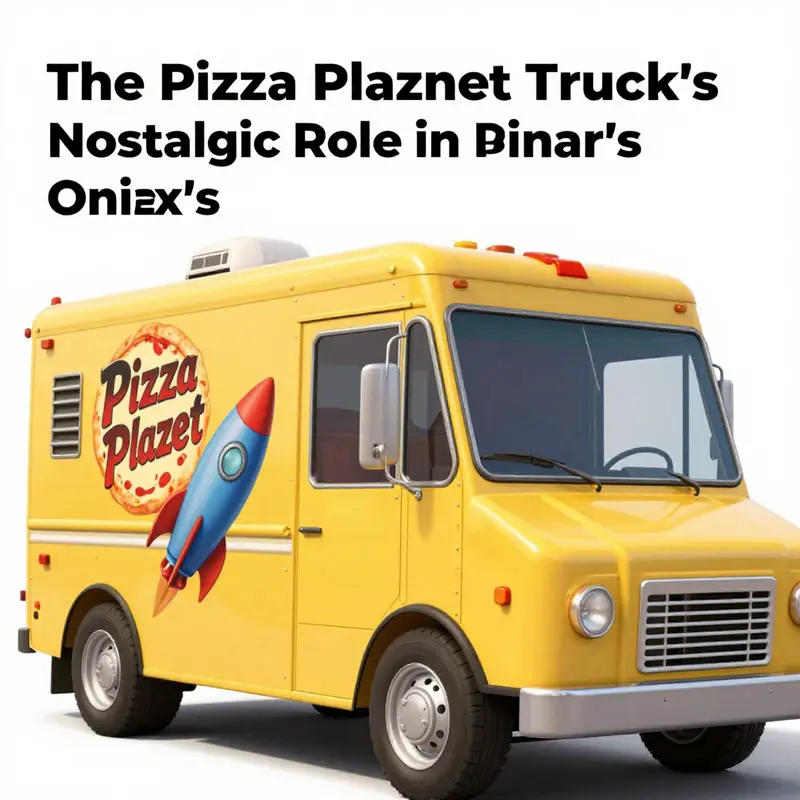
A single splash of yellow, a blue rocket glinting atop a compact delivery van, and the unmistakable roundel of a pizza slice on a red field. The Pizza Planet Truck is not just a prop, not merely a joke; it is a signature, a token, and a quiet invitation to readers of Pixar’s sprawling, interconnected storytelling. When Barley and Ian Lightfoot drive toward a future shadowed by both magic and memory, a familiar silhouette lingers in the background—a reminder that the stories we fall in love with commune with one another across time, genre, and even the laws of reality within a shared cinematic landscape. In Onward (2020), this cameo emerges as more than a nostalgic wink. It stands as a deliberate and telling gesture about how Pixar thinks about its own universe: a place where fungible elements—characters, settings, vehicles—can travel forward, backward, and sideways through a tapestry that fans continually stitch with their attention and imagination.
The first spark of this idea is historical. The Pizza Planet Truck was born in Toy Story, a movie that would become the keystone of Pixar’s identity. Over the years, the truck reappears in one film after another, tucked into scenes where it almost glides past the audience’s consciousness like an emblem of the studio’s memory. Its design—bright yellow, a rocket perched jauntily on top, the iconic logo—reads like a universal shorthand for “Pixar world.” To a viewer who has watched closely, the truck’s presence signals that the film you’re watching is part of a larger, deliberate experiment in shared space. In Onward, the truck does not shout its presence; it drifts into frame as the protagonists move through the mystical realm of New Mushroomton and its forested clearings. It sits near a clearing, a quiet marker of continuity rather than a loud punchline. This is Pixar at its most refined: a signature element placed so the story breathes with the sense that a greater universe is listening, watching, and welcoming viewers who know how to look.
The visual logic behind the cameo matters as much as the cameo itself. In a fantasy landscape that emphasizes once-familiar textures—the crunch of leaves, the shimmer of magical fog, the way light threads through dense branches—the truck appears as a deliberate contrast. It is a suburban, almost mundane object cast into a world where wonder is the daily currency. That juxtaposition—mundane object in magical setting—anchors Onward in the studio’s broader project of world-building. It suggests that even as Barley and Ian navigate dragons, spells, and the long shadows of their father’s absence, they inhabit a universe where childhood memories and everyday objects survive the test of time and distance. The truck’s presence becomes a subtle bridge between genres: it nods to the audience that the world of Toy Story and the world of Onward share a future where these signs travel, not just as in-universe props but as tokens of a larger storytelling ecosystem.
What makes the Pizza Planet Truck meaningful in Onward goes beyond the thrill of recognition. It is a tactile reminder that Pixar’s cinematic universe is not a gallery of isolated artworks but a living, rotating collection of motifs that recur and evolve. The truck, with its gleaming paint and simple branding, functions as a beacon for the audience’s memory. It invites viewers to replay the question: what else has Pixar hidden in plain sight across its films? When a child’s eye first sees it, or when an adult returns with a fresh perspective, the object becomes a repository of associations—from childhood theater seating to late-night internet roundups of Easter eggs. The effect is double: it rewards long-time fans with a familiar cue and invites new viewers to go hunting later, to rewatch, to talk, to speculate. In this sense, the truck is not merely a collectible icon; it is a catalyst for a participatory form of viewing where the film becomes a doorway to an expansive, collaborative canon.
If we return to the film’s narrative core—brotherhood, acceptance, navigating a world both wondrous and perilous—the truck’s cameo takes on a quiet thematic resonance. Onward explores the ache of growing up while grappling with what it means to keep faith with those who came before. The reappearance of such a familiar object within a magical landscape frames the story with a doubled sense of belonging. It says: even when life becomes more complex, the comforting reminders of childhood—whether a family road trip, a favorite family routine, or a beloved roadside icon—still exist, still connect us to what came before. The Pizza Planet Truck, perched above the road of memory, marks a line between the mundane and the magical. It helps the film argue that the world is bigger than we know, and yet, in its small, almost trivial details, it is also intimate and intimate in a way that invites a shared, communal memory.
The broader significance of the cameo also rests in Pixar’s broader storytelling philosophy. Pixar has long embraced a practice of embedding Easter eggs, hidden signals, and recurring design language across its films. The Pizza Planet Truck is one of the most enduring, a thread that binds toy store streets to enchanted forests without erasing the specificity of each film’s voice. Onward, which looks at identity, vulnerability, and the bond between brothers against a backdrop of myth and spellwork, benefits from this continuity. The truck’s appearance acts as a balm, a reminder that even as characters adventurize new realms, they traverse a larger, familiar map. It reassures viewers that the studio’s history and future are not separate skyscrapers but a single city with common street names and shared landmarks. The truck’s cameo, then, becomes a form of cultural memory within the film, a nod to the audience that we are part of a long, ongoing conversation about family, courage, and the stubborn persistence of joy.
From a media studies perspective, the truck’s contribution to Onward can be seen as part of a rhetoric of intertextuality. Pixar has crafted a language in which an object, a color palette, or a single logo carries a history that audiences decipher across multiple screenings and generations. This is not merely fan service; it is a deliberate storytelling technique that builds trust with viewers. When a film invites you to notice a familiar icon, it is inviting you to participate in the act of interpretation. The act itself enlarges the sense of meaning, transforming a background prop into a bridge between films, between times, and between fans who carry the same habit of looking for subtle signals. The Pizza Planet Truck functions as a co-author of the Onward experience, silently contributing to the film’s texture and mood in a way that the script alone cannot achieve.
The emotional resonance of the truck’s appearance should not be underestimated. Onward centers on concerns of loss, legacy, and the work of becoming who you are while honoring who you have been. In this light, the Truck’s signal—“We are part of something bigger than this moment”—becomes a quiet encouragement. It invites the audience to feel not alone in the universe of stories Pixar has created but connected to a lineage that stretches from Toy Story to the present, including Onward. The visual language of continuity—repeated shapes, familiar logos, and a color system kept across films—helps spectators internalize a sense of belonging to a vast storytelling community. It fosters a belief that the lines of a film’s universe are not so much drawn as braided, shaped by every viewer who pays attention and then returns to re-experience the craft with new eyes.
For fans who love the hidden reference hunt, the Onward cameo becomes a welcome invitation rather than a mere breadcrumb. It encourages a form of active watching in which viewers compare frames across films, note the placement of vehicles and logos, and then share their discoveries. The online conversations surrounding the Pizza Planet Truck—where it appears, how it is framed, and what it might imply about the Pixar universe—are a modern extension of Pixar’s tradition of communal storytelling. In this sense, Onward participates in a larger social practice around film watching: the ritual of spotting Easter eggs reinforces the idea that cinema can be a shared cultural experience, a scavenger hunt that rewards patience and attention with a richer sense of companionship among viewers who speak the same visual language.
As a narrative ornament, the Pizza Planet Truck in Onward thus embodies a philosophy about how stories live and travel. It is a reminder that the studio’s characters and places do not belong to single titles in isolation but are interconnected through time, through recurring motifs, and through the shared act of memory. The truck’s cameo is a compact argument for Pixar’s belief that stories are not discreet entries in a catalog but living threads woven into a broader tapestry. It is a quiet coup, a way to honor the past while keeping the door open to the future—a future where new adventures can unfold in forest glades and magical realms, yet still feel grounded in the familiar rhythm of a road that runs through every Pixar film.
For readers and viewers who crave a deeper sense of connection, the Pizza Planet Truck in Onward offers a model for how to read contemporary cinema. It demonstrates that the most meaningful details can emerge from the simplest objects when placed with intention and care. The truck becomes a mnemonic device, a memory cue that helps the audience recall not only Toy Story’s beginnings but the entire arc of Pixar’s creative journey. It also acts as a gentle reminder that the act of watching can be as enriching as the act of storytelling itself: that a background prop, chosen with care and then allowed to drift into the frame, can become a noteworthy catalyst for reflection on shared culture, memory, and the beauty of a universe that remains open to those who seek it.
For those who want to explore this thread further, a notable entry point is the broader discussion of the Pizza Planet Truck across Pixar’s films. Pizza Planet Truck across Pixar movies offers a concise map of appearances and the threads they weave through the studio’s canon, underscoring how one tiny vehicle travels with the brand through different tones, genres, and eras. This continuity is not a gimmick but a design principle, a deliberate choice that invites audiences to recognize a shared language and to feel at home within a universe that respects its own history even as it keeps innovating.
External resources provide additional context for readers who want to compare Onward’s cameo with other films and to understand how the pizza-planet motif functions as a storytelling device across the Pixar canon. For a deeper dive into the Onward Easter egg, see the discussion that frames the Truck’s appearance as part of a larger pattern of hidden references: https://www.cinemablend.com/entertainment/Pixar-Onward-Pizza-Planet-Truck-Easter-Egg-Explained-16374585.
In the end, the Pizza Planet Truck in Onward stands as a quiet testament to Pixar’s faith in memory, in shared experience, and in the idea that a single, well-placed object can connect a child’s first adventure with the company’s most ambitious modern fantasy. It is a small sign that the magic of cinema can be both dazzling and intimate, a reminder that even as we travel through enchanted forests and magical realms, we are never truly stepping away from the road that leads back to Toy Story, to childhood, to the joy of spotting a long-held favorite in a new frame.
Rolling Through Memory: Fan Reactions to the Pizza Planet Truck in Onward and Pixar’s Shared Universe
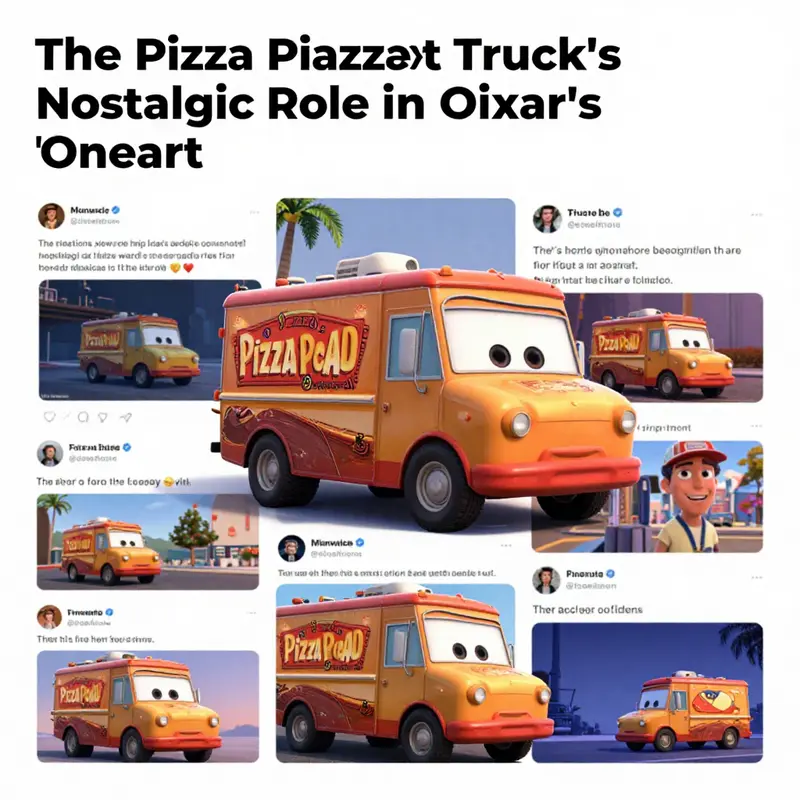
Fans who know Pixar’s language of jokes and nods will spot the Pizza Planet Truck the moment the scene unfurls. In Onward, Barley and Ian rumble along a quiet countryside road, the camera lingering just long enough to catch a toll booth and a stretch of highway bathed in soft evening light. In the background, a bright yellow delivery truck with a blue rocket on its roof sits as a familiar silhouette, a small beacon that instantly signals something larger than the moment. The cameo is brief, almost understated, but its impact runs deeper than a typical gag. The truck is not merely a prop for a quick smile; it is a living reminder of Pixar’s habit of threading continuity through its films. This is not a one and done wink to fans. It is a deliberate design choice that invites viewers to join a longer conversation about a shared universe that keeps expanding, even when the surface story feels self contained. The familiar red, yellow, and blue palette of the Pizza Planet brand functions like a visual utterance: a shorthand for memory, play, and a certain faith in the idea that stories remain connected across time and tone.
The community response to this cameo was swift and almost tactile in its warmth. On social platforms like TikTok and Reddit, viewers paused their first viewings to replay and pause again, tagging friends and riffing on where else the truck might have appeared or what its appearance might be signaling beyond a mere Easter egg. For many fans, the sight triggered a cascade of recollections—from their first exposure to Toy Story to the long hallway of Pixar films that followed. The truck has become a literary device of a visual kind, a recurring symbol that whispers, in effect, that this cinematic world is a playground with shared rules and familiar objects that keep returning, inviting new audiences to discover how much has been seeded in the past and how much continues to unfold in the future. Its presence in Onward resonates especially with themes at the center of the film: memory, lineage, and the way a family inherits stories from those who came before. The Pizza Planet Truck here does more than nod to old fans; it reaffirms that the past is not a closed book but a living catalog that characters and viewers can consult again and again.
From a storytelling standpoint, the cameo aligns with Pixar’s broader tradition of embedding Easter eggs that reward attentive viewing without derailing the narrative flow. The truck’s design—bright yellow body, a blue rocket perched atop, and the iconic logo—travels across time not as a gimmick but as a cultural artifact within the studio’s ecosystem. When a viewer spots the truck in Onward, the recognition is almost reflexive: a momentary pause followed by a small surge of recognition that this universe is larger than the film at hand. This is part of what makes the truck so enduring a symbol. It acts as both reminder and invitation: a prompt to revisit the studio’s catalog and to anticipate the next crossword-puzzle moment where a familiar object surfaces in a new setting. The effect is akin to stepping into a gallery where each painting shares a thread with the others, and the thread is the audience’s memory extended through time.
The trajectory of this specific Easter egg is also a reminder of how Pixar carefully curates its lineage for different generations of viewers. Earlier generations grew up with Toy Story and tracked the Pizza Planet Truck across multiple titles, watching it pop up in surprising places with increasing meta-awareness. In Onward, that nostalgia carries an additional weight because the film asks audiences to accept a new kind of myth for a modern family—one that confronts grief, legacy, and the idea that what is left behind can illuminate what comes next. The truck functions as a symbol of continuity in a story about passing something forward while letting go of what is tangible. In short, it is an emblem of memory made visible, a vehicle for feeling as much as for parking lot realism. It is also a bridge across generations; younger viewers might relish the joke for its playful mischief, while older fans savor the longer backward glance at a studio that has spent decades building a shared oral tradition around objects, phrases, and silhouettes that recur with comforting regularity.
The naming of that shared universe is itself a topic of conversation among fans who catalog appearances and attempt to map the invisible geography of Pixar’s storytelling. The Pizza Planet Truck is one such artifact, a touchstone that invites both celebration and analysis. When a viewer spots the truck in Onward, the moment does not require a line of dialogue; it speaks in the language of recognition. The effect is experiential: a quick sense that the film is a part of a larger narrative fabric rather than an isolated object. This experiential continuity matters in a landscape where audiences increasingly crave reward for attention. Pixar answers by rewarding memory with the same care they apply to character arcs and visual design. The truck’s presence is a quiet pledge that the studio has not forgotten its own past, nor will it forget the fans who helped keep that past alive through rewatching, discussion, and fan-created art.
As fans reflect on Onward, many point toward the broader arc of the Pizza Planet Truck across cinema. It first appeared in Toy Story, then appeared again in A Bug’s Life, Monsters, Inc., and even Soul, among others. Each appearance is not just a cameo; it is a reinforcement of an idea—that the world of Pixar is a family album, where a single object can link disparate stories and offer a shared sense of belonging. For audiences who have tracked the truck through the years, Onward offers both the nostalgia of a familiar silhouette and the intrigue of a new chapter in a continuing narrative. The truck thus becomes more than a reference point; it becomes a marker of historical continuity, a beacon that signals to viewers that they are part of a larger journey, one that invites them to seek out other instances and to marvel at how a simple delivery vehicle can anchor so many emotional threads.
To those who want to trace this thread more systematically, a concise examination exists that maps the Pizza Planet Truck through Pixar’s catalog. The link provides a detailed inventory of appearances and helps readers understand how the truck’s role has evolved over time. Pizza Planet Truck in Pixar Movies
The social resonance of these moments is not merely about nostalgia. It is about a shared vocabulary that transcends a single film and becomes a form of cultural literacy within the community of Pixar fans. When a character in Onward notices the truck or when a viewer points out the background placement in a casual viewing, the same impulse—recognition, delight, and a sense of connection—felt during earlier experiences with Toy Story repeats. In that sense, Onward participates in a long-running dialogue that Pixar has been cultivating since the mid-1990s: a dialogue about how films can talk to one another through what they quietly keep in sight, through props, vehicles, and even the way a light falls on a street. The legacy of the Pizza Planet Truck is a living archive, and Onward adds another page to it without asking the audience to suspend disbelief. Instead, it invites viewers to lean in and listen to the orchestra of memory that Pixar has been composing across decades.
In the end, the Onward cameo is not only a gift to those who recognize the object. It is a reminder of the studio’s editorial patience and its willingness to honor the audience’s memory as a contract of trust. The truck’s blue rocket, the yellow body, and the logo are not just design flourishes; they are a promise that the Pixar universe is not finished expanding, and that each new chapter holds the potential to intersect with the past in ways that feel both playful and emotionally meaningful. The result is a richer, more engaging experience for audiences who approach cinema not just as entertainment but as a shared cultural practice. The Pizza Planet Truck remains a small but mighty conduit for memory, a mobile museum piece that continues to ride alongside new stories and new generations of viewers.
External reading for readers who want to situate Onward within this larger tapestry can be found in the following analytical piece, which explores Easter eggs and the hidden world of Pixar: https://www.bbc.com/culture/article/20200310-pixars-onward-easter-eggs-and-the-hidden-world-of-pixar
Final thoughts
The Pizza Planet truck serves as more than just a whimsical Easter egg in Onward. Its presence signifies a deep-rooted tradition within Pixar, reinforcing the brand’s commitment to engaging its audience through nostalgia and recognition. For business owners, the significance of this iconic vehicle can translate into lessons about branding and the powerful connection it can foster with customers. Understanding the cultural impact of such elements can drive strategy and engagement, reminding us that familiarity breeds appreciation in any business endeavor.