
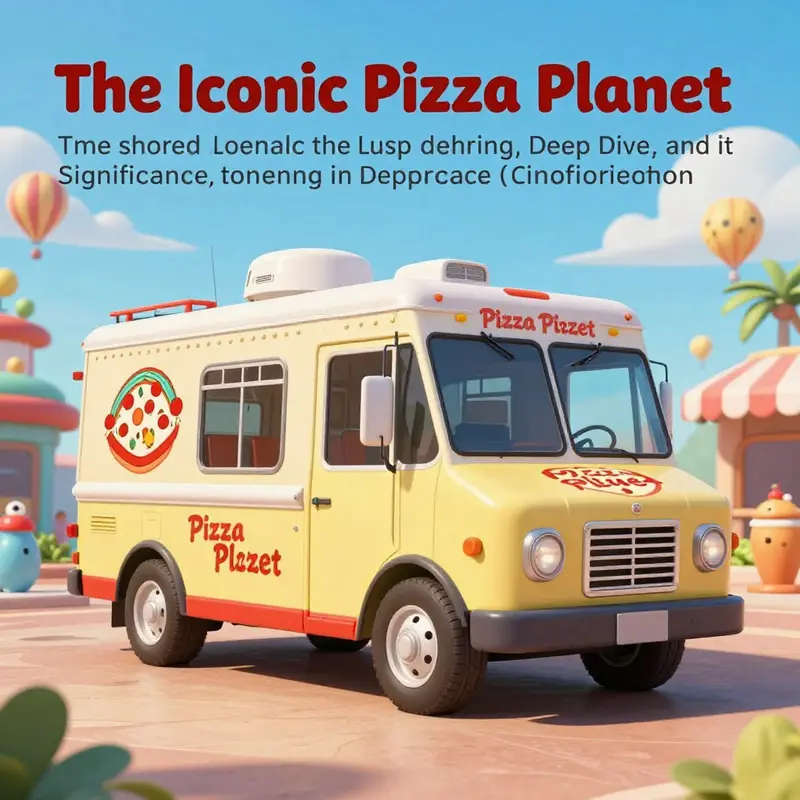
The Pizza Planet Truck, known for its vibrant presence in Pixar’s Toy Story franchise, is a 1978 Gyoza Mark VII Lite Hauler pickup truck that has transcended its role as a fictional delivery vehicle to become a symbol of nostalgia and creativity. This article aims to unravel the type of truck it is and explore its design characteristics, cultural significance, and the clever Easter eggs hidden in various Pixar films. By examining each facet, we can appreciate how this charming vehicle has become an enduring icon in contemporary pop culture, particularly among business owners seeking to evoke a sense of nostalgia and connection through their branding.
Decoding the Delivery Legend: The 1978 Gyoza Mark VII Lite Hauler Behind Pixar’s Pizza Planet
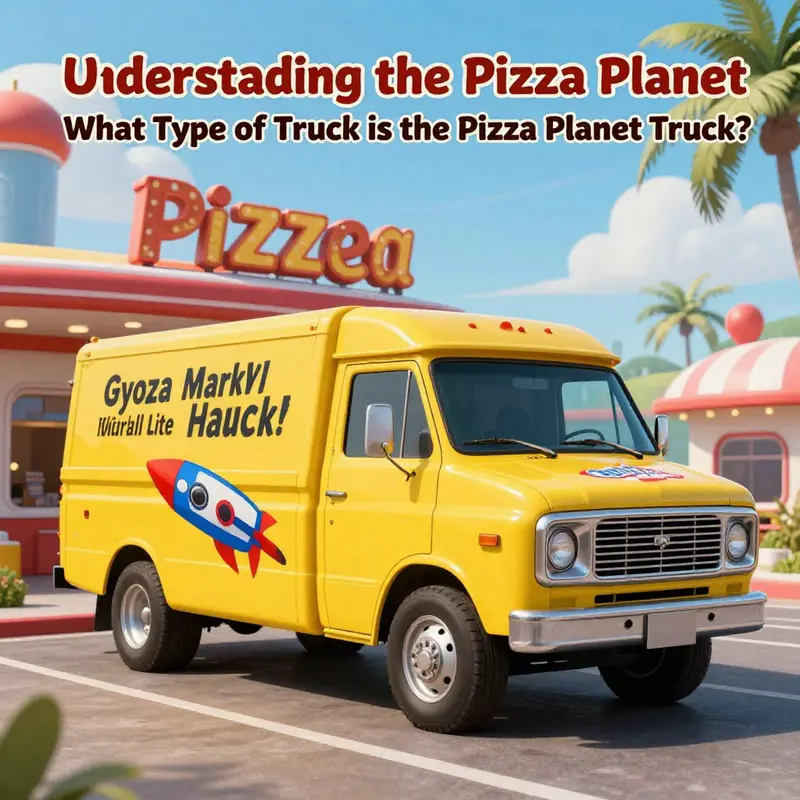
In the sprawling, interconnected world Pixar builds across its films, some visual threads feel almost ceremonial: a pinch of color, a hint of chrome, a vehicle that appears not to serve the plot so much as to remind viewers that the universe is shared and carefully curated. The Pizza Planet Truck is one of those threads. It is at once a prop within a story and a signpost that nudges fans toward a larger, collaborative cosmos. Its presence is a testament to how a single design choice can bridge countless narratives, become a familiar wink to longtime viewers, and, over time, earn a place in the pantheon of cinematic Easter eggs. The Pizza Planet Truck is a 1978 Gyoza Mark VII Lite Hauler pickup truck, a declaration that the studio’s world-building often wears a bright, cheerful face even when the tale itself travels through peril and pathos. This exact lineage is documented in sources like the Disney Wiki – Fandom, which identifies the vehicle as Pizza Planet’s delivery workhorse in the Toy Story franchise. To fans and casual observers alike, the truck’s identity is rarely in dispute: it is a symbol of delivery, yes, but more broadly, of a brand’s playful permanence across time and film. The Mark VII Lite Hauler—an era-specific pickup—gives the truck a tactile credibility that only a concrete, even antique, chassis can offer. Its color and motif translate the imagined energy of Pizza Planet into a physical presence that resembles the earnest optimism of late-70s automotive design, a time when the world of cars still carried the aura of rugged practicality mixed with a dash of optimism about the future. The yellow body, the red and blue rocket motif, the distinct grille and headlight configuration—these elements are not just aesthetic choices. They are signals that the vehicle belongs to a world where color is a storytelling instrument and where even a delivery truck can feel like a character in its own right. The 1978 frame anchors the truck in a real, recognizable era of automotive design, a period notable for chunky, durable lines, robust metalwork, and glass that catches the light in ways that modern vehicles rarely replicate. The Mark VII Lite Hauler, with its vintage pickup cues, offers fans a sense of nostalgia—an emotional bridge that connects the audience to a pre-digital age of road travel, where a long, straight highway leading to a distant city could hold the promise of a new adventure. In Toy Story, the vehicle’s function is straightforward: it ferries pizzas from Pizza Planet to the city’s hungry inhabitants. Yet that simple function is purposefully amplified by design. The truck’s bright yellow paint makes it unmistakable as it darts across a frame, a beacon amid the more muted or shadowed hues of the surrounding environment. The red and blue rocket motif, a tiny but unmistakable emblem, signals a broader brand identity—an emblem of space-age whimsy sewn into a family-friendly, everyday object. This is no mere graphic flourish; it is a deliberate alignment with Pixar’s broader aesthetic, where playful iconography and bold color choices reinforce the emotional tone of a scene. The vehicle’s grille and headlights, too, carry the hallmarks of late-70s pickup design, with round headlights and a sturdy, uncomplicated chrome frame that suggests reliability and a touch of ruggedness. Those features anchor the truck in a believable, tactile world even as it ventures into the films’ more fantastical moments. The fusion of nostalgia and whimsy is precisely the magic the truck embodies. It looks like a real-world vehicle, a vivid homage to the era’s transportation, yet it arrives in a world where talking toys, sentient rain, and magical doorways exist. That juxtaposition—of the tangible and the fantastical—helps the truck serve as a bridge between normal life and the extraordinary. The design’s impact goes beyond its onscreen duties. The Pizza Planet Truck functions as an Easter egg within Pixar’s movies, a recurring visual motif that fans learn to spot and anticipate. It is a familiar friend who shows up in different contexts, often in the background, sometimes as a nod to a studio’s shared creative language. The Easter egg role is not accidental. It is a carefully orchestrated element that signals to audiences that these films inhabit the same universe, with the same playful rules and the same core values: warmth, curiosity, perseverance, and a sense of wonder about everyday objects when placed in extraordinary circumstances. The truck’s presence invites viewers to engage with the franchise on a deeper level, encouraging conversations about how a single prop can carry continuity across stories and generations. It is, in essence, Pixar’s internal wink to the audience—a reminder that the company’s creative process thrives on intertextual resonance as much as on emotional storytelling. The historical and aesthetic specifics of the Pizza Planet Truck—its 1978 origin, the bright yellow body, and the rocket motif—produce a synergy that makes the vehicle feel instantly recognizable in any scene. That recognition matters because it anchors the audience to a familiar sensory baseline. When a character strides into a frame and a yellow truck powers past, we do not simply see a delivery vehicle; we perceive a symbol of reliability, a short tour through time, and a link to the playful, indie spirit that defined the early. The truck’s vintage cues—grille shape, headlight arrangement, chrome accents—are not relics; they are careful design choices that inform how viewers interpret every subsequent moment in which the truck reappears. In that sense, the Mark VII Lite Hauler is less a prop and more a narrative instrument. Its form suggests a backstory about a world where trucks could double as ambassadors of hospitality and cheer. It is no coincidence that the same vehicle recurs across multiple films and settings, turning an ordinary delivery run into a thread of continuity that fans can trace like a map. This is where the internal fan culture around Pixar’s Easter eggs becomes most vivid. The truck has inspired endless curiosity: where did it come from within the universe? How many times does it appear, and in which films? What does its continued reappearance say about the studio’s approach to storytelling and world-building? These questions are more than trivia; they reflect a shared cultural literacy built around the studio’s distinctive approach to creating a cohesive, interwoven cinematic experience. The Pizza Planet Truck thus becomes a touchstone for fans who delight in spotting cross-film references and appreciating the care with which a simple color palette can carry meaning across an entire body of work. When you watch for it, the truck’s presence is a reminder that Toy Story’s world is not a closed loop but a living ecosystem where everyday objects can travel through space and time, gathering stories and friendships along the way. Acknowledging this helps deepen the appreciation for how animation can craft a universe that feels both intimate and expansive. If you want to see how this particular vehicle stitches into a broader narrative thread—how a delivery truck can become a recurring emblem across films—you can explore further discussions and analyses that spotlight its appearances, such as the Pizza Planet Truck Pixar Movies article. For readers who want a broader, contemporary sense of how such props shape fan engagement and franchise storytelling, the resource is a good starting point: it traces the truck’s footprint across different titles while acknowledging the design decisions that allow it to function as both a practical vehicle and a cultural landmark. The enduring appeal of the Pizza Planet Truck lies in its accessibility and charm. It is a familiar, almost innocent object that invites audiences to imagine the everyday—pizza deliveries, road trips, roadside diners, and the gentle rhythm of a journey. Yet it is through Pixar’s deft hands that such a simple object morphs into a symbol of connection, a visual cue that binds a child’s adventure to the larger, shared experience of watching movies built on warmth, wit, and wonder. To place the truck’s significance in a single sentence would do it a disservice; it deserves to be pondered as a confluence of design, nostalgia, and storytelling strategy. The 1978 Gyoza Mark VII Lite Hauler is more than a model; it is a memory capsule that invites fans to rewatch scenes with fresh eyes, spotting the yellow hue and rocket motif or listening for the subtle jingle that hints at the brand’s cheerful ethos. In that sense, the truck transcends its function as a courier of pizzas. It becomes a narrative instrument that travels with the characters, a shared reference point that keeps the films knitted together even as new stories unfold. As Pixar continues to expand its universe, the Pizza Planet Truck will likely persist as a small, reliable beacon—a bright yellow reminder that every journey, no matter how far it goes, can still feel like a delivery to a friend, a moment of connection, and a little spark of the fantastical within the everyday. For a broader context on how such iconic props fit into Pixar’s world-building, see Wikipedia’s Pizza Planet article. This external resource offers additional perspectives on the franchise’s world-building and the ways in which recurring objects contribute to a sense of continuity across films.
An Icon on Wheels: Decoding the 1978 Gyoza Mark VII Lite Hauler Behind the Pizza Planet Truck
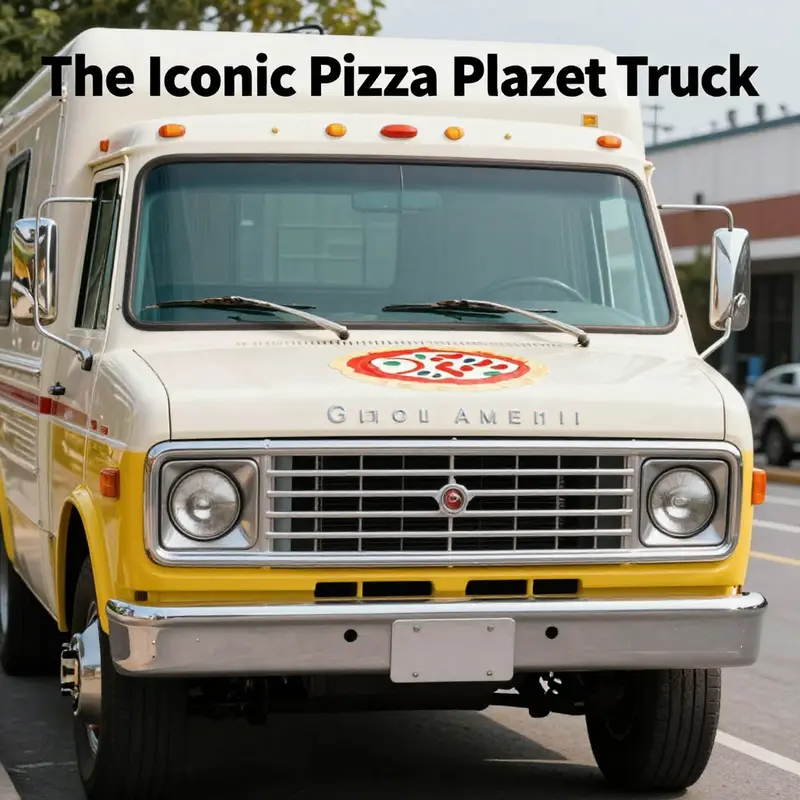
When fans talk about the Pizza Planet Truck, they are often describing more than a clever prop. They are referencing a carefully chosen vehicle lineage that roots a fantasy in a recognizable, real-world silhouette. The truck that powers the Pizza Planet brand in the Toy Story universe is traceable to a specific, tangible machine: the 1978 Gyoza Mark VII Lite Hauler pickup truck. This isn’t a mere cosmetic afterthought swapped in for color and whimsy; it is a deliberate design choice that grounds a fantastical concept in a practical, historically resonant vehicle. The result is a delivery vehicle that feels both freshly imaginative and reassuringly familiar, the kind of machine you might actually see rolling through the backstreets of any mid-century American town turned interstellar showroom. The identification of this model explains why the truck’s lines, proportions, and even its tonal gestures feel so right for a franchise built on memory, motion, and mischief. It is, in essence, a small, bright, yellow signpost pointing to an interwoven universe where a family-friendly film world collides with the real-world vocabulary of service vehicles and the people who drive them.
At first glance, the truck’s most arresting feature is its utilitarian silhouette. The Mark VII Lite Hauler is a compact, lightweight commercial pickup, designed for small-scale deliveries and efficient maneuvering rather than heavyweight hauls. The Toy Story adaptation preserves that core identity while channeling it through a brighter, more playful color language. The cab maintains a simple, functional geometry—a straightforward front fascia, a modest grille, and a squared-off cab that conveys reliability and approachability. The cargo bed remains its workhorse, a shallow, practical space that signals purpose without embellishment. In this way, the truck’s design preserves the honesty of a work vehicle while inviting a childlike sense of exploration and possibility. The visual logic is clean and legible, a quality Pixar has long championed when translating real-world machinery into animated personalities.
This balance—between rugged practicality and cartoonish charisma—begins with the vehicle’s color palette. The Pizza Planet Truck is best known for its bold, high-contrast scheme: a bright yellow body paired with red and blue rocket motifs. The yellow acts as a beacon, drawing the eye with the same immediacy a street vendor relies on when pulling a passerby’s attention to a steaming slice. The rocket motif adds a dash of whimsy and kinetic energy, implying speed, space, and adventure—attributes that align neatly with Pixar’s broader storytelling project of transporting audiences into new and familiar worlds. The red accents, often seen on the grille area or along the sides, provide a sharp, friendly counterpoint to the sunlit body, ensuring the vehicle stays legible even in rapid motion or on crowded cinematic horizons. This combination—utilitarian form plus a branding-driven, playful finish—achieves a level of recognizability that persists across films, seasons, and fan theories, making the truck not just a prop but a recurring symbol of mobility, service, and a portable eatery.
The interior and exterior details work in tandem to reinforce the truck’s dual character as a work tool and a storytelling device. The Mark VII Lite Hauler’s exterior pays homage to classic pickup cues—the recognizable grille treatment, round headlights with a hint of chrome highlight, and a sturdy, no-nonsense stance. These elements whisper nostalgia, a quiet invitation to viewers who grew up with similar machines in the real world. Inside, the cab is stripped to essentials: a compact seating arrangement, a clean dashboard, and controls that underscore efficiency rather than luxury. It is precisely this economy of form that makes the vehicle so adaptable for animation. There is room for whimsy in the signage and lighting, but the structural honesty of the pickup’s skeleton remains intact. That honesty allows the Pizza Planet branding to feel authentic within the animated world, a credible vehicle for delivering slices in a universe where toys, aliens, and talking cars coexist with everyday objects.
The branding strategy—how the truck communicates its role and its story—makes the vehicle more than a traveling billboard. The graffiti-like simplicity of the Pizza Planet name, the rocket iconography, and the bold, legible typography are designed for quick recognition. In busy film scenes, a character or a viewer should be able to read the brand at a glance, even at a distance, even when the scene is in flux. The bright color contrasts help with legibility on motion, while the rocket motif injects a sense of forward momentum. In other words, the truck is not merely carrying food; it is carrying narrative energy. The color economy and the brand mark function as a rapid, visual shorthand for a portable, friendly culinary experience, an idea that translates well to the tactile world of real-life food trucks and pop-up eateries.
Beyond aesthetics, the Pizza Planet Truck embodies a practical philosophy that aligns with real-world delivery vehicles. Though the in-film operations are fantastical—the truck seems to appear in various settings, crossing genres and storylines—the underlying concept resembles how actual mobile food services operate. A compact, easily maneuvered vehicle is ideal for urban and suburban landscapes where space is at a premium and visibility matters. The 1978 Mark VII Lite Hauler’s modest footprint ensures it can navigate tight streets, park in limited spaces, and dock briefly at a storefront or a curbside pop-up, all while keeping the branding clearly in view. Real-world operators in the same class often equip such vehicles with electric ovens or hot plates to reheat slices or assemble pizzas on the move. This operational practicality mirrors the visual design’s intent: a vehicle that is friendly, efficient, and straightforward to use—an everyman machine for a fantastical universe.
The cultural resonance of the Pizza Planet Truck rests not merely in its looks, but in its function as an Easter egg and a cross-film touchstone. Across Pixar’s filmography, the truck appears as a wink to fans, a shared device that signals a larger connected universe. The vehicle becomes a familiar talisman that fans recognize in places far from the initial Toy Story setting. Its reappearances under different lighting, in varied contexts, contribute to a sense of continuity—a playful nod that invites viewers to trace the network of stories across time and genre. This interconnectedness is more than fan service; it reinforces the studio’s self-conception as a creator of an expansive, cohesive world where objects carry memory and meaning beyond their immediate on-screen purpose.
Given the real-world analogue, it is instructive to consider how such a vehicle would function in practice outside the film’s frames. A modern pizza truck of the vintage class would typically be configured with compact, space-efficient kitchens and electrical systems capable of sustaining heat for short service windows. The Mark VII Lite Hauler’s design would facilitate a minimal but workable kitchen layout, with heating elements along the cargo area and a service counter that could be deployed quickly at a curbside or in a market square. The logistical logic—speed, visibility, and reliability—would guide equipment choices, from insulation and power supply to the placement of signage and lighting to maximize both safety and customer appeal. The way the Pizza Planet Truck is imagined in Toy Story mirrors this reality: a vehicle that’s not just about getting food from A to B, but about creating a small, portable theater for a public, shared experience.
For readers who want to situate this discussion within broader industry conversations, it is worth noting how real-world standards and best practices influence how we perceive such iconic vehicles. In a real food-truck operation, branding must be legible at a glance, maneuverability matters, and the vehicle’s engine, electrical, and heating systems must be able to deliver service without interruption. A practical reference point for those curious about how a truck of this vintage would be configured today can be found in comprehensive industry sources that outline regulatory, safety, and financial considerations for mobile food services. See a trusted overview of the field for context on how design, operation, and branding coalesce in a real-world setting.
As a storytelling artifact, the Pizza Planet Truck’s lineage to the 1978 Gyoza Mark VII Lite Hauler clarifies why the vehicle resonates with audiences. The model’s compact scale, its straightforward cab, and its workmanlike cargo bed all contribute to a silhouette that is simultaneously endearing and credible. The color scheme and rocket motif are not mere adornments; they are functional cues that signal purpose, playfulness, and a willingness to push beyond the ordinary. When viewed through the lens of the wider Toy Story canon, the truck’s design emerges as a blueprint for how the film world negotiates the boundary between the familiar and the fantastical. It demonstrates how a single, well-chosen vehicle can anchor a brand identity across multiple narratives, helping to bind a sprawling universe with a common visual language.
If one were to ask, in a practical sense, what type of truck the Pizza Planet Truck most closely resembles, the answer rests on a careful blend of historical accuracy and imaginative adaptation. It appears as a compact, lightweight pickup—the sort of vehicle that historically served small businesses with efficiency and reliability. Yet the franchise transforms this practical form into something delightfully cinematic: a moving emblem that signals the arrival of pizza, friendliness, and an invitation to imagine a world where toys and humans share the road. The Mark VII Lite Hauler provides the bones; the Pizza Planet branding supplies the soul. That duality is the core of the truck’s enduring appeal: a reminder that in the realm of animation, even the most ordinary object can become a vessel for wonder when paired with a strong, purposeful design language. For fans of both design history and film lore, the Pizza Planet Truck offers a compelling case study in how form, function, and fantasy can harmonize in a way that feels inevitable once you recognize the model’s real-world origins.
For further reading on how this iconic vehicle threads through the broader Pixar tapestry, explore the Pizza Planet Truck in Pixar Movies, which traces its appearances and evolution across the studio’s catalog. Pizza Planet Truck in Pixar Movies.
External context on mobile food operations can broaden understanding of how such vehicles would function in reality. For a practical, industry-informed overview, see the National Restaurant Association’s Food Truck Business Guide. https://restaurant.org/food-truck-business-guide
Tracing the Wheels of a Legend: How the 1978 Gyoza Mark VII Lite Hauler Became Pizza Planet’s Iconic Courier
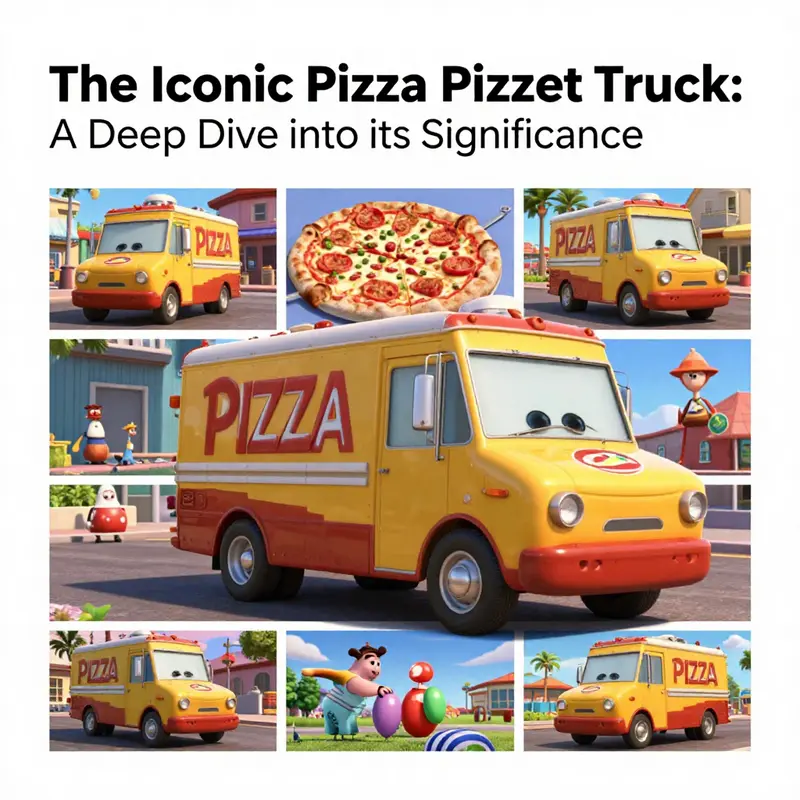
In a universe where a toy’s imagination can stretch far beyond the shelf, a single prop can become a compass point for generations. The Pizza Planet Truck is one of those beacons. Conceived as a delivery vehicle for a fictional pizzeria, it grew into something far larger than its on-screen function. What begins as a practical prop—a bright, friendly truck tasked with bringing pizza to the toy world—evolves into a cultural touchstone that guided fans through the Toy Story stories and beyond. The truck’s identity rests on a compact truth: it is a 1978 Gyoza Mark VII Lite Hauler, a real-world style repurposed for a fantasy of speed, color, and whimsy. Its vintage silhouette grounds it in a recognizable American automotive past, while its oversized, almost cartoonish branding invites a sense of boundless possibility. This duality—nostalgia anchored in a familiar chassis, peppered with Pixar’s signature exuberance—gives the Pizza Planet Truck a staying power that few screen props ever achieve.
Design details matter as much as narrative context. The Mark VII Lite Hauler’s yellow body gleams with a brightness that feels almost like a beacon in a dimly lit toy universe. On top, a pizza-themed sign arcs over the cab, a playful nod to the truck’s core mission: deliver joy as much as pepperoni. The sign’s rounded edges and oversized pizza motif read instantly in a kid’s eye, making the vehicle easy to spot on screen and in memory. The red and blue rocket elements that flank the truck’s sides echo a mid-century optimism, a time when space travel felt tactile and new, even in the hands of cartoon storytellers. The vehicle’s grille and headlight geometry—functional yet softened by the animation’s lines—further anchor this piece in a period that feels both real and dreamlike. The result is a prop that reads as a collaboration between a craftsman’s respect for vintage pickups and a stylist’s hunger for color and motion. It’s a shape people recognize, even if they cannot name every component or model number.
Yet the truck is not merely a pretty face in the Toy Story parade. It functions as a narrative engine in miniature, a moving stage where toys watch, learn, and imagine. In its earliest screen appearance, the Pizza Planet Truck becomes a courier between human and toy worlds. Its deliveries open pathways for friendship, curiosity, and courage. The truck’s presence helps to establish a rule of the Toy Story universe: the ordinary can become extraordinary with a spark of story, and transportation—whether by car, rocket, or cardboard box—serves as the vehicle for that spark. In this sense, the Mark VII Lite Hauler is more than a mode of conveyance; it’s a doorway into a sense of shared adventure. The truck’s bright color palette, its oversized logo, and its friendly, approachable silhouette work together to welcome viewers into a world where imagination can outrun gravity and gravity can still feel like a warm hug.
From a production standpoint, the choice of a 1978 model is telling. The late 1970s offered a particular blend of rugged practicality and decorative flare. The Gyoza Mark VII Lite Hauler embodies that combination: durable enough to feel real, yet stylized enough to function as a canvas for symbol and story. Its vintage cues—rounded fenders, a sturdy grille, and a compact cab—ground the truck in a recognizably real vehicle category. At the same time, the truck’s bright paint job, oversized signage, and the cartoonish scale of its branding translate seamlessly into the animated world, where exaggeration serves narrative clarity. This balance is not accidental. Pixar’s artists lean into the charm of tangible objects to invite empathy from viewers. When a kid meets a familiar type of truck in a movie, they feel a kinship with a world that admits real calendars, real road rules, and real craftsmanship—only to have that world slip into a more magical gear once the pizza sign hums to life and the adventure begins.
What makes the Pizza Planet Truck’s cultural impact so enduring is precisely this blend of the ordinary and the extraordinary. It is a recurring Easter egg in multiple Pixar films, a small prop that reappears across a shared universe as if winking at attentive fans. The truck’s appearances are not random cameos; they are deliberate reminders that the studio’s stories exist in a single, interconnected cosmos. The effect is cumulative. Audiences learn to watch for the truck, to recognize its color, its sign, and its cheerful silhouette wherever it might appear. Over time, that recognition becomes a kind of shorthand for the larger magic of Pixar: a promise that imagination travels with you, even when you think you’ve left the theater behind. In this way, the Mark VII Lite Hauler becomes an emblem of continuity, a reminder that the world of Toy Story is not a closed loop but a living, growing tapestry that invites new viewers to discover its past while participating in its ongoing present.
The truck’s status as a cultural artifact has been reinforced outside the screen as well. Theme parks have embraced the vehicle as more than a prop; it has become a tangible touchpoint where fans can connect with the movie’s world. Photo opportunities, interactive exhibits, and carefully designed vignettes let visitors stand beside the iconic yellow body and the rocket-decorated sides, a momentary step into the toy universe for people of all ages. In such spaces, the vehicle’s nostalgia takes on a social and communal dimension. People share stories about their first Toy Story experiences, about the way a simple prop could spark a lifelong affection for animation and storytelling, and about the way a well-made detail can spark a collective memory. The Pizza Planet Truck helps people connect not only with a movie, but with childhoods, friendships, and the simple joy of believing in a world where a delivery truck can become a portal to adventure.
Iconography matters, and the truck’s distinctive look is a masterclass in branding through design. The yellow body, the two-tone rocket motif, and the towering pizza sign combine to create a silhouette that is as legible from a distance as a logo is in a storefront window. This legibility matters in animation, where a frame may need to convey character intent in a fraction of a second. The truck’s shape suggests reliability and speed in a way that aligns with the story’s themes—friendship that travels, adventures that arrive when you least expect them, and the idea that small gestures can propel a big journey. The retro aesthetic, with its own built-in sense of nostalgia, invites adults to reminisce even as children lean into the promise of future possibilities. The truck’s visual grammar—its bold, saturated color blocks; its oversized sign; its sturdy, almost industrial lines—keeps the prop legible to new audiences while preserving its charm for longtime fans.
To understand the truck’s lasting appeal is to understand how animation, memory, and design collide. Pixar is renowned for embedding subtle prop work that rewards careful watching. A recurring vehicle like the Pizza Planet Truck becomes more than a prop; it becomes a narrative glue that stitches together scenes and films across a franchise. When viewers spot the yellow body rolling by or catch a glimpse of the pizza emblem in a new setting, a quick thread of recognition connects them to the broader universe: a shared history of characters, jokes, and moments that yield new meaning each time they return. The truck’s cultural footprint is not limited to the screen. It spills into fan art, fan fiction, classrooms, and social media conversations where enthusiasts decode its appearances, speculate about its various screen roles, and celebrate the craft that allows such a prop to travel through time and genre without losing its core identity.
The threefold appeal—the truck’s design, its role within Toy Story, and its broader cultural afterlife—underscores a larger truth about why certain vehicles endure in popular imagination. A prop can outlive the moment of its use if it resonates with people’s sense of wonder about movement, memory, and companionship. The Pizza Planet Truck embodies that resonance. It is both a piece of set dressing and a keystone of storytelling, a reminder that the simplest objects can bear the emotional weight of a universe when they are designed with care and linked to universal desires: to belong, to explore, to share a slice of joy with friends. In acknowledging the truck as a real-world model—the 1978 Gyoza Mark VII Lite Hauler—we also acknowledge the human hand that crafted it, the artisans who translated a concrete machine into a vessel for dreams. The truck’s legacy is a tribute to that translation: a bridge from gears and chrome to imagination and community.
Fans frequently discuss how a prop like this might function in a more literal sense. If the Mark VII Lite Hauler truly existed as a delivery vehicle for a pizza business, its practicality would be balanced against the whimsy of its mission. The truck’s compact size and sturdy build would be perfect for navigating small-town streets and bustling fairgrounds, bringing not just meals but a sense of shared ritual. Yet the biology of the prop—its bright signage, its bold color scheme, its almost cartoonish proportions—keeps it firmly in the realm of fantasy. The tension between realism and fantasy is precisely what makes the Pizza Planet Truck so compelling. It embodies a democratic ideal of storytelling: the belief that a small, well-crafted object can unlock big emotional experiences regardless of age, background, or background knowledge of automotive history. That is the gift of the design—the ability to compress memory, aspiration, and fun into a single, easily recognizable object that continues to invite new audiences into the fold.
For scholars and fans alike, the truck symbolizes the way animation builds universes through recurring motifs. Its presence across films creates a through-line, a reminder that the Pixar cosmos is not a collection of isolated tales but a shared landscape where objects can carry memories and meanings across contexts. The pizza sign, the rocket motif, and the vintage pickup chassis all contribute to a mythos that invites viewers to trace the prop’s appearances, to recall a familiar color palette, and to feel a sense of continuity that mirrors the continuity of friendship and adventure in the stories themselves. The Pizza Planet Truck does not merely move characters from point A to point B; it moves readers and viewers from curiosity to delight, from memory to anticipation. In that sense, the 1978 Gyoza Mark VII Lite Hauler is not simply a type of truck. It is a cultural instrument, a small-but-potent catalyst that keeps the flame of shared imagination alive across generations.
As audiences continue to revisit Toy Story and the wider Pixar canon, the Pizza Planet Truck remains a subject of affectionate study and playful speculation. It operates on multiple levels: as a beloved prop in a beloved film, as a sign of design excellence, and as a symbol of how a single vehicle can become a passport to a broader cultural conversation. The truck’s enduring charm lies in its capacity to feel both familiar and wondrous—a vintage pickup that looks ready to ferry a pie across a sunlit parking lot, yet also a beacon of possibility that invites us to believe that the road ahead is wide, bright, and full of adventure. In the end, the question “what type of truck is the Pizza Planet Truck?” resolves into a richer answer: it is a 1978 Gyoza Mark VII Lite Hauler, a craftsman’s blend of realism and whimsy, a motif that travels through time with a roar of color and a slice of imagination. It is, in short, the perfect companion for a universe where toys dream big, roads bend toward wonder, and a delivery run can become a legend worth sharing.
External reference: For a broader overview of the truck’s background and appearances, see the Disney Fandom entry on the Pizza Planet Truck.
Internal reference: Fans may explore related discussions in the article Pizza Planet Truck in Pixar Movies, which traces the vehicle’s appearances across different films and contexts. Pizza Planet Truck in Pixar Movies.
The Retro Hauler That Spans Pixar’s Cosmos: Tracing the 1978 Gyoza Mark VII Lite Hauler Behind the Pizza Planet Truck
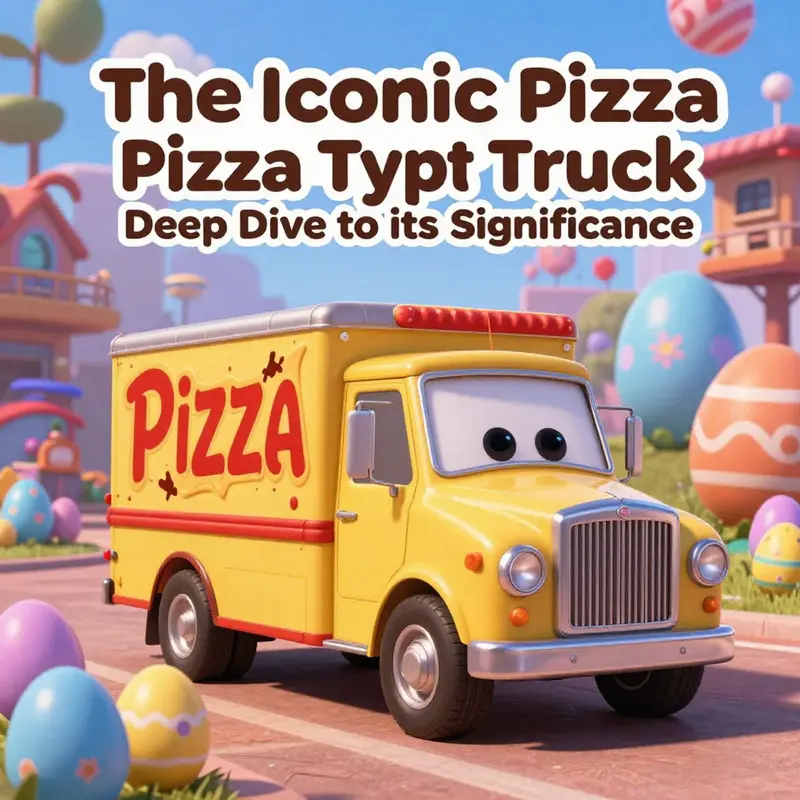
When fans talk about the connective tissue of Pixar’s cinematic universe, they often start with themes like shared character arcs, recurring jokes, and hidden cameos. Yet one of the most enduring threads runs through the frames as a gleaming, yellow delivery truck with a pizza logo. The Pizza Planet Truck is not just a prop; it is a deliberate, design-forward signal that a story world is bigger than the scene you’re watching. At its core sits a fictional make and model—the 1978 Gyoza Mark VII Lite Hauler—an homage to a bygone era of American pickups, reimagined to carry the playful energy of a pizzeria that exists in multiple dimensions of Pixar’s storytelling. The result is a vehicle that feels both familiar and fantastical, a bright-yellow beacon with red and blue rocket motifs that instantly announces, even to the most casual viewer, that you are entering a constellation where cartoons and cinema casually nod to one another across time and space.
The Pizza Planet Truck’s appearance in Toy Story (1995) as the courier for a fictional restaurant quickly established a visual shorthand that would outlive the first film. Its bold colors and oversized pizza emblem are more than branding; they are a compact piece of world-building that communicates, with minimal dialogue, the tone of the Pixar universe. The truck’s form—a stylized, retro pickup with a grille that hints at classic design, gleaming headlamps, and a bed that carries more than just boxes—belongs to a lineage of objects that are treated as characters by devoted fans. The mark of the 1978 Gyoza Mark VII Lite Hauler grounds the truck in a fictional history; the model’s vintage contours contribute to a sense of nostalgia, a tactile link to past decades that grants the present films a tangible, lived-in depth.
Across films, the truck functions as an Easter egg—a subtle, recurring signifier embedded in the background of scenes rather than thrust into the foreground. It appears in places where a casual observer might miss it, tucked into a street scene, parked in a lot, or glimpsed through a window of a passing vehicle. The effect is cumulative. Each tiny appearance multiplies the sense that the Pixar cosmos is not a string of independent stories but a single universe in which objects carry memories, and these memories travel between films as reliably as the characters do. There is a quiet choreography to the truck’s appearances: sometimes it shares a frame with a major moment, sometimes it sits apart as if waiting for a fan to notice, and sometimes it wears a different license plate or minor modification that signals, in tiny visual shifts, that the same vehicle has traversed a long, imaginative road.
Design-wise, the truck’s identity is anchored by its high-contrast color scheme and the pizza motif, with a stylized logo that reads instantly as “Pizza Planet” even at a distance. The yellow body radiates warmth, while the red and blue accents echo the primary-color aesthetics that Pixar uses to keep its universe approachable and luminous on screen. Yet the retro pickup silhouette—rounded fenders, a grille that nods to late-20th-century design, and a bed that promises practical, almost comic-book function—grounds the vehicle in a nostalgia that resonates with audiences who grow up alongside these films. It is precisely this blend of playful futurism and familiar form that makes the truck feel both outlandish and intimate, a bridge between the everyday and the magical.
The vehicle’s origin within the studio’s lore adds another layer to its significance. The name Pizza Planet itself has a seed of realism: it was inspired by a real-life pizzeria located near Pixar’s original Emeryville headquarters. From that starting point, the creative team built a fictional brand and a fleet of narrative props, among which the Pizza Planet Truck became a kind of ambassador. The truck’s design, while clearly a fabrication for the films, borrows from real-world pickup aesthetics enough to look plausible as a vehicle you might see on a California street in another era. This dual stance—the vehicle as both a believable street machine and an element of a fantastical, interwoven universe—gives it a unique oxygen, letting audiences suspend disbelief with ease.
As appearances spread beyond Toy Story into other Pixar features, the truck’s role evolved from a punchy visual gag to a cultural touchstone within the studio’s extended canon. In A Bug’s Life, Monsters, Inc., Finding Nemo, and The Incredibles—as well as in films like Brave and Luca—the truck emerges in ways that are often non-intrusive but unmistakably intentional. It may sit in the background of a bustling street, perched near a seaside pier, or appear in a quietly lit alley, a splash of color that invites recognition. The variations are interesting too: license plates shift, minor decals drift from one frame to another, and the truck sometimes seems to carry a different load, hinting at informal, in-universe travel. These small discrepancies are not errors; they’re deliberate texture, textures that reward repeat viewing and heighten the sense of a shared universe where every prop has a backstory patients could spend hours unraveling.
This connective function is not accidental. Pixar has long cultivated a culture of cross-film nods and serialized texture—an approach that rewards careful watching and deep fan engagement. In the Pizza Planet Truck, the studio accomplished something durable: a single prop that travels through an entire constellation of stories without becoming a mere shipping crate. The truck performs a storytelling duty as elegantly as any character line in a screenplay. It offers continuity in a world of shifting narratives and, perhaps more importantly, provides a playful thread for fans who like to spot the familiar in unfamiliar contexts. The vehicle becomes a way to talk about time, not just place, suggesting that the universe exists in more than one movie at once, and that a small delivery van can touch many lives by its mere presence.
Another layer of fascination comes from the way audiences interpret the truck’s journey. Is it a relic of a company’s corporate road trips, a rural outpost traveler, or a cosmopolitan courier that has wandered from one film to the next through some pocket of cinematic space? The truth in the films is never stated outright, and that absence invites fan theorizing and scholarly parsing. What matters most is that the truck remains a recognizable constant—the same visual language, the same aerodynamic grin of nostalgia—while the stories around it grow older and more complex. In that sense, the Pizza Planet Truck is less a plot device than a cultural solvent, a vehicle that dissolves the boundaries between Toy Story’s micro-universe and the broader Pixar panorama. It is a reminder that even in an animated world, objects carry memory, identity, and a shared sense of belonging.
The interior of this chapter’s discourse is not a pedantic catalog, but a continuous reflection on how a single model can function as both prop and icon. The 1978 Gyoza Mark VII Lite Hauler is not a real-world model one would commission for a vintage show, yet in the world of animation it becomes a believable, lived-in artifact. Its design language—bold colors, a compact, rugged frame, and a bed ready to haul anything from pizza deliveries to the imaginings of a child’s adventure—speaks in a shorthand that transcends language. That shorthand is precisely what makes the Pizza Planet Truck so effective as a storytelling instrument. When a film cuts to a lonely shot of the truck parked on a sunlit street, or a character glances out a window and spots it idling on the curb, the audience experiences a moment of recognition that binds the film to a larger narrative fabric. The sense of continuity it provides feels almost automatic, as if Pixar were reminding us that the real world’s streets are not so different from the ones they paint in bright, cinematic color.
In the realm of fan engagement and research, this prop invites a kind of participatory curiosity. Viewers who catalog each appearance begin to build a rough map of Pixar’s cinematic geography—a map that shows how places, objects, and even vehicles drift from film to film, sometimes in the foreground and often in the background, as if to whisper, “I was here, and I’m going somewhere else.” The experience is akin to collecting musical motifs across symphonies: a recurrent riff that evolves with each new setting, yet remains instantly recognizable. Even without knowing every exact frame, the visual memory remains intact, a kind of signature stamp that confirms the possibility of a shared universe where a simple delivery truck becomes a traveler of sorts, crossing narratives the way a character crosses borders.
For readers who want to pursue the details further, there is a growing body of compiled observations and fan-driven explorations that trace every appearance of the Pizza Planet Truck across Pixar’s releases. A convenient starting point for those who want a deeper dive into the truck’s cinematic journeys is a dedicated resource that collects appearances, variations, and the small changes that keep the prop feeling alive across decades of filmmaking. The cross-film continuity you’ll discover through that lens reinforces a larger point: Pixar’s world-building is not a single blueprint but a living organism, one that invites fans to revisit old scenes with new eyes and discover that even the most seemingly minor prop can carry a gallery of meanings.
The charm of the Pizza Planet Truck lies in its capacity to feel both specific and universal. It is a specific object within a particular brand universe, yet it functions as a universal cue—a reminder that stories in this cosmos are interconnected and playful in their referencing. It is, in short, a vintage workhorse that carries not only boxes of pizza but also memories, inside jokes, and a sense of rhythm across films. In this sense, the 1978 Gyoza Mark VII Lite Hauler is more than a model or a visual motif. It is a storyteller in its own right, whispering through time about the enduring belief that imagination can travel as far as a road can carry a truck—and that the road between Toy Story and the rest of Pixar’s films is a road worth following.
To explore a consolidated view of these cross-film appearances and the broader question of what type of truck it is across the Pixar universe, readers can consult a focused overview that maps the Pizza Planet Truck’s appearances through the series. Pizza-Planet-Truck-Pixar-Movies offers a curated collection of moments and frames where the vehicle surfaces, guiding fans toward a more systematic understanding of how Pixar threads its worlds together. This inquiry into the truck’s cinematic migrations helps illuminate a larger aesthetic strategy: that continuity can be achieved not only through explicit plots but through the subtleties of production design and the patience of long-term storytelling. The truck’s journeys remind us that, in animation as in life, a small, well-designed prop can become a shared language spoken across many stories.
External resource: Pizza Planet Truck on Disney Wiki – Fandom. Pizza Planet Truck on Disney Wiki
Internal reference for further reading can be found here: Pizza Planet Truck in Pixar Movies.
Final thoughts
The Pizza Planet Truck is more than just a fictional vehicle; it embodies charm, nostalgia, and a sense of community that resonates with audiences of all ages. Its striking design, cultural relevance, and clever placements in various Pixar films have established it as a beloved icon in pop culture. For business owners, recognizing the powerful connection that such symbols can create with their audience is crucial for branding success. The Pizza Planet Truck serves not only as a vehicle of delivery in an animated world but also as a reminder that well-crafted narratives can resonate through generations, inspiring entrepreneurship and creativity.