
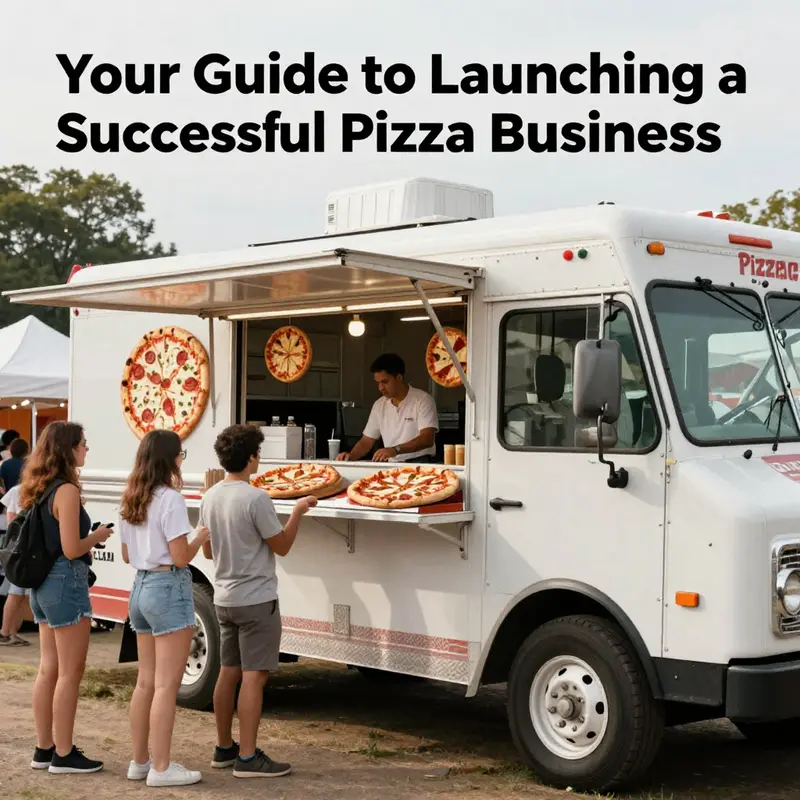
The allure of operating a pizza truck business lies in its mobility, flexibility, and lower overhead compared to a traditional restaurant. As food enthusiasts and entrepreneurs increasingly recognize the potential of the mobile food industry, understanding how to establish a pizza truck is paramount. This comprehensive guide navigates through the essential components: understanding your market, navigating complex legal requirements, and choosing the right equipment and vehicle. Each chapter builds upon the previous insights to equip aspiring pizza truck owners with the knowledge they need to launch and succeed.
Reading the Market Right: How Market Research Shapes a Successful Pizza Truck Startup
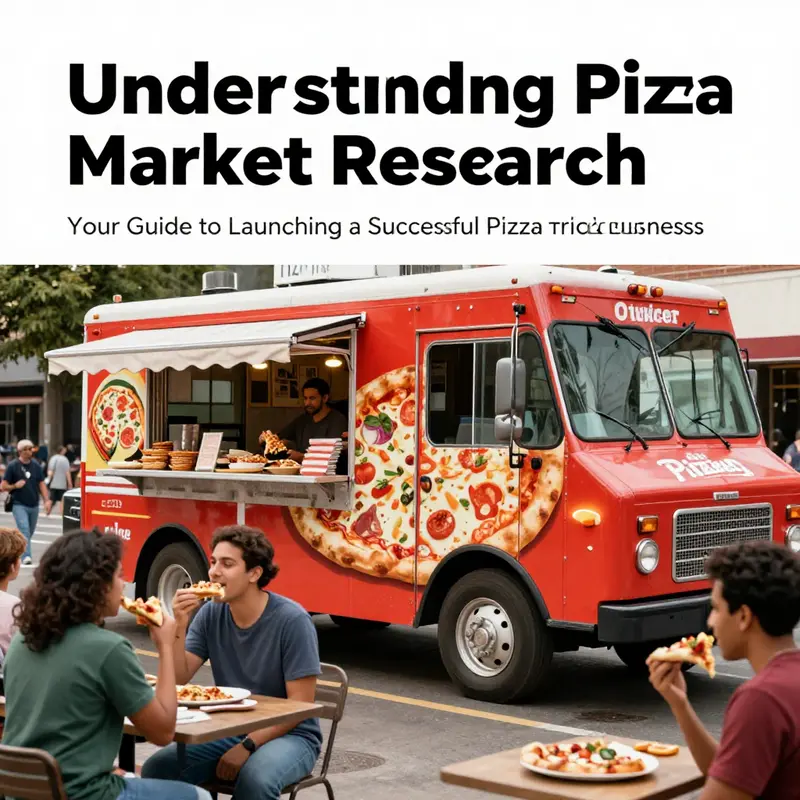
Market research isn’t a distant spreadsheet exercise; it is the compass you hold as you navigate the crowded, ever-shifting landscape of mobile food. In the context of opening a pizza truck, it translates into a practical, reality-tested plan for where you stand, who you serve, what you offer, and when you serve it. It helps you connect a concept with real demand and prevents you from chasing dreams in places where demand simply isn’t there. Think of market research as the bridge between idea and execution. Without it, you might build a brilliant kitchen on wheels and discover—too late—that there’s no steady stream of customers or that the pricing and menu don’t align with what people in your town are willing to pay for. With it, you can tailor your concept to local tastes, optimize your schedule and routes, and configure a menu that speaks to the times and places your truck can truly own.
To begin, you need a clear sense of objectives. You’re not collecting data for its own sake; you’re using concrete questions to shape the core of your business. Who are your ideal customers, and where do they spend their time? How much are they willing to pay for a pizza on the go, and what do they expect in terms of speed, quality, and variety? What spots are most accessible and sustainable for a mobile operation: busy office corridors at lunch, parks at weekends, or events that draw large crowds? How do prices at nearby food outlets compare, and what gaps exist in the local pizza scene that a truck could credibly fill? By framing your inquiry around these questions, you can align every operational decision—from dough fermentation times to oven choice and route planning—with actual demand rather than assumptions.
A central idea in market research for a pizza truck is identifying your niche within a crowded field. The market is often noisy with a mix of traditional pizzerias, festival vendors, and other mobile kitchens. Your niche becomes a beacon that helps customers recognize you in a single glance and helps you justify premium pricing or unique offerings. You might decide to emphasize authenticity with a wood-fired oven on wheels, or lean into customization with high-quality toppings and rapid service during lunch. Or you could focus on a comfort-forward menu that appeals to families and weekend crowds, with kid-friendly options and generous portions. The important thing is to let the local demand and the competitive landscape guide your concept, rather than forcing a generic approach that looks good on paper but struggles in practice.
In practice, market research blends qualitative impressions with quantitative signals. You’ll gather insights from conversations with potential customers and from broader data that describes the health of the mobile food sector. Primary research—direct conversations, surveys, and on-site observations—lets you hear what people want and observe how they behave near potential parking spots or at events. Secondary research—industry reports, demographic data, and competitive analyses—gives you the framework to interpret those signals and to benchmark your plan against broader trends. The goal is not to prove a preconceived notion but to distill a practical picture of demand, pricing, timing, and location viability.
When you translate those insights into a concept, a few disciplined patterns emerge. First, speed and simplicity matter a great deal. A limited menu—five to eight signature pizzas at most—reduces the cognitive load on customers and keeps prep manageable in a compact mobile kitchen. A focused menu also protects your margins, especially if you feature high-value add-ons such as premium cheeses, specialty oils, or crust variations that customers perceive as worth a little extra. The market responds to clarity: people want a consistent, repeatable experience as they pass by a truck multiple times, and a defined, repeatable offering makes that possible. Second, you learn where you should park and when you should operate. If the market study shows a heavy lunchfoot at office districts on weekdays, your truck can time its routes to maximize visibility during those hours and minimize downtime between serving windows. If weekends attract families to parks or event spaces, your scheduling shifts to accommodate longer service periods, a kid-friendly menu, and a layout that appeals to families who linger rather than hurry.
The most practical way to approach this is to view your market like a living map that evolves with the seasons, local events, and demographic shifts. The map is drawn from two streams: conversations with potential customers and a synthesis of data points from credible sources. In conversations, you’re listening for pain points and preferences. Do people in your target neighborhoods favor quick, hot slices for a fast lunch, or are they more inclined toward a leisurely, artisanal experience that just happens to be portable? Do office workers in your area value a quick lunch with gluten-free or vegan options, or do they lean toward classic flavors with familiar toppings? In these discussions, you’re not just collecting preferences; you’re gauging willingness to pay, the value placed on speed, and the appeal of a distinctive offering that justifies premium pricing.
On the data side, you’ll draw from a mix of industry indicators and local indicators. The broader landscape of mobile food services has shown steady growth in the past decade, a signal that a well-executed pizza truck can ride a positive trend. This is not a guarantee of success, but it is a supportive backdrop for careful, location-aware experimentation. Within your city or town, you’ll want to study foot traffic patterns at potential spots. A busy cross-street at noon may be more valuable than a park you adore but that sees little traffic on weekdays. The data you gather should inform your site selections, service hours, and even how you stage your truck’s exterior to attract attention from passersby.
One of the most valuable outcomes of thoughtful market research is a built-in mechanism for learning as you operate. You should design a feedback loop that turns observations into action. Track a small set of key indicators that tell you whether you’re resonating with your chosen audience. For a pizza truck, these indicators often include daily sales per location, average ticket size per customer, price sensitivity, and customer retention or repeat visit likelihood. A high repeat rate signals that your concept, quality, and service are delivering value that makes customers come back. A rising cost per slice, if not matched by proportionate increases in price or efficiency, signals a need to adjust either the menu or the process. The beauty of a mobile concept is that you can adapt quickly. If a particular location isn’t delivering, you can retire that spot and rotate in a more promising one with relatively modest disruption to operations.
The process is iterative by design. You begin with hypotheses—about who will buy, where you’ll park, and what you’ll serve. Then you test those hypotheses in real life, collect data, and refine. After a few cycles, you’ll have a clearer answer to questions like: Is there a sustainable lunch crowd near a specific business district? Will a park on weekend mornings bear enough families to support a larger menu? Can you price a core pizza at a level that covers labor, fuel, and ingredients while still delivering value? You’ll also learn what you don’t know, which is equally important. You’ll uncover blind spots about permit requirements, local regulations, or seasonal shifts that could slow you down or force adjustments to your operating plan.
A practical point about data sources deserves emphasis. Secondary data should be your starting point, not your only source. Localities differ in how friendly they are to mobile vendors. Zoning requirements, street permitting, and health codes may shape where and when you can operate. The data you gather from general sources—like demographic profiles, median incomes, and commuting patterns—helps you estimate demand in broad strokes. But you must verify those patterns against the reality of your specific area. This is where the primary research becomes indispensable.
To connect primary and secondary insights, consider a staged approach. Start with a quick survey of potential customers who work in an office district near your planned routes. Ask about lunchtime preferences, price expectations, and tolerance for fast service versus a more leisurely pizza experience. At the same time, observe foot traffic at a few candidate locations. Note the volume of people moving through, the dwell time, and the kind of foot traffic that seems most responsive to street food vendors. You’ll want to map these observations against competing options: what nearby food trucks or brick-and-mortar pizzerias offer, how their menus are structured, and what price points they employ. This competitive lens helps you identify a genuine gap—an opportunity that your truck can exploit with a compelling value proposition.
In this ecosystem, the role of branding cannot be understated. Market research informs not just the what and where, but also the how you present yourself. A brand that signals a clear point of difference—whether it is a wood-fired authenticity, a focus on high-quality ingredients, or a fast, affordable lunch option—needs to be consistent with the expectations you uncover in your market data. The branding should flow from the market’s voice, not contradict it. This alignment helps you craft a vehicle wrap, a menu, and a staking plan that create recognition and trust in the first moments a customer encounters you on the street.
When you reflect on the insights you’ve gathered, a natural question arises: how do you translate this body of knowledge into a concrete plan for your first few months? The answer lies in a rollout that mirrors the market’s rhythms rather than a single grand opening. Start with a soft launch at a couple of community events or farmer’s markets to validate the concept in a measured way. Observe how customers respond to the product, the price, and the service model. Use that feedback to adjust the menu, streamline the service flow, and fine-tune the pricing. Track your KPIs with discipline: daily total sales, the ratio of repeat customers, the cost per slice of crust, and the overall profitability margin after accounting for labor and fuel. If the numbers consistently point to a sustainable path, you can scale to more events, extend operating hours, or partner with other venues that attract your target audience, such as breweries or concert venues.
A practical demonstration of how a well-researched concept can translate into a thriving practice can be seen when you consider the timing and location strategy that emerges from the data. For example, if your market study reveals a steady stream of lunch traffic near a particular corporate campus, you should design routes that maximize visibility during the peak hours and ensure a reliable supply chain of dough, cheese, and toppings to avoid delays. Conversely, if weekends reveal a surge of families at a certain park, you may want to schedule a longer stay there, offer kid-friendly items, and coordinate with nearby vendors or event organizers to create a family-friendly environment that encourages longer visits and bigger orders. The outcome is a lean, responsive operation that changes with the market rather than clings to a fixed plan that may no longer fit.
The insight you gain from market research also helps you price your product effectively. You learn about willingness to pay, the importance of speed, and how much customers value premium ingredients. You can then build a pricing model that preserves margin while delivering perceived value. A common pattern in successful mobile pizza businesses is a tiered approach: a core lineup of reliably priced staples, supplemented by premium toppings or limited-time specials that justify higher price points without eroding the perceived value of the core offerings. The precise balance will depend on your local market signals, the quality of your ingredients, and the efficiency of your kitchen on wheels. In short, you deserve a price that covers costs, rewards efficiency, and reflects the quality customers expect when they see your truck rolling up with a mouth-watering scent and a clearly communicated value proposition.
Beyond the numbers, market research is about building relationships with the communities you serve. The more you learn about the rhythms of your potential customer base, the more you can tailor your presence to fit into the social fabric around your routes. This involves not only where and when you vend, but how you engage with people who come to you. A thoughtful approach can include a simple loyalty mechanism, delivered via accessible channels, and a storytelling angle that emphasizes your commitment to fresh ingredients, craft techniques, and local partnerships. The synergy between data-driven decisions and community engagement is what turns a mobile pizza operation from a novelty into a trusted, recurring option for lunch, dinner, and weekend bites.
In the end, market research is about turning uncertainty into a practice with predictable outcomes. It enables you to choose a niche with confidence, identify the best locations and hours, size your menu for efficiency, and price for profitability. It also keeps your idea dynamic enough to adapt as the market shifts, regulations evolve, or new competitors enter the scene. You should view the research as an ongoing partnership with the market, not a one-time checkbox. The more you engage with customers, observe data, and iterate, the more you’ll reduce guesswork and increase the likelihood that your pizza truck becomes a durable, beloved staple in your community. If you want a crisp, experiential sense of what a well-executed mobile concept can feel like, you can explore how others narrate their street-level journeys and the lessons they’ve learned through hands-on execution in the broader industry dialogue—a resource that captures the texture of the street, the pace of service, and the ways drivers translate market signals into action: Pizza Truck Experience.
As you balance ambition with evidence, remember that the market loves clarity. A well-researched concept communicates a clear promise to customers and a clear plan to partners and investors. It tells them why a particular block is the place to be at a particular time and what you will provide that makes your service valuable. It explains how your supply chain can reliably deliver consistent quality, how you will handle peak periods without sacrificing speed, and how your branding will look, sound, and feel distinctive in a sea of options. When these elements come together, your market research stops being a set of numbers and becomes the living, actionable backbone of a startup that can scale from a single, well-chosen truck to a small fleet that serves multiple neighborhoods and events with consistency and charm.
External resources and ongoing data sources fuel this process. For practitioners planning a launch, keeping an eye on credible labor market and industry indicators helps you stay grounded as you experiment. You’ll want to triangulate your local observations with national trends and long-running data about the mobile food service sector, which provides a broader context for anticipated demand and potential headwinds. This balanced perspective supports prudent planning around capital needs, permits, and insurance requirements, ensuring that the research you rely on translates into a deployment plan that is both ambitious and sustainable. For further reading on industry trends and practicalities, see reputable data sources that track small-business dynamics and the evolution of mobile food services. External resource: https://www.bls.gov/.
Steering Through the Paperwork: Legal Foundations for Launching a Pizza Truck
From the moment you consider rolling a pizza truck onto the street, the legal landscape begins to shape every strategic choice. The allure of a mobile kitchen—lower overhead, flexible locations, and the potential to build a loyal local following—remains compelling. Yet mobility introduces a web of rules that don’t quite apply to a stationary restaurant. Understanding these rules early is not merely about compliance; it’s the difference between a smooth launch and a costly stumble. The chapters that follow flow from the recognition that a pizza truck is a business on wheels, and with that mobility come responsibilities to customers, to the public realm, and to the authorities who oversee food safety, commerce, and public space. When you start with clarity, you can design a launch plan that respects the letter of the law while preserving the autonomy that makes a pizza truck so appealing in the first place.
The legal journey begins with a decision about how you will structure the business itself. A formal structure—whether a sole proprietorship, a limited liability company, or a corporation—provides a shield for personal assets and shapes how you file taxes, how you raise capital, and how you approach liability. An LLC, for example, offers liability protection and a straightforward path to separating personal finances from business obligations. A sole proprietorship, by contrast, is simpler to establish but places the full burden of liability on the owner. Whichever path you choose, you’ll need to register the entity with the state and obtain an Employer Identification Number from the IRS, even if you are a one-person operation. These steps create the base from which every other permit, permit, and policy flows. You may also need to file a fictitious or doing-business-as (DBA) name so customers can identify the truck’s legal name on receipts and marketing materials. The goal is not to complicate things but to establish a traceable, compliant framework for every transaction, from the first order to the last napkin leftover at the end of a busy shift.
Once your business is officially formed, the licensing and permitting phase begins in earnest. In most locales, a municipal business license is the entry point. This license signals that your operation is recognized as a legitimate enterprise within the jurisdiction. Beyond that, a mobile food vendor permit is typically issued by the city or county health department. This is not a formality; it ensures that your vehicle’s kitchen meets sanitation standards and that you have a plan for safe food handling in a confined, moving environment. A food service permit or food handler’s permit may also be required for you and any staff who prepare or handle food. These permits often involve a short exam or training module on basic food safety and hygiene, reinforcing a standard that protects customers and your brand alike. In parallel, a fire department approval is commonly needed when gas ovens or other flame-based equipment are part of the setup. The presence of a combustible heat source in a small, enclosed space elevates risk, and fire authorities will want to confirm escape routes, extinguishing systems, and clear labeling of emergency shutoffs. Finally, a sales tax permit is essential if you intend to collect and remit sales tax. While the specifics vary, the throughline is consistent: you must align your business with the tax structure that governs the transactions you conduct, tracked carefully and remitted on schedule.
The vehicle itself becomes a moving performance space, and vehicle and equipment compliance is where practicality and safety converge. A sound truck conversion is not just about function; it’s about reliability and safety under real-world operating conditions. The vehicle may be a repurposed van or a purpose-built mobile kitchen, but the design must account for ventilation, insulation, and ample space for the cooking, prep, and service workflow. Essential equipment includes an oven suited to your concept, a refrigeration system that reliably maintains temperature, stainless steel prep surfaces for sanitary efficiency, a dependable water system with a handwashing station, and a waste disposal setup that avoids backflow or leaks. A robust point-of-sale system and a method for managing digital orders integrate the front of the house with back-end operations, ensuring orders flow smoothly even when the line grows long. Insurance is non-negotiable: commercial auto coverage to protect the vehicle, general liability to cover bodily injury or property damage, and, where applicable, workers’ compensation if you hire staff. These requirements are rarely optional; they are safeguards that protect you, your customers, and your investors while signaling responsibility to lenders and permit authorities.
In this regulatory orbit, the question of where you can operate also matters. Mobility creates opportunities, but it also imposes constraints. Cities designate zones where mobile vendors may set up shop and govern where you can linger and how long you may stay in a given location. Event permits, park approvals, and private venue contracts all carry their own terms, sometimes with designated time windows or conditional approvals tied to crowd control, traffic management, or noise limitations. The end result is a calendar of permissible venues and times rather than an open-ended highway. The prudent operator builds a pipeline of pre-approved locations, secures commitments for recurring events, and negotiates permit coverage for major festivals well in advance. This foresight protects you from competing with yourself for attention and ensures your schedule remains feasible as demand grows.
Insurance, naturally, stands as a cornerstone of compliance and business health. General liability protects against common risks like slips, trips, and spills in public spaces. Commercial auto insurance covers the truck while it travels between locations, a critical line of defense as you negotiate the complexities of street parking, loading zones, and traffic incidents. If you employ staff, workers’ compensation becomes mandatory in many jurisdictions. Product liability, while not always required, offers a valuable shield against claims related to foodborne illness or allergic reactions. Each policy interacts with the others in a way that builds a safety net around the operation, a net that is often as important to lenders as it is to customers who trust you with their meals.
The most technical layer involves health and safety compliance, anchored by the standards of the FDA Food Code. This code informs how you store, handle, and prepare food, and it guides critical practices such as proper handwashing, preventing cross-contamination, and maintaining safe cooling and reheating temperatures. Compliance is not merely about meeting a baseline; it’s about creating a culture of safety that threads through every shift. The mobile environment adds nuance to these requirements: you must account for the challenges of limited space, the need for reliable hot and cold holding, and the logistics of washing and waste disposal on wheels. An explicit plan for cleaning, sanitizing, and pest control becomes as essential as the dough recipe itself. Screenings, schedules, and routine inspections are your organizational spine, making sure that what you serve meets the same standard whether your truck is parked in a park, at a corporate campus, or outside a bustling venue.
Environmental and zoning considerations complete the regulatory mosaic. Even as a vehicle, you are part of a larger ecosystem. Waste management requires careful handling of grease, trash, and wastewater, often involving holding tanks or dedicated containment systems that prevent spills and protect the groundwater and public spaces around you. Noise and emissions, while perhaps less intuitive for a pizza truck, still fall under local restrictions, particularly in residential neighborhoods or near sensitive uses. The responsible operator maps out these environmental footprints and builds routines that minimize impact. This practical discipline not only aligns with regulatory expectations but also endears you to communities that become your most loyal followers when you demonstrate respect for their spaces and routines.
The path to lawful operation is not a single checklist but an ongoing discipline. Early on, you should engage with city or county offices, zone administrators, and health departments to understand the exact requirements for your city. Rules differ widely from one jurisdiction to another, even from one neighborhood to another within the same city. Because the landscape can evolve with new city policies or changes in health codes, it is wise to establish a point of contact within each agency and schedule periodic reviews of your compliance posture. A practical approach is to keep a centralized file—physical or digital—that contains all registrations, permits, inspection reports, insurance certificates, and renewal timelines. A single lapse can derail an entire season, underscoring the value of proactive renewals and proactive communication with authorities.
For readers who want a compact, actionable primer on the sequence of steps in setting up a food-truck operation, a practical resource compiles the basic steps in a clear order. A practical, step-by-step primer is accessible here: legal steps for launching a food truck. This reference is not a substitute for local regulations, but it can serve as a usable map as you prepare to engage with your city’s agencies. It helps align your internal processes with the expectations that regulators will have when they evaluate your opening package, from the entity formation documents to the sanitation plans and the proof of training for staff. It is a bridge between entrepreneurial ambition and regulated operation, ensuring that every milestone you pursue—whether it is the first permit request, the first fire-suppression inspection, or the launch at a community event—aligns with the legal framework that makes your truck a trusted part of the food ecosystem.
In practice, this legal groundwork translates into a deliberate launch rhythm. Start with the business formation and registrations, then secure the health and safety permits that anchor your kitchen’s legitimacy. Simultaneously, align your vehicle’s configuration with the expectations of safety inspectors and fire authorities, ensuring your exhaust, ventilation, water, and waste systems are sealed and documented. As you approach your first events, confirm location permissions and schedule event-specific approvals, and keep a master calendar that tracks renewal dates, compliance inspections, and insurance expirations. The rhythm is not tedious; it is protective—protective of customers who rely on your consistency, protective of your team as they learn the craft, and protective of the brand you are building on the streets. And because you operate in a dynamic environment where permit conditions can shift with the season, your ability to adapt—and to document those adaptations—will be a meaningful differentiator in a competitive market.
The legal journey also invites a broader perspective on responsibility and opportunity. Every permit granted, every inspection passed, becomes a signal of legitimacy that customers naturally trust. It is the quiet groundwork that supports expansion plans, whether you intend to scale to multiple trucks, partner with event organizers, or establish a year-round presence near a particular hub of activity. When you have built a reputation for safety and reliability, the growth conversations with lenders and potential partners become less haunted by unknown risks and more anchored in demonstrable governance. In the end, the legal framework is not a constraint; it is a framework that, when understood and embraced, unlocks sustainable growth while preserving the essence of what makes a pizza truck appealing—the freedom to bring great pizza to people wherever they gather.
Finally, the guidance here converges with practical, real-world wisdom: regulatory requirements are not static, and the road to compliance is rarely a straight line. Your best strategy is to treat compliance as a living, breathing part of your business model. Regularly review agency updates, renew licenses ahead of expiration, maintain clean records, and invest in staff training that reinforces safe practices. When you operate with transparency and consistency, you establish a reputation that travels as reliably as your truck. In time, the legal landscape that once seemed like a maze turns into a predictable gear—the engine that powers your brand’s mobility rather than a barrier that slows it.
External resource for regulatory standards and deeper guidance is available through federal authorities. See the FDA Food Code for detailed guidance on food safety, handling, and preparation principles that apply to mobile food operations in many jurisdictions: FDA Food Code.
On Wheels and in Heat: Mastering Equipment Design and Vehicle Strategy for a Mobile Pizza Kitchen
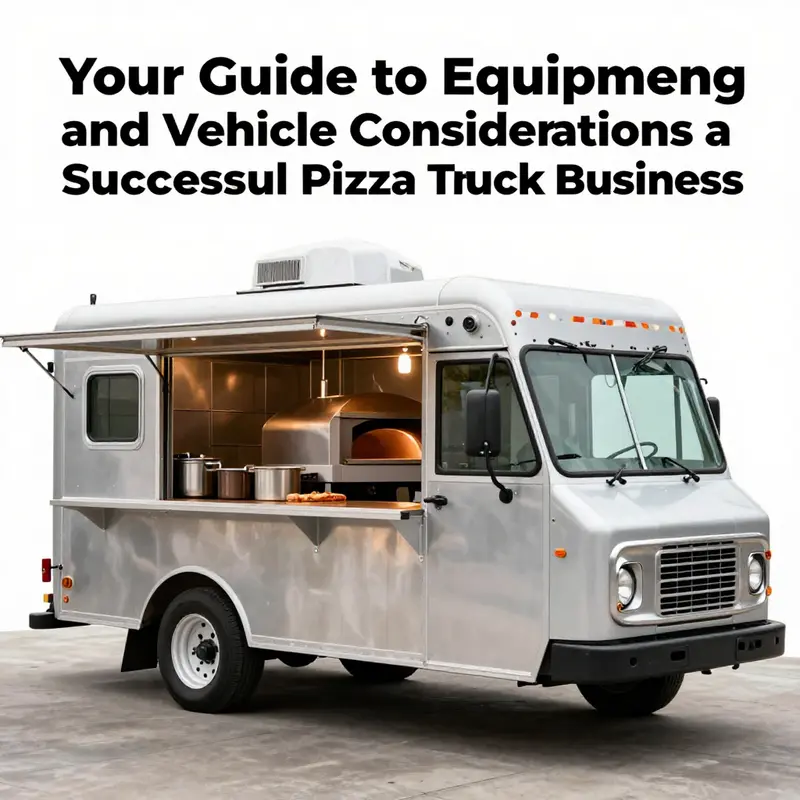
The heart of a successful pizza truck business beats in two places at once: the kitchen that makes the dough rise and the vehicle that carries it to its customers. When you open a pizza truck, you’re not just buying a oven on wheels; you’re crafting a compact, compliant, and efficient workspace that can deliver consistent pies, safe practices, and a brand experience that travels. This chapter threads together the practical realities of equipment selection and vehicle design with the broader business goals you’re pursuing. It explains how a thoughtful approach to your mobile kitchen—balancing performance, safety, and workflow—can shorten the path from concept to a profitable, repeatable operation. It’s about choosing the right core components, planning your layout with an eye toward speed and quality, and understanding the regulatory frame that governs what can operate where and how.
Begin with the acknowledgement that your truck is your storefront. The way you equip it and lay out its interior determines not only how fast you can serve a line of hungry patrons but also how reliably you can reproduce your product across venues—from a park on a weekday to a bustling festival on a weekend. This requires a design that respects heat, ventilation, water management, waste handling, and, crucially, a smart flow from raw ingredient to finished slice. The decisions you make in this stage ripple through every other facet of the business: how you source ingredients, how you train staff, how you price menu items, and how you schedule events. The best operators treat their mobile kitchen as a living system, designed to adapt to different spaces while maintaining a consistent standard of quality.
First, the vehicle itself must be purpose-built or properly retrofitted for food service. A standard cargo van can become a functional kitchen if you install a clean, certified cooking enclosure, effective ventilation, and robust insulation. The absence of proper ventilation is not only unsafe—it will spoil your dough, your toppings, and your customers’ experience. Insulation matters because it stabilizes oven temperatures and helps keep energy use predictable. In a compact space, heat and steam must be managed so that the oven performance isn’t compromised by drafts or temperature swings. A well-designed kitchen layout considers the path of food from storage to prep to cook to service, ensuring there are no bottlenecks that slow service during peak periods. In practice, this means prioritizing a logical line flow: cold storage and prep near the back, the oven toward the center where it can vent without blowing onto customers, and a service window positioned to minimize the distance staff must move across hot surfaces.
A high-performance oven is the centerpiece of any pizza truck. It must deliver the blistering heat necessary for the crust you’re aiming for, while fitting into a space that can be accessed safely by a compact crew. The emphasis is on speed, consistency, and energy efficiency. In a mobile kitchen, you’ll often choose between a gas-fired or electric convection system versus a more specialized stone or deck oven built to handle pizza dough in tight quarters. Whatever you select, the oven should be capable of reaching and maintaining the temperatures you need, with reliable heat distribution so crusts bake evenly across the stone. The key is to look for a unit that performs consistently in a rolling environment, handles repeated cycles during busy service, and can be cleaned and serviced with ease. In this space, brands and models are less critical than the oven’s ability to maintain stable temperatures, recover quickly after door openings, and integrate with your ventilation and fire-safety requirements. And while a particular brand name is often discussed in industry circles, the central criteria remain universal: bake quality, reliability, safety, and serviceability within the constraints of a mobile kitchen.
Beyond the oven, refrigeration is the second pillar of a safe and efficient operation. A robust cold chain is essential for dough, cheese, vegetables, and finished toppings. In a vehicle where space is at a premium, you’ll likely lean toward a compact, reach-in or under-counter refrigeration system, paired with a separate freezer compartment if your menu includes frozen dough balls or specialty ingredients. Insulated drawers and well-sealed doors help reduce temperature fluctuations during transit and daily shutdowns. The refrigeration plan must also consider energy consumption and maintenance. For speed and throughput, it’s advantageous to keep common ingredients in readily accessible locations—things like shredded cheese, diced vegetables, and pre-portioned toppings—so your crew can assemble pizzas quickly without leaving the line or rummaging through crowded coolers.
Sanitation cannot be an afterthought. A commercial-grade sink is a must for cleaning tools, rinsing dough boards, and maintaining hygienic practices on the move. The sink size and configuration should fit within your vehicle layout without forcing you to pedestrian paths around hot ovens or greasy surfaces. A practical setup includes hot and cold running water, a dedicated area for handwashing, and clearly defined zones for washing, rinsing, and sanitizing to align with health regulations. Where space is tight, you may combine a compact two-compartment or three-compartment sink with well-planned drainage and waste disposal. The waste management plan—how you handle used oil, wash water, and solid waste—deserves upfront attention to avoid backflow, odors, or regulatory issues when you park in various districts.
Counter space and storage are the quiet workhorses of your operation. In a mobile kitchen, every inch matters. You’ll want stainless steel prep surfaces to withstand heavy use and frequent cleaning, plus a layout that keeps dough handling, sauce prepping, and topping assembly within a few simple hand movements of each other. Ample storage solutions, including wall-mounted racks, magnetic knife holders, and overhead shelves, help keep the workspace organized and safe. When space is limited, consider modular equipment and multi-function units. For example, you might use a prep table with integrated cutting boards and a built-in waste bin, or a refrigerated prep unit that doubles as a counter space when needed. The goal is to create a repeatable workflow that minimizes motion waste and preserves the integrity of your dough and toppings.
The vehicle layout is a critical, often overlooked, form of competitive advantage. Your truck’s interior should be designed with a clear, safe workflow in mind. The customer-facing side—your service window—must be kept separate from the staff’s work zone to prevent cross-traffic hazards. Clear sightlines, accessible controls, and properly placed fire safety equipment are non-negotiable. You should plan for one or two entry points for staff with dedicated routes to the oven and prep areas. Good design anticipates daily operations: how easy is it to clean between shifts, how quickly can you rotate ingredients, and how well does the setup support a rush without compromising safety? In this way, your vehicle becomes less of a set and more of an adaptive, well-tuned machine capable of delivering high-quality pizzas under varying conditions.
The regulatory landscape for mobile food vending adds another layer of complexity to equipment and vehicle choices. Licensing and permits aren’t merely bureaucratic steps; they define how and where you can operate. Some cities require specific vehicle standards, fire safety approvals, and health inspections before you’re allowed to serve. Zoning rules determine permissible parking locations and event participation. It’s wise to align your truck’s design with local requirements from the outset. For example, certain jurisdictions expect a fire suppression system for gas-fired cooking and a dedicated waste disposal plan that meets environmental and health standards. The vehicle’s chassis should be sturdy enough to support the weight of equipment and the vibrations of city streets, while also complying with any inspections tied to mobile food vending.
In practical terms, your equipment selection should reflect a balance between performance and cost, while keeping in mind the realities of a mobile business. A simplified yet capable menu reduces the stress on your kitchen and speeds service. High-margin toppings and smart prep play a crucial role here: you can achieve greater profitability by pre-cooling dough, pre-portioned toppings, and using consistency-driven recipes that staff can execute without extensive training. The emphasis on standardization is essential. Document every step of the process—from dough hydration and fermentation times to sauce recipes and topping portions—so that even a new employee can produce the same pie with minimal supervision. This isn’t merely about avoiding mistakes; it’s about building a brand promise that every customer experiences with the same bite, crust, and aroma, regardless of which stop you’re at.
As you plan, keep a close eye on the relationship between equipment and speed. In a truck that occasionally serves long lines, you want to avoid steps that cause bottlenecks. If your workflow requires you to repeatedly walk across a hot zone to fetch ingredients, you’ll slow the line and frustrate customers. The right layout keeps you close to the oven while maintaining safe distances from hot surfaces. It also makes maintenance straightforward. A serviceable kitchen means you can keep the oven’s blower, vent hood, and gas lines in good condition with routine checks, rather than discovering a problem mid-shift. Routine maintenance is a cost of doing business on wheels, but it pays off in uptime and reliability. A well-thought-out system reduces downtime and helps you deliver consistent crust, melt, and tangy tomato brightness that become your signature.
In addition to the core equipment, you’ll consider ancillary components that round out the operation. A dependable point-of-sale system, mobile payment options, and a way to manage orders digitally are part of the juice that fuels growth. While these elements live outside the stove, they influence how you structure the kitchen. For instance, if you’re integrating a digital ordering flow, you’ll want a counter space that accommodates a tablet or a small screen, as well as a way to pass orders to the kitchen without interrupting the cook line. You’ll also want a plan for cleaning and sanitizing the devices you introduce into the workspace. The aim is to deliver not only great pizza but a smooth, modern customer experience that complements the on-the-road nature of your business.
A practical way to approach this phase is to start with a clean sheet and design your kitchen to fit the menu you intend to run consistently. If your concept emphasizes a classic Neapolitan style with crisp, blistered crusts, you’ll want a heat source that delivers intense, even heat and short bake times. If your concept leans toward gourmet or seasonal toppings, you may prioritize larger cold storage or a broader array of toppings to keep quality high across a longer shift. Either way, keep the layout flexible enough to adjust as your menu grows or as you shift focus to different events and venues. The pizza truck of tomorrow should be able to adapt its interior without a full rebuild.
To keep this practical, consider how you would explain your equipment choices to a prospective investor or partner. They’ll want to know not only why a particular oven or sink fits the space but also how it integrates with permits, insurance, and health compliance. A simple, consistent story—“we designed a mobile kitchen that prioritizes safety, speed, and reliability, with heat control, sanitation, and an efficient prep flow as core pillars”—helps align everyone around a shared standard. You can illustrate this by mapping a typical service cycle from pre-service setup to teardown, showing how each component contributes to quality and speed. This narrative is not about owning the flashiest gear; it’s about building a system that you can count on when the wheels roll.
For those readers who crave a more concrete, how-to angle, the literature and case studies point toward a practical path: start with the vehicle’s chassis, add a cooking module with a compact yet capable oven, incorporate a robust refrigeration system, and ensure sanitation and drainage meet local codes. Then design the interior for safe, efficient workflow, with a service window that supports fast, friendly customer interaction and a staff area that remains separate from the customer zone. It’s a rounded approach that recognizes the vehicle as a small, highly engineered workspace rather than a large, fixed restaurant. The more you invest in thoughtful design early on, the easier it will be to scale the operation, whether you expand to a second truck, add a partner, or rotate through events with high predictability.
As you refine your plan, you’ll likely return to a few core questions: Which oven format best fits your expected volume and space? How will you source a compact refrigeration system that’s efficient and easy to service on the road? What is the minimum sanitary footprint that still meets your city’s guidelines? How will you optimize the layout to minimize movement and maximize throughput without compromising safety? And perhaps most important, where will you park, park legally, and park with permission so you can operate reliably across multiple venues? The answers to these questions are never identical from city to city, but the underlying framework remains the same: prioritize heat integrity, food safety, cleanability, and a workflow that makes your crew efficient and your customers delighted.
If you’re looking for a practical takeaway that connects this chapter to the broader article, remember that your equipment decisions should be reflected in your business concept and launch plan. A lean menu and a layout designed for speed will shorten the path to profitability and reduce the risk of mid-course adjustments. Your branding and service style should echo the reliability of your kitchen: consistent crust, crisp edges, and a short, satisfying finish that makes customers remember the pie and seek you out next time. And because your vehicle is a moving brand, the way it looks—its wrap, signage, and the clean lines of your service window—should reinforce the same message as the kitchen. The combination of solid equipment, careful layout, and compliant operations is what turns a pizza truck from a temporary curiosity into a trusted, repeatable business.
For readers who want a hands-on reference to building the mobile kitchen itself, there is a practical resource that tracks the steps of constructing a pizza truck and aligning it with regulatory expectations. It provides a straightforward road map from chassis selection through installation to launch, emphasizing a tight fit between design and compliance. The key takeaway is the same as in this chapter: treat the vehicle as a working, evolving system that must accommodate heat, sanitation, and flow while staying within the rules.
In closing, the journey from concept to customer starts with the space you build for heat and hands. Choose a layout that prioritizes safe, repeatable cooking workflows, invest in an oven and refrigeration that deliver fast, even results, and design the interior for efficient cleaning and maintenance. When the vehicle, the equipment, and the operating plan come together, you create a mobile kitchen that can serve great pizza with the same reliability—from the first test batch to the busiest festival—that you envisioned when you first sketched the concept. If you want to dive deeper into the practical steps of turning a shell into a functional pizza kitchen, you can explore a detailed guide that focuses on the process of building a pizza food truck and aligning it with best practices in the field. This route helps ensure your truck doesn’t just look the part but lives up to the performance your customers expect. how to build a pizza food truck.
As you shift from planning to execution, remember that the vehicle and equipment story you tell should be a part of every stakeholder conversation. Investors, lenders, and partners will want to see a clear path to profitability that starts with a well-designed kitchen on wheels. Your narrative should explain how your choices create efficiency, reduce risk, and support a brand that can travel from one event to the next with the same quality. And as the business grows, you can revisit the interior layout, swap in upgraded components, or reconfigure for larger volumes, always with the aim of keeping the dough warm, the toppings vibrant, and the service fast enough to keep pace with demand. The road to a successful pizza truck business is paved with thoughtful preparation, precise equipment selection, and a layout that keeps heat, hygiene, and hustle in harmonious balance.
External resource: https://www.alfaforni.com/en/food-truck-pizza-oven
Final thoughts
Establishing a pizza truck business combines culinary passion with strategic planning. By understanding the market landscape, adhering to legal mandates, and investing in the right equipment, you lay a strong foundation for your mobile pizzeria’s success. Remember, each step taken today not only brings you closer to launching your business but also sets the stage for growth and sustainability in the thriving food truck industry. Engage with your community, adapt to feedback, and keep your menu exciting to ensure long-term success.