

Launching a successful pizza food truck hinges on delivering delicious pies consistently while managing time and resources effectively. At the heart of every great pizza is its dough, making it vital for food truck owners to master the art of dough preparation. This guide will navigate you through choosing the right dough formula, utilizing a commercial mixer for optimal results, and employing bulk fermentation techniques, ensuring you meet customer demands while maintaining quality. Each chapter is designed to enhance your understanding and enable you to create exceptional pizza dough tailored for your mobile kitchen environment.
Mobile Dough, Masterful Crust: A Practical Formula for Pizza on a Food Truck

In a food truck, the dough must be forgiving and scalable. A hydration range around 65 to 70 percent yields a crust with good oven spring and a soft crumb that ages well during long shifts. Use a lean salt level and a small amount of olive oil to improve handling and shelf life. Fermentation should be balanced with service pace, with options for a 2 to 4 hour room temperature bulk or a 12 to 24 hour cold ferment when the schedule allows. Divide after bulk fermentation into portions around 230 to 260 grams, rest 20 to 30 minutes, and bake on a hot deck or conveyor for blistered crusts. Keep logs of batch weight, mix time, fermentation, and outcomes to reproduce results across trucks.
Powering Consistent Dough on the Move: Mastering a Commercial Mixer for a Pizza Food Truck
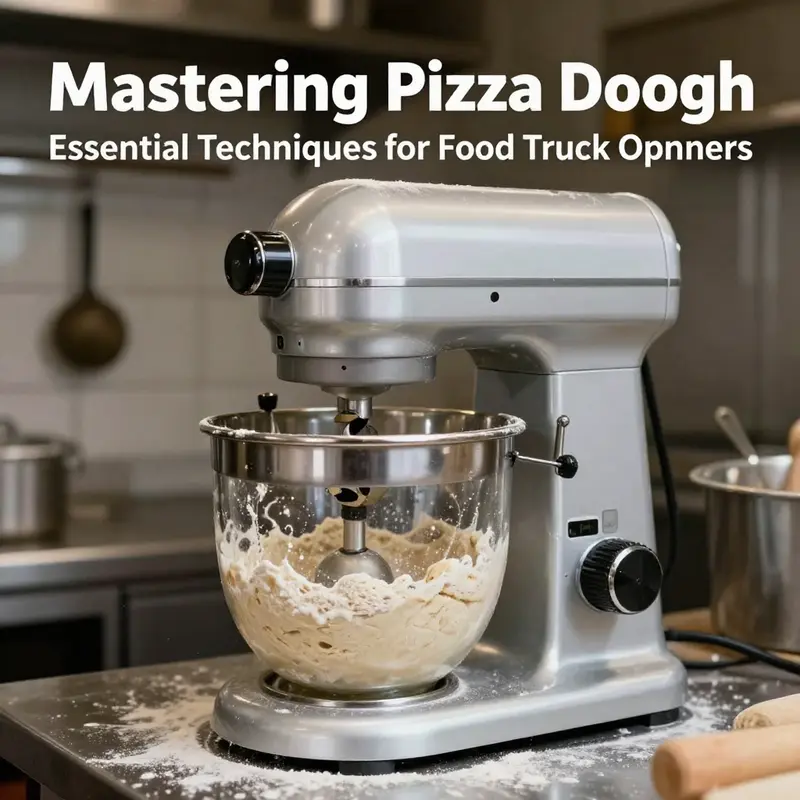
In a pizza food truck, the pace is relentless and the dough is the make-or-break element that travels with you. The right mixer doesn’t simply knead; it anchors consistency, enabling a team to deliver identical crusts from one order to the next, across busy lunch rushes and late-night shifts. When space is tight and time is precious, a dedicated, high-capacity mixer becomes the backbone of your dough program. It frees staff from repetitive labor, reduces fatigue that leads to inconsistent results, and provides a reliable baseline so every pizza meets a defined standard. The goal is not luxury equipment but predictable outcomes—dough that bills as the same dough whether you’re serving a line of five or twenty pizzas in an hour, whether you’re cooking to order or pulling several dough balls from a cold crib for quick service.
A practical starting point is a high-hydration, low-yeast dough. Hydration, the percentage of water relative to flour, governs the dough’s internal moisture and gluten development. For a food truck, a 65–70% hydration range offers a soft, extensible dough with enough strength to hold shape during hand-stretching and yet remain forgiving under the stress of rapid assembly. A classic formula that scales well for mobile operations uses 1000g bread flour (or all-purpose flour), 650g water, 20g salt, 10g instant yeast, and an optional 30g olive oil. This combination yields a dough that’s pliable, forgiving, and capable of yielding a chewy, lightly blistered crust—characteristics that suit both Neapolitan and New York–style pizzas. The olive oil’s role is not merely flavor; it contributes to a slightly extended shelf life and helps with handling when the kitchen clock is ticking.
The core of dough work on a truck hinges on how the mixer handles development. You want a mixer that can reliably hydrate, combine, and develop gluten without requiring hand-kneading or prolonged labor by the staff. In practice, this means a professional-grade, three- or four-quart capacity mixer with a planetary mixing action. The aim is to achieve a smooth, elastic dough that passes the windowpane test—where a tiny piece of dough can be stretched so light shines through without tearing. This test is not a ritual for perfectionist pastry chefs alone; it’s a practical check that your dough’s gluten network is sufficiently developed to hold up during shaping, tossing, and baking in a hot oven. With a dependable mixer, your team can batch a day’s dough in a few precise cycles, guaranteeing uniform texture across dozens of pies.
The mixing sequence matters almost as much as the ingredients. Start with a dry mix of flour, salt, and yeast in the bowl. Pour in water and oil as you begin to mix. In the first stage, keep the speed low—level 1 or 2 on most commercial machines—and mix for about 2–3 minutes. This gentle start helps hydrate the flour and evenly distribute ingredients without prematurely tearing the developing gluten. Then ramp up to a higher speed—speed 3 or the top setting available—and mix for 10–15 minutes, until the dough becomes smooth and elastic and passes the windowpane test. If your mixer has a “tumble” or “knead” pulse option, use it in short bursts to ensure even gluten development without overheating the dough. If you’re using a fat like olive oil, incorporate it after the initial mix and continue kneading until it’s fully absorbed. The goal is not to exhaust the gluten network but to coax it into a structure that balances extensibility with cohesion.
As a safety measure for a mobile operation, logging batch times and outcomes becomes essential. A simple timer and a notebook—or a digital log—keep track of how long each batch was mixed, at what speed, and the post-mix dough condition. This record-keeping makes it easier to reproduce results across shifts and cooks. It’s a practice that pays for itself in consistency and waste reduction, two comfort points for a business that relies on predictable output to satisfy a steady stream of customers.
Bulk fermentation is the next lever you can pull to elevate flavor and texture while maintaining workflow efficiency. After mixing, you can let the dough ferment at room temperature for a short window or opt for a cold ferment that stretches over 12–24 hours in the fridge. The benefit of bulk fermentation is twofold: it deepens flavor through slow fermentation and improves dough handling by allowing the gluten network to relax and strengthen gradually. On a truck, cold fermentation is especially valuable; it lets you prepare dough ahead of service, lay out portions when the day begins, and bring them to room temperature as orders come in. The knowledge base notes a practical middle ground: a two-hour bulk fermentation with periodic folds every hour can yield improved flavor and texture while still fitting into a robust service timeline. You can adapt that approach to your truck by scheduling a mid-shift folding cycle to refresh the dough’s structure without halting service.
When you’re ready to portion, divide the bulk dough into uniform pieces—commonly around 250g per dough ball for individual pizzas—and let them rest under a damp cloth or plastic dome for 20–30 minutes. This resting stage relaxes gluten, making the dough easier to shape and less prone to springing back when you stretch it. Rest is not a waste of time in a food truck; it’s a practical step that reduces the risk of torn dough and improves the final pizza’s texture. The rest period also harmonizes with a busy workflow, allowing staff to plate toppings or answer customer questions while the dough comes to a more pliable state.
Shaping in a compact kitchen demands strategy. In a mobile setup, you can either pre-shape dough balls and refrigerate them for up to 24 hours or shape on demand as orders come in. Pre-shaping offers speed at service time and is particularly useful during peak hours when every second counts. When you stretch the dough, you can do it by hand or with a rolling pin, depending on your team’s skill and the crust style you’re pursuing. A properly rested dough stretches readily and resists tearing, enabling you to shape a tortilla-thin edge or a thicker, chewier rim as your menu requires. Top the dough with sauce, cheese, and toppings in quick, practiced motions, then bake immediately in a high-heat deck or conveyor oven. In mobile terms, the key is to keep a consistent oven temperature and to move pizzas through the oven with practiced speed so the crust achieves a crisp edge while remaining tender inside.
The choice of oven makes a major difference in how you leverage dough quality in a truck. A deck oven or a conveyor oven provides even heat and rapid cooking, which is critical when tickets stack up. A high-heat environment ensures the bubbles set quickly, the crust blisters attractively, and toppings cook through without over-drying the dough. For a workflow that values throughput, you’ll want a setup that minimizes handling of pizzas mid-bake, as every transfer or repositioning wastes valuable seconds. The aim is to deliver consistent crust texture—chewy and blistered—with minimal variance from one order to the next. In a well-run truck operation, the dough becomes the constant against which all other variables, including toppings and oven quirks, are managed.
Beyond the core dough process, equipment ergonomics play a quiet but essential role in consistency. A dough divider and rounder can shape portions into uniform balls, ensuring each pizza starts from the same baseline. Airtight dough containers keep the interior environment stable, protecting moisture and preventing drying out or over-fermentation. Time stamps on containers help with FIFO inventory, ensuring older portions are used first and reducing waste. When space is limited, clever storage and labeling become a daily performance tool. Keep frequently used dough near the oven, stacked in a cart or on a rack that’s easy to access during service. Rotate batches methodically, so every ball progresses through bulk, rest, shaping, and baking on a predictable clock. The discipline of storage and labeling pays back as brand reliability; customers come to expect a crust that tastes the same whether you’re at a 2-hour or a 10-hour service.
Incorporating a robust dough program into a food-truck operation naturally invites the question of how to balance production with menu variety. A simple strategy is to maintain a single, solid dough formula and adapt toppings and sauce profiles to create variation without touching the base dough. The mixer remains central to that consistency. When you adjust toppings, you still rely on the same dough structure to deliver the same crust texture and chew. That stability is what your customers recognize as your signature. A well-executed dough plan also supports staff training; new team members can learn a repeatable routine quickly, reducing the learning curve for a mobile kitchen and ensuring that the dough remains consistent even as you scale up or tweak menus for events.
From a business perspective, the operational advantages of a commercial mixer extend to labor efficiency and waste reduction. A reliable mixer condenses what used to be several labor-intensive steps into a single, repeatable process. It frees staff to focus on customer service, proper topping distribution, and quick order fulfillment. Fewer manual kneads mean less fatigue, which translates into steadier performance during peak hours and fewer mistakes that can derail a busy line. The result is a dough program that aligns with a broader strategy for profitability: faster service, consistent product, and less waste due to over-fermentation or poor handling. In the long run, that consistency becomes a critical differentiator in a crowded street-pareto of options where customers judge quality in a single bite and a brief impression of your brand.
For operators seeking further validation of scalable, professional dough methods, the Serious Eats guide on pizza dough offers a scientifically grounded framework for hydration, gluten development, fermentation, and proofing. It’s a resource that complements the practical, on-the-ground approach described here, supporting you as you scale from a single truck to a small fleet or a rotating sidewalk presence. If you want a direct, well-documented method to study, you can explore their detailed recipe and testing notes to understand how hydration levels influence dough behavior across different flour types and environmental conditions. This outside perspective can help you adapt the base dough formula to your local climate, flour brands, and oven characteristics, while preserving the core advantages of a mixer-driven workflow. The aim is not to copy a recipe exactly, but to apply a tested science to your mobile kitchen practice so you can deliver the same crust quality in every shift.
As you build your dough program, consider how this chapter’s approach connects to broader operations, including training, inventory, and customer communication. A well-documented dough process provides a clear training path for new staff and a common language across shifts. It helps with inventory planning because you know how many dough balls you need per service window, how long they will remain usable, and how to rotate them to minimize waste. It also gives you a reliable baseline for menu pricing, since you can predict crust yield, bake times, and portion control with greater accuracy. The result is not just a better crust, but a more resilient operation that can respond to changing demand, events, and crowd dynamics with confidence. When customers ask about what makes your pizza special, you can point to a dough that is consistently well executed, time after time, even under the demanding conditions of life on a food truck.
If you’re craving a more in-depth, science-backed exploration of dough development beyond the practical steps outlined here, take a look at the external resource that provides a rigorous, scalable framework for dough making in professional settings. It offers precise ingredient ratios, detailed instructions for mixing, fermentation, and proofing, and guidance on scaling recipes for commercial use. This reference can support your team as you refine your process and consider future growth while keeping the core, mobile-friendly workflow intact. For a deeper dive, see the external link below.
For an internal reference that speaks directly to the realities of operating in a mobile kitchen and building a profitable business around pizza, you can explore one of our internal posts that discusses the economics and logistics of running a pizza-focused truck. It provides practical considerations for day-to-day operations, especially around throughput, pricing strategies, and customer experience on the curb. This piece complements the dough program by situating the batter, the bench, and the oven within a complete service model that keeps customers returning.
In summary, a high-quality mixer is not a luxury in a pizza food truck; it’s a strategic investment that anchors consistency, improves throughput, and supports a scalable, customer-focused operation. By choosing a mixer capable of handling the full dough cycle—hydration, mixing, fermentation, divide-and-rest, and shaping—you set your team up for reliable results. Pair that with a proven dough formula, disciplined fermentation, and disciplined storage, and you’ll carry a crust that travels well from the tray to the plate and leaves your customers savoring the same bite every time.
Internal resource for broader context: Pizza food trucks profitable.
External reference for deeper science and scalability: https://www.seriouseats.com/the-perfect-pizza-dough-recipe-20190723
On the Move, On Point: Bulk Fermentation Mastery for Pizza Dough in a Mobile Kitchen
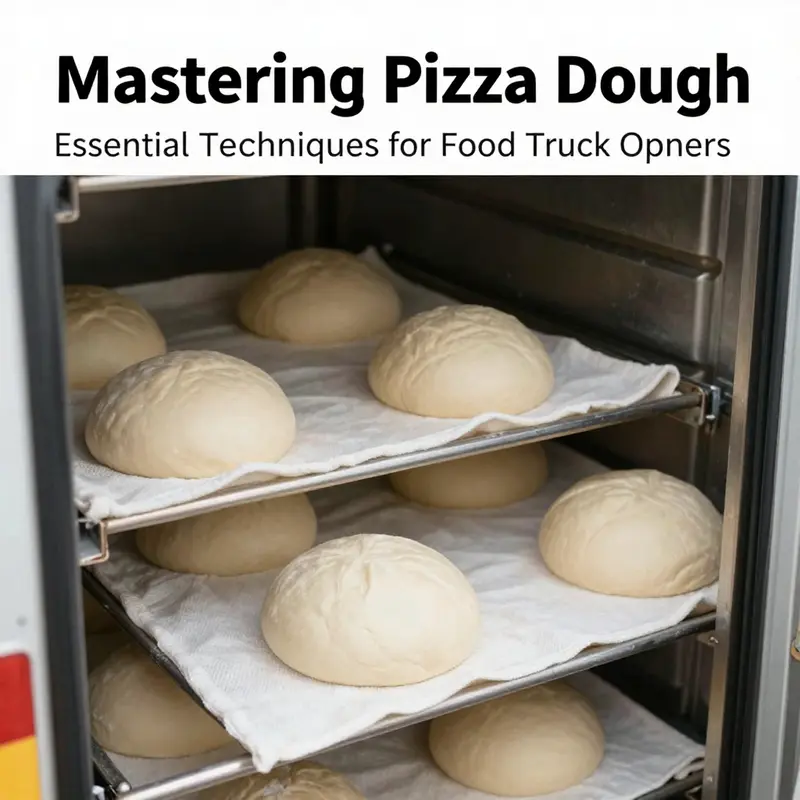
Dough that breathes with consistency and flavor is the quiet backbone of a successful pizza operation on a food truck. The bulk fermentation phase is where that flavor begins to bloom, where gluten network strength and gas production create the chew and aroma customers notice before they even see a slice. In a mobile kitchen, the challenges are different from a stationary bakery or a brick-and-mortar pizzeria: space is tighter, temperatures swing with the day, and service demand can pulse unpredictably. Yet the same physics apply. Yeast metabolizes sugars, carbon dioxide builds bubbles, and a controlled environment nudges the dough toward a dependable texture that can be stretched by hand or with a minimal assist from equipment. The goal in this chapter is not to chase miracles but to choreograph a reliable, scalable process that keeps dough predictable from dawn to dinner rush, regardless of where the cart happens to be parked. To do that, it helps to start with a dough that is forgiving yet expressive, and to build a fermentation routine around two knobs you can always adjust: temperature and time. A standard approach uses a high-hydration dough with modest yeast, so the dough ferments steadily without turning sour or overtaken by the heat of a busy kitchen. In practical terms, that means a dough formula that scales cleanly, performs reliably across shifts, and remains workable whether you are hand-stretching at a prep table or rolling dough through a small, portable mixer. A commonly used framework sits around 65–70% hydration with a low-yeast count. For a production-friendly batch, you might start with roughly 1000 g of flour, 650 g of water, 20 g of salt, and about 10 g of instant yeast, with an optional 30 g of olive oil for flavor and a touch more shelf life. This combination yields a soft, chewy crust suitable for both Neapolitan and New York–style profiles, while preserving enough structure to handle the hands of a hungry service window. The exact numbers matter less than the relationship between water, flour, and time, and the capacity to reproduce that relationship every time you mix. The mixer itself is a quiet, powerful ally in a food truck’s compact workspace. A reliable commercial mixer lets you build a uniform dough mass at scale, a crucial factor when dozens of dough balls must emerge consistent from daybreak to closing time. The process begins with the simplest of stages: dry mix first, then water and oil. In a large bowl or mixer, add flour, salt, and yeast. Pour in the water and oil, and begin the kneading sequence. Use a low-speed mix to bring the components together, usually a couple of minutes in the first stage, then transition to a higher speed to develop the gluten. The windowpane test — stretching a small piece of dough until it becomes thin enough to see light through without tearing — is a practical signal that gluten development has reached a productive level. If the dough isn’t there yet, allow the mixer to run a bit longer, but be mindful of over-kneading; the dough should be elastic, not rigid, with a supple bite that translates into a chewy crust once baked. If your workflow includes added fats or oils, incorporate them after the initial mix and knead until fully integrated. The beauty of a high-hydration dough is that its moisture helps the gluten relax a bit during handling, reducing tearing when you shape multiple pies in a row. A key discipline in a mobile kitchen is to log batches and times. Timekeeping becomes a quality control tool, ensuring that every batch follows the same cadence. With a consistent foundation, you set the stage for fermentation to do its work without surprises when the truck hits the street. Bulk fermentation is more than a wait; it is a flavor-building, texture-magnifying phase that benefits from rhythm and restraint. The room-temperature window for bulk ferment is typically around 2–4 hours, a period that suits fast turnover and keeps dough ready for portions as the day unfolds. If your workshop allows, a cold-ferment option offers deeper flavor development and better management of longer service hours. Refrigeration for 12–24 hours slows yeast activity, allows the dough to build more complex flavors, and provides a practical buffer for early prep. In either scenario, you should divide the dough into portions after the initial mixing and then place each portion in airtight, sealable containers. The goal is to create a controlled environment where air exposure is minimized, yet the dough can breathe enough to ferment without developing pinched, dry edges. A helpful note from seasoned bakers is to consider a folding routine during bulk fermentation. For a typical 2-hour bulk, folding the dough every hour redistributes gas, strengthens the gluten network, and keeps the interior characterized by a more uniform crumb. In a food truck, where every minute counts, that folding ritual can become a bridge between a rushed morning and a steady afternoon. It is not a requirement for all operations, but when used thoughtfully, folding can shave minutes off the final shaping and reduce the risk of uneven bubbles or dense centers. Temperature is the most immediate dial you can turn to modulate fermentation in a mobile kitchen. In practice, dough behaves differently as the day warms and cools, and as the truck moves from sunlit curbside to a shaded parking space. If the dough ferments too slowly, you can deploy a few simple tactics. Place the dough near a warmer oven when it’s not in use, or use a small proofing box or a heated mat set to a gentle low. A warm surface can nudge the dough into a more active phase without pushing the batch beyond its intended profile. Conversely, if fermentation races ahead in hot climates, you can slow things down by adjusting liquid temperature in your mix and, if needed, retarding the dough with refrigeration for a portion of the bulk. It is a practical approach that keeps flavor development on track while preserving the structure you need for stretchability. The science behind these adjustments is straightforward: yeast behaves like a tiny metabolic engine. Warmer temperatures accelerate metabolism, gas production, and gluten relaxation, but they can also push the dough into over-fermentation where aromas become overly sour and the dough weakens. Cooler temperatures slow metabolism, yielding a milder, slightly more taut dough that might require longer handling in hot hands or slight adjustments in shaping technique. In service terms, this translates to a flexible schedule. You can bulk-ferment at room temperature for a couple of hours, then retard overnight for more flavor if the prep window allows. Or you can perform a shorter room-temperature bulk, followed by a cooler rest to ensure dough is ready when the window opens for stretch and topping. In practice, many operators will find success with a standard routine that balances speed and flavor: a two-hour bulk at room temperature with periodic folding, followed by a cold-retardation of 12–24 hours. When dough goes into the cold, it slows yeast activity and keeps flavors from becoming overly aggressive during an extended service. The dough is then brought to room temperature before portioning and shaping. This approach aligns with the need to prepare dough ahead of peak times and still produce pizzas with the bright, springy bite customers expect. After bulk fermentation, the dough is divided into equal portions — often around 250 g per pizza for a standard Neapolitan- or New York–style crust — and allowed to rest. Resting relaxes the gluten, making the dough easier to work and less prone to springing back during shaping. A damp cloth or a dome over the containers helps maintain moisture and keeps the surface from forming a dry crust during the waiting phase. In a food truck, the logistics of resting must be integrated with the day’s prep rhythm. You may pre-portion dough balls in the morning and keep them chilled until service begins, then portion them again as orders come in. Resting time, even for 20–30 minutes, helps ensure the gluten network relaxes sufficiently so that you can stretch the dough without tearing. When it comes to shaping and cooking, the bulk fermentation phase has done its work in ways that show up in the final crust. A well-fermented dough is easier to stretch by hand, holds a longer rise under heat, and creates that desirable blistering and char in a hot oven. You can stretch by hand or with a small tool depending on your workflow. In a truck, the ability to shape quickly and consistently is essential. You may pre-shape dough balls and hold them in the fridge for up to 24 hours, bringing them to room temperature just before service. This practice reduces the time from order to oven and helps you maintain a predictable product across a busy shift. When you’re ready to bake, aim for a hot, steady oven environment, typically around 450–500°F (230–260°C). The high heat helps set the crust rapidly, creating a crisp edge while the interior stays chewy. The exact bake time depends on your oven and dough thickness, but a typical range is eight to twelve minutes. In the mobile kitchen, maintaining consistent heat across multiple pies is as much a management of space as it is a mastery of dough. A deck oven or a conveyor oven can deliver reliable, even heat in a compact footprint, an advantage when shop space is a premium and service expectations are high. The equipment choice is part of the bulk fermentation strategy because the way you finish the dough depends on what you have available during service. A dough that has fermented to the right level will reveal its readiness during shaping and baking, presenting the crisp exterior and tender interior that customers associate with a well-made crust. The bigger picture is that bulk fermentation in a food truck hinges on predictability. You want a process that yields consistent dough texture, reliable handling, and predictable bake results, regardless of whether you’re serving at a crowded festival or a late-night alley corner. For that reason, it’s valuable to keep a few practical guidelines in view. First, keep ice-cold water and measured salt and flour ready for each batch so deviations are minimized. Second, track your batch times with a simple log. A bound notebook or a quick digital note can be enough to ensure that every batch’s development aligns with your target window. Third, maintain your containers and seals to minimize air exposure and to protect dough from drying out in transit or under a counter light. Finally, cultivate a flexible mindset. If a venue is hotter than expected, you can roll back fermentation by chilling. If a venue is cooler, you can use warmth as a facilitative tool for fermentation. The point is to be deliberate about the way you manage time and temperature, rather than reacting to the lack of control. For readers who want more depth on the science of fermentation and how to structure a scalable dough process, a deeper dive into professional techniques will be instructive. See the external resource listed at the end of this chapter for a long-form treatment of dough proofs and texture development. Within the practical kitchen you’re building, you can implement these techniques and see the benefits in repeatable crusts, fewer dough losses, and a smoother shift flow. If you’re curious about expanding your mobile operation into a more sustainable and scalable model, consider exploring a comprehensive guide on building and running a pizza-focused food truck. A practical route is to examine material that outlines how to build the operation from the ground up, including workflows that mirror the discipline of bulk fermentation in a compact space. The link below points to a resource that discusses translating a kitchen workflow into a truck-ready system, offering guidance on planning, equipment, and staffing that keeps a dough-first approach front and center. how-to-build-a-pizza-food-truck. As you refine your process, you’ll learn that fermentation is not merely a waiting period but a strategic step that shapes the texture, aroma, and reliability of every crust. Finally, for a broader scientific foundation on dough handling and texture optimization, researchers and professionals point to a classic, well-regarded reference that explains hydration, gluten development, and the mechanics of doughs designed for high-volume production. This external resource provides a grounded look at how to balance ingredients, time, and environment to achieve consistent results across shifts and across kitchens, including the specific challenges of large batches and variable service conditions. External resource: https://www.seriouseats.com/the-perfect-pizza-dough-recipe-20190723
Final thoughts
By mastering dough preparation techniques on your pizza food truck, you can ensure high-quality pizzas that customers will love. The right dough formula, efficient mixing with commercial equipment, and effective bulk fermentation are crucial factors that will set your offerings apart in a competitive market. As you implement these insights, you’ll not only enhance your workflow but also build a reputation for delivering outstanding, consistent pizzas on the go. Take the next steps towards pizza perfection on wheels!