
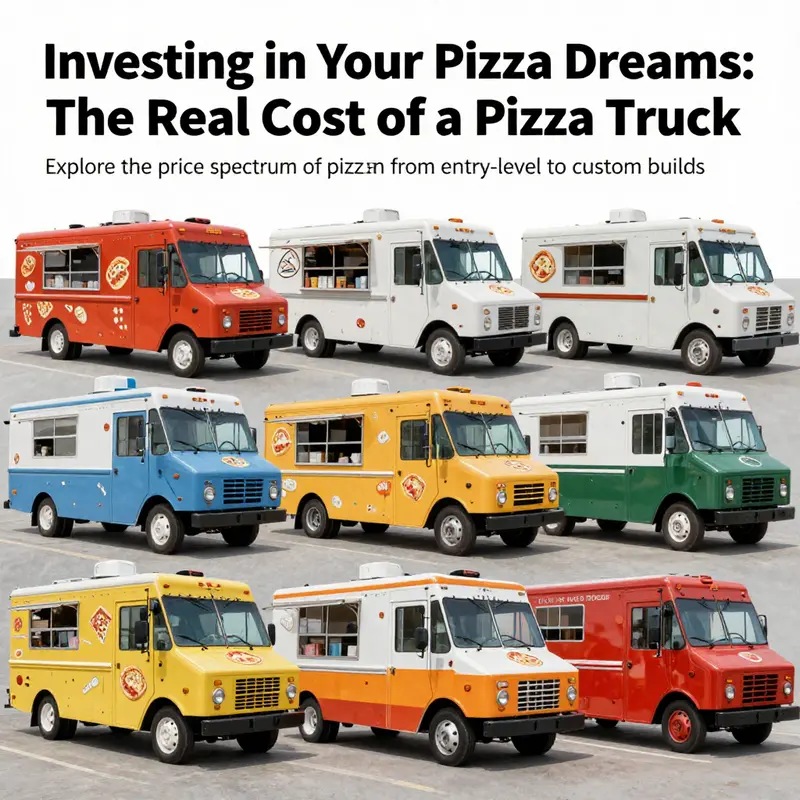
Starting a pizza truck business requires careful consideration of investment, especially regarding the type of truck you need. Understanding the costs associated with different pizza trucks is essential for new and seasoned operators alike. This guide will explore three crucial tiers of pizza truck pricing: entry-level models suitable for beginners, high-quality professional trucks that can handle a bustling market, and bespoke options that allow for significant customization. Each chapter will contribute to a well-rounded perspective on financial planning for your pizza venture.
Stretching the Starter: Unraveling the Real Price Tag of an Entry-Level Pizza Truck

Prices for a pizza truck do more than reflect a sticker price; they map the choices a founder makes about scale, reliability, and the kind of pizza they truly want to serve. An entry point into the market is not a single price tag but a spectrum. On one end sits a lean, pre-owned trailer or a modest, smaller-capacity unit that can be activated with a handful of essential tools. On the other end lies a more crafted setup with better insulation, efficient layout, and a dependable oven that can sustain a steady pace through busy lunches and weekend events. The numbers in this spectrum are useful, but they are best understood when you see how the components add up to a functioning business rather than simply reciting a total at the outset. In practice, the entry-level price is the sum of three interlocking decisions: the base platform, the kitchen equipment, and the supporting infrastructure that keeps the operation moving.
Starting with the base platform, the most affordable route into pizza serving is often a used trailer or a basic chassis with a compact kitchen shell. An entry-level entry point commonly begins around twenty thousand dollars for a used or simple trailer setup. This base figure usually covers the purchase of the platform alone—the frame, the walls, and the basic insulation that allows safe operation in a range of climates. What this base does not cover is the core cooking and refrigeration work that makes pizza, well, pizza. The oven, the refrigeration for dough, toppings, and perishables, and the cooking surfaces all sit above this initial platform price. Those essentials push the total upward, typically adding anywhere from ten thousand to thirty thousand dollars more, depending on the exact specifications and the quality of the equipment you choose. The math is straightforward, but its impact is practical: you cannot produce a pizza safely and consistently without a dedicated oven and a reliable cold chain, and those are the line items that most often stretch the budget beyond the first twenty thousand.
When you add a professional kitchen’s backbone—an appropriate oven, cold storage, and the necessary cooking surfaces—the story shifts. A fully equipped mobile pizza truck, one that includes a built-in oven, refrigeration, and properly arranged workstations, generally lands in the range of fifteen thousand to forty thousand dollars or more. The wide range reflects differences in oven type (gas, electric, or specialty units like stone-lined or convection designs), the quality and capacity of refrigeration, and how much “business-ready” layout comes with the package. These are not cosmetic upgrades; they impact throughput, food safety, and the operator’s ability to sustain a consistent product during peak periods. A high-quality, reliable setup reduces waste, lowers maintenance headaches, and shortens the preheat times that otherwise steal precious minutes from service. In turn, those efficiencies can translate into more pizzas sold in a single event, which reshapes the unit economics of the venture. There is a reason many seasoned vendors invest in a modular plan that allows a standardized kitchen layout designed specifically for pizza production. It is not merely about how many toppings you can hold; it is about how you can move from order to oven to slice with minimal friction.
Beyond the standard oven-and-refrigeration equation, another category to consider is the wood-fired pizza truck. Premium units with stone-lined ovens that craft authentic Neapolitan pizzas start around thirty thousand dollars. They can climb well beyond sixty thousand dollars depending on oven quality, the materials used for the build, and any additional features that enhance performance or branding. The wood-fired option is appealing for its flavor profile and the theater of cooking, yet it is not for everyone. The extra cost tends to show up in longer preheat times, more intense fuel handling requirements, and sometimes more stringent maintenance routines. If one’s market favors a wood-fired crust, the premium is often justified by higher perceived value and a distinctive menu that differentiates the business in competitive events. In contrast, a conventional gas or electric oven remains the more predictable choice for operators aiming to scale quickly or maintain a uniform product across many events in a month.
The design of the truck itself can tilt the price in subtle but meaningful ways. Custom or high-end models with climate control, solar panels, enhanced branding, or luxury finishes naturally push the price upward. Even where the core kitchen remains the same, the envelope—the insulation, the climate controls, and the ergonomics—shapes both the daily experience for staff and the long-run operating costs. A well-insulated truck reduces energy waste, keeps temperatures stable, and improves the overall efficiency of service. These improvements matter because every extra minute spent idle or cooling the space is a minute not spent turning dough into pies for customers. Operational discipline in the kitchen, paired with a thoughtfully designed vehicle, compounds returns over time by reducing waste, shortening line waits, and boosting customer satisfaction.
Even when a price seems settled, the ongoing costs should be rehearsed alongside the upfront investment. Fuel is a frequent, and sometimes underestimated, expense for pizza trucks. Convection ovens and pizza stones can draw substantial energy, especially when preheating times stretch thirty to sixty minutes. The energy footprint of a pizza operation matters not only for the budget but for the environment of the mobile kitchen and its opportunities in different locations. Maintenance is another recurring line item. Ovens, refrigeration units, and other heavy equipment require routine service, parts, and occasional replacements. Insurance and permits are nontrivial, and the cost of staffing to manage peak demand—particularly at events with tight window timings—can dominate the labor plan if the business grows beyond a one-person operation.
Perceived value and risk perception also shape how an aspiring owner approaches the numbers. It is common for entrepreneurs to underestimate the capital needed to reach a dependable, scalable level of service. A modest budget might allow a basic pizza kitchen to start, but reliability, consistency, and regulatory compliance demand steady reinvestment. The discipline of budgeting for maintenance, upgrades, and contingency funds helps keep the operation resilient as events vary by location, season, and demand. For many buyers, the sweet spot lies in a practical balance: a robust, properly installed oven and refrigeration arrangement paired with a well-planned kitchen layout, all built on a platform that can handle the flow of tickets and the pace of the kitchen when the crowd arrives.
To take a more concrete step in evaluating cost, consider the typical equipment package that accompanies entry-level operation. A professional-grade pizza oven, refrigeration units, and a functional cooking line can often lift the investment by ten to thirty thousand dollars beyond the base trailer price. This is the core investment that turns a chassis into a pizza kitchen. If a buyer then adds better insulation and a more efficient layout, a few thousand more might be spent on details that improve energy efficiency and staff comfort. The result is a total in the ballpark of thirty to fifty thousand dollars for a more reliable, efficient, and ready-to-go operation. It is not unusual to see a cap of fifty thousand dollars being used by operators who want a safe, consistent product with predictable service times and a brand that looks polished on location. Those numbers, while practical, still omit one critical dimension: the paperwork and permits that allow a truck to operate legally in different jurisdictions. A permit can vary significantly by city, parking rules, and event restrictions, and many aspiring operators underestimate the time and cost required to secure a compliant footprint for their first season.
What does all of this come down to in day-to-day terms? The entry-level price is a function of risk tolerance, time-to-market, and the level of professional polish the operator wants at launch. A lower upfront spend can be attractive to founders who want to test a market quickly and learn on the ground. Yet a lean setup may require more careful planning around events, schedule management, and a tighter control of costs since the margin per pizza will hinge on volume and efficiency. A more generous initial investment, by contrast, provides a buffer for a faster ramp in service quality, color and branding, and a kitchen that can sustain higher volumes with less stress on the staff. The trade-off is clear: either you buy time by investing in a more capable system up front or you accept a longer runway and potentially higher ongoing costs as you grow.
As you map your path, a practical step is to anchor your thinking around a few target scenarios. If you anticipate frequent participation in street fairs, farmers markets, or small private events, a compact, efficient, and easy-to-navigate setup can keep you agile and lower the barrier to entry. If you anticipate aiming for larger corporate events or multi-day festivals, the numbers shift toward a more robust, slightly larger footprint with a higher-capacity oven and more extensive refrigeration. In both paths, the central question remains: how will you balance cost with capability, and how will the chosen configuration influence your ability to deliver consistent product, on time, every time? The chapter at Food Truck Empire explains these nuances in deeper detail and provides structured guidance for new entrepreneurs who want a grounded, transparent view of cost and performance: How Much Is a Pizza Food Truck?.
Looking back at the broader market picture, you can see that the entry-level price is not a single fixed amount but an entry pipeline into a broader decision about scale, reliability, and the kind of pizza you want to master. A basic, pre-owned trailer needs careful budgeting for essential cooking tools, while a fully equipped unit offers the possibility of higher volume, more consistent results, and a service tempo that can sustain a growing event calendar. Wood-fired setups bring a different value proposition: a flavor and theatrical experience that can command premium pricing but demand a different operational rhythm and cost discipline. And finally, the premium custom builds symbolize a longer horizon—branding, climate control, and energy autonomy can converge into a vehicle that travels as a business brand as much as a kitchen on wheels. Each path has its own rhythm, and the choice ultimately reflects not only money but the owner’s appetite for managing risk, maintaining quality, and pursuing growth in a mobile market where today’s event might be tomorrow’s repeat customer.
As you plan, remember that the numbers above are a framework, not a fixed rule. The best approach is to build a detailed budget that captures every line item from the first permit to the last pre-event check. Don’t forget the small but mounting costs—elemental utilities, hoses and fittings, trivets, pans, and a dependable water supply—that keep the kitchen functioning under pressure. You’ll likely want to reserve a portion of the budget for staff training, as even the best equipment loses value if the crew cannot operate it efficiently. The ultimate aim is a setup that gives you the confidence to move quickly from queue to oven to slice while maintaining product consistency and safety—because the real test of any entry-level truck is not the sticker price but the daily rhythm of production and the ability to translate a line of customers into satisfied eaters who return for more.
External insight can sharpen your planning. A detailed cost breakdown, with practical examples and considerations, is available from industry resources that focus on the economics of mobile pizza. This external resource broadens understanding of how the numbers work in different contexts, from single-operator ventures to teams handling multiple events weekly. External readers can use this background to cross-check their assumptions about equipment quality, energy costs, and maintenance schedules as they model a viable path to profitability.
In sum, the entry-level cost of a pizza truck is not a single number but a landscape of choices that collectively determine how quickly you can start, how reliably you can operate, and how profitably you can scale. From the base platform to the cooking heart of the kitchen and the supporting infrastructure, every element has a price and a payoff. The more you align these elements with a clear plan for service pace, product quality, and event strategy, the more your initial investment turns into a sustainable business. For prospective operators, the invitation is not just to tally costs but to imagine the daily workflow you want to deliver, and to choose a configuration that makes that daily workflow both possible and repeatable. That is the heart of turning a starter budget into a living, breathing pizza business on wheels.
External resource: https://www.foodtruckempire.com/pizza-truck-cost-breakdown
Investing in Performance: What a Professional Pizza Truck Really Costs

When you set out to buy a pizza truck for professional use, price is only the first of many decisions. A pizza truck is not a single product. It is a mobile kitchen, a brand platform, and a long-term revenue generator. The cost you pay reflects choices about cooking style, build quality, legal compliance, and the scale of service you plan to offer. Understanding how those choices translate into dollars helps you match investment to ambition and avoid surprises that can eat margins in the first year.
A practical way to view pricing is as a sliding scale defined by three axes: cooking capability, structural quality, and regulatory readiness. At the low end of the scale you will find compact, entry-level units built from lighter materials and equipped with simple electric ovens or hot plates. These can be purchased for a few thousand dollars and are suited for reheating or limited fresh production at small events. Mid-range builds add commercial-grade convection ovens, better refrigeration, integrated sinks, and more robust electrical and water systems. High-end trucks bring heavy-duty stone or wood-fired ovens, thick insulation, professional ventilation, and premium finishes. Those top-tier builds command tens of thousands of dollars.
Size matters in two ways: customer throughput and operational complexity. A small truck reduces purchase and running costs. It also limits the number of pizzas you can produce during a rush. Larger units require more power, stronger chassis, and larger ovens. They need heavier electrical systems and larger water tanks. Each upgrade increases cost and adds to maintenance demands. When projecting sales, compare realistic peak-hour throughput to oven capacity. If your oven can cook four pizzas at once, but your typical event attracts long lines, the truck will become a bottleneck. Conversely, an oversized truck sitting idle wastes capital and increases fuel and upkeep costs.
The oven choice is the single most influential component for both cost and brand positioning. Electric convection ovens are efficient and easier to integrate with limited ventilation. They often appear in mid-range trucks. Gas ovens provide faster heat up and more consistent surface browning without open flames. Wood-fired ovens deliver the signature char and flavor that many customers seek. They also require substantial structural reinforcement and ventilation. Wood-fired options typically add tens of thousands to the price, due to oven weight, masonry or stone linings, and required safety systems. Even when a wood-fired oven is the centerpiece, plan for longer preheat times and specific fuel handling needs.
Materials and cabinetry affect durability and hygiene. Commercial stainless steel surfaces resist corrosion and meet most health inspector expectations. Lightweight aluminum and fiberglass lower upfront costs and reduce weight. However, they can dent or degrade faster under heavy use. Consider where you will operate. Urban streets with frequent set-up and tear-down demand sturdier fittings and impact-resistant surfaces. Markets and festivals may tolerate lighter finishes if the truck moves less frequently. Flooring, gaskets, insulation, and finish materials all contribute to longevity. Choose surfaces that clean easily and maintain a professional appearance with minimal rework.
A critically overlooked area is utilities and their installation. A professional truck needs reliable electrical systems sized for ovens, refrigeration, lighting, and point-of-sale systems. Many professional builds include dual-voltage compatibility with 110V and 220V connections, shore power capability, and the option to run on a generator. Water supply and waste systems require onboard storage or plumbing hookups for events. Built-in sinks, hot water heaters, and grease traps increase compliance and convenience. These systems add upfront cost but reduce the risk of costly retrofits that interrupt service when inspections or local rules require upgrades.
Regulatory compliance influences both the build and the budget. Health department standards often dictate the presence of sinks, refrigeration capacity, food-safe materials, and ventilation. Fire codes will influence oven placement and the need for fire suppression or specialized extinguishers. Urban municipalities may restrict open combustion, which can make wood-fired ovens impractical or require expensive emissions mitigation. The cost of obtaining permits, safety inspections, and local licenses varies widely by jurisdiction. Budgeting for these fees and for possible design changes to meet local rules is essential. A compliant build saves money over time by avoiding fines and forced modifications.
Buying new versus buying used is a classic trade-off. New builds provide the latest equipment and warranties, and they allow customization for workflow and brand identity. They also come at a premium. Used trucks reduce the initial capital outlay. However, used units may hide wear in engines, generators, or installed cooking equipment. A used truck might require immediate repairs, re-certification, or cleaning to meet health standards. Always arrange a thorough mechanical and kitchen equipment inspection before purchase. Factor in the cost of replacing worn refrigeration, repairing electrical wiring, or installing modern ventilation. Those upgrades can quickly erase the apparent savings of a low purchase price.
Customization and branding are where a truck becomes a business asset. Exterior wraps, awnings, service windows, and branded signage all carry varying price tags. A striking brand treatment can increase visibility and perceived value, but high-end finishes add to the build cost. Consider a phased approach. Start with a durable, neutral exterior that supports an economical wrap. Upgrade finishes as revenue grows and customer demand validates higher spend. Custom interior layouts that streamline workflow can increase productivity and decrease labor costs. Efficient placement of ovens, prep tables, and refrigeration reduces staff movement and orders lost to long waits.
Financing options influence how cost affects cash flow. Paying cash avoids interest and simplifies accounting. Financing spreads cost over time but increases total expense. Leasing can lower monthly costs but may limit customization. Some entrepreneurs choose a mixed approach: finance the vehicle chassis and pay cash for kitchen buildouts. Grants, small-business loans, and equipment financing are common ways to fund the purchase. Prepare realistic financial projections showing time to breakeven. Include conservative estimates for daily sales, average ticket size, and operating expenses.
Operating costs often surprise first-time buyers. Fuel, maintenance, and insurance add predictable but recurring expenses. Ventilation systems and ovens require scheduled servicing. Grease traps and waste removal are recurring costs that vary by location. Utility costs for electricity and gas influence profit margins, particularly when running power-hungry ovens. Staffing costs depend on service model. A single operator model reduces payroll but increases task-switching and potential for errors. Consider peak-event staffing and the cost of hiring trained cooks who can manage specialized ovens. Training costs are an ongoing investment, especially when using high-performance ovens that require precise timing.
Return on investment depends on matching investment level to your target market. A premium, wood-fired truck may attract higher menu prices and a loyal following. It can command larger margins per pizza, but at slower initial sales due to higher price points and possible location restrictions. A modest truck with efficient electric ovens can deliver quick turnover, lower per-item margins, and higher volume in certain settings. Analyze nearby competition, foot traffic, and event opportunities to determine where your truck will operate most often. Many operators find that a mid-range build offers the strongest balance between initial cost and operational flexibility.
Maintenance and lifecycle planning protect your investment. Establish a maintenance schedule for mechanical systems, cooking equipment, and exterior finishes. Track service intervals for engines and generators. Document cleaning routines for ovens and refrigeration. Keep a sinking fund for major replacements like refrigeration compressors or oven rebuilds. A well-maintained truck retains higher resale value. When the time comes to sell or upgrade, that retained value offsets future purchase costs for a new build.
When deciding what to buy, prioritize items that affect food quality and customer experience first. A reliable oven with consistent temperature control, adequate refrigeration to ensure food safety, and a functional layout that speeds service are more valuable than luxury trim. Build in flexibility. Consider modular solutions that allow for future upgrades. For instance, design cabinetry to accept a heavier oven later, or include space for a future fryer or prep station. Modular thinking reduces the need for costly full rebuilds as demand evolves.
Business strategy affects the best price point. If you plan to focus on private events, a larger truck with flexible menu options makes sense. If street vending and quick turnover are the priority, choose a compact, efficient build. For event circuits or catering, plan for storage and transport logistics. A heavier truck may require special licenses for operation on certain roads or in designated event areas. Research parking rules and vendor ordinances in your primary service zones, and budget for the licenses or memberships that grant access to lucrative events.
Finally, be pragmatic about timelines. High-end ovens and custom builds can require weeks or months of fabrication and certification. Permit processes introduce variability. Factor in lead times for parts and schedules for inspectors. Start timelines early enough to allow for delays. A phased rollout might let you begin operations on a simpler build while finalizing premium features.
If you want a direct comparison to recent market offerings and a reference point for specifications, consult a detailed supplier listing that outlines technical specifications, certifications, and pricing guidance. It provides a useful benchmark when evaluating quotes and planning your budget.
For additional practical guidance on legal requirements before you launch, see this short primer on the steps required to start a mobile food business: how much is a pizza food truck.
External resource for a pricing and specification benchmark: https://www.alibaba.com/product-detail/UD-CT-Mobile-Kitchen-Pizza-Truck_1600738835295.html
Brand on Wheels: Reading the Customization Equation Behind the Price of a Pizza Truck

Customization is the forge where intention becomes enterprise in the world of mobile pizza. A truck is more than a cooking space; it is a moving brand, a tactile showroom, and a logistics hub all rolled into one. The price tag for a pizza truck, then, is less a fixed number and more a measurement of how much of your business you want to engineer into the vehicle. The more you personalize—from the size of the crew kitchen to the precise ambience of the service window—the more your capital outlay reflects not only equipment, but also identity, reliability, and the potential speed of growth. When we talk about how much a pizza truck costs, we are really talking about a spectrum of options, trade-offs, and future possibilities, all folded into one chassis on wheels. In the market today, the variation is striking because builders can tailor almost every facet, and the difference between a simple, compact trailer and a fully branded, climate-controlled culinary studio on the move can be tens of thousands of dollars. Yet the path from a basic mobile unit to a fully customized workhorse is rarely linear. It is a careful calibration of needs, ambitions, and practical constraints—one that begins with two questions: what will you cook, and where will you operate it? From there, every feature you add or refine has a price tag attached, sometimes elegant in its simplicity, sometimes conspicuously product-driven in its extravagance.
Consider first the fundamental anchors of price. Size frames cost in obvious ways. A smaller, entry-level unit may be outfitted with a portable oven and a modest prep counter, packing just enough functionality to test the market or serve niche events. Prices in that tier can begin quite low, a reminder that the barrier to entry for a pizza truck can be surprisingly modest for someone who is content with a lean operation. But as you scale up, the kitchen expands, and so does the bill. Built-in gas or electric convection ovens, refrigeration, storage, and a more developed work area transform a trailer into a real production space. The marginal cost of adding a quality oven to a truck is not merely the appliance itself; it is the alignment of exhaust, safety systems, electrical load, and ventilation. Each of these considerations bubbles into the overall price and adds layers of compliance and maintenance that must be planned for in the early budgeting stages.
Then comes the material and the construction philosophy. A corrosion-resistant aluminum body, a hallmark of modern mobile kitchens, can justify its premium through longevity and ease of cleaning. The ergonomics of the service window, the layout of the modular kitchen, and the flow from order to cook to serve all influence not just the day-to-day experience but the ability to sustain high-volume service during peak hours. A dual-axle design or a more robust suspension is another cost vector that matters more if you plan to cover long routes or frequent shows at large outdoor events. The trade-off here is obvious: a more mobile, resilient platform costs more upfront but reduces downtime and replacement risk over the life of the truck. The value of precision in build quality becomes especially clear when you imagine the daily rhythm of a busy cart: hot ovens humming, coolers maintaining exact temperatures, an ergonomic window letting staff work at speed without distortion, and a kitchen that can be cleaned in minutes rather than hours.
Space planning itself becomes a canvas for branding and efficiency. A modular layout is not only a convenience; it is an opportunity to express your concept and to optimize throughput. When equipment and storage are arranged with intention, the operator saves minutes on every service, and those minutes accumulate into dollars. The same logic drives the integration of energy systems. A modern mobile kitchen may lean on 220V refrigeration and carefully selected energy-efficient appliances. In practice, the electricity budget of a truck matters as much as its oven capacity. If you plan to run a high-powered oven, climate-control fans, and a POS system from the same power source, you must account for the electrical panel, the generator or shore-power supply, and the potential need for upgraded wiring. Each choice—whether to rely on natural gas or electricity for cooking—reshapes the operating cost and, by extension, the price.
Branding sits at the intersection of aesthetics and economics. A truck is a portable billboard, and the cost of rendering a brand onto the vehicle goes beyond a painted logo. It includes design services, color schemes that withstand outdoor wear, durable signage, and sometimes illuminated accents for nighttime events. The color palette you choose—the white and red, or the more restrained blue and green—becomes part of the procurement narrative. A fully branded unit often requires not only exterior finishing but also interior details that echo the same identity, from the color of the workbench to the shape of the menu boards. The result is a unit that looks, feels, and sounds like a cohesive business rather than a vendor operating out of a generic trailer. The more you demand in branding, the more you invest in materials, finishes, and custom fabrication, and the higher the price tends to rise. Yet the payoff is measurable. A strong brand on wheels can shorten the path to recognition, command premium pricing, and foster customer loyalty at scale.
The question of who you hire to build the truck is, in many ways, the hinge on which price swings. A turnkey, fully customized build with a long checklist of specifications and high-end fittings commands a higher price than a more modest, quickly assembled trailer. But there is value to a careful vendor who negotiates the build around day-to-day realities: the exact oven type, the flow from cold to hot zones, the way the service window opens to minimize crowding, the integration of a point-of-sale system with countertop space, and the strategic placement of lighting and signage to attract attention from a distance. Each of these decisions can be negotiated, with potential cost savings or extra cost depending on the level of finish, the quality of components, and the degree of regulatory compliance you require. In this arena, the price often reflects not just the appliance list, but the journey from conception to inspection-ready reality. A builder who can translate your concept into a coherent, safe, and durable vehicle tends to come with a premium, but the value is not solely measured in dollars: it is revealed in the consistency of service, the ease of maintenance, and the probability of meeting food-safety standards without drama.
The customization equation also extends into optional capabilities that many operators find decisive. A climate-controlled interior that maintains a comfortable environment for staff and preserves the integrity of ingredients is not merely a luxury; in some markets, it is a necessity for year-round operation. Solar panels can reduce running costs and increase the truck’s reliability in locations where power access is limited, though they add upfront expense and require careful insulation and weight considerations. A robust branding package, including vehicle wraps and interior signage, adds to the upfront investment but can magnify the marketing impact across events, streets, and festivals. An integrated POS or receipt system not only speeds transactions but can tie into inventory and waste management, delivering operational insights that help with cost control and menu optimization. Lighting that highlights the pizza’s aroma while remaining energy-efficient is another example of a small feature with outsized effects on sales and customer perception. Even choices such as a dedicated storage area for toppings, or a separate space for dough proofing, have ripple effects on throughput and product consistency.
Delivery timelines and availability of customization services influence price as well. Some buyers want a rapid, compact trailer ready for events in a matter of days, which nudges the project toward modular kits and pre-configured layouts. Others seek a deeply personalized kitchen and branding package, which can stretch into weeks or months of collaboration with designers, fabricators, and compliance specialists. The longer the lead time, the more opportunities there are to refine your concept and control the final cost, but also more risk of price fluctuations due to material costs or regulatory changes. In these scenarios, a practical approach is to establish clear milestones, verify design equivalents, and insist on a transparent bill of materials. Costs can then be traced to specific choices—what you gain in functionality, where the premium lies in aesthetics, and how much you’re paying for the assurance of regulatory certification and ongoing support.
In enumerating the practical realities of customization, it helps to ground the discussion in some realistic ranges. A basic, entry-level mobile pizza trailer may start in the well-understood range of a few thousand dollars, enough for a simple setup with a compact oven and a modest prep counter. When you move into a fully equipped mobile pizza truck with a built-in oven, refrigeration, and a more complete workstation, the ballpark typically lands in the range of roughly fifteen thousand to forty thousand dollars or more, depending on build quality, equipment choices, and the level of brand integration. A wood-fired option ushers in a different category altogether, often starting around thirty thousand dollars and sometimes climbing past sixty thousand as stone-lined ovens and premium materials are specified. If you are pursuing a highly customized vehicle with climate control, solar power, high-end finishes, and advanced branding, it is not unusual for prices to push into the range of seventy thousand to one hundred thousand dollars or more. None of these numbers exist in isolation. They reflect trade-offs among mobility, durability, and the intensity of the brand experience you want to deliver.
For operators who want to dip their toes into the market before committing to a full custom build, budget-friendly concession trailers offer a practical stepping stone. These units tend to emphasize high-volume sales at events rather than long, everyday routes. They often rely on more economical electric ovens or heat-and-serve capabilities to reheat pre-made pizzas or assemble pizzas quickly on site. The advantage is a lower entry price and a faster path to market. The trade-off is fewer capabilities, reduced control over product quality, and less brand leverage in the long run. The decision to choose one path over another should be guided by your business plan, your target market, and how much you value speed of deployment versus control over every component of the customer experience. If the aim is to build a scalable brand with a kitchen that can be reconfigured for different menus or events, invest in modularity and durable components from the outset. If the aim is to minimize upfront risk while learning the market, a more modest, temporarily branded unit can be a wise first step.
Customization also invites a broader reflection on the lifecycle of the business itself. The vehicle is not just a tool; it is a workplace that defines staff comfort, efficiency, and safety. A well-designed space reduces fatigue, speeds service, and supports consistency in product quality. It is worth considering how the kitchen’s layout aligns with the dough’s needs, the timing of toppings, and the flow of customers from order to pickup. In practice, the most successful traders are those who balance the artistry of pizza making with the discipline of operations management. They treat the truck as a living system that must be maintained, updated, and adapted to new markets or evolving regulations. The “how much” question becomes part of a larger conversation about how a mobile pizzeria can sustain revenue growth, manage costs, and deliver a dependable experience in which every crust, cheese, and sauce is crafted with intention.
To connect this discussion to the lived experience of operators, one may turn to resources that explore the day-to-day realities of running a pizza truck. For readers hungry to see how a well-considered space translates to real-world results, there is value in seeing how others navigate the design choices, the logistics, and the branding that together define a successful mobile pizzeria. This perspective helps ground the numbers in behavior and outcomes, illustrating why certain features are worth the premium and how the absence of those features can slow down service during a busy event. A reader who wants a practical, narrative window into the process can explore Pizza Truck Experience for a closer look at what it feels like to operate in a kitchen-on-wheels and how design decisions play out when the crowd lines up and the oven roars to life.
In sum, pricing a pizza truck with personalized features cannot be reduced to a single figure. It is a negotiation between scope, quality, and brand ambition. The more you embed your concept into the truck—the stronger your kitchen workflow, the more precise your branding, and the more robust your support systems—the higher the dollar figure will climb. But in return you gain a vehicle that travels as an extension of your business, capable of delivering a consistent product, a memorable brand, and the potential for growth across events, neighborhoods, and markets. The final price is not only a reflection of the equipment and materials but of the business you intend to build around that vehicle. It is a barometer of how seriously you take the idea that food on wheels can become a scalable enterprise when every feature is chosen with intention, executed with care, and aligned with a strategy for sustainable, repeatable success. For readers plotting this journey, the best approach is to set a flexible budget range informed by your market, define the must-haves that anchor your concept, and then allow room for the unexpected—whether that is a more efficient layout, a brighter branding package, or a technology upgrade that streamlines service and reduces waste over time. The result is not merely a truck; it is a capable, branded system designed to cook, connect, and convert customers wherever the wheels roll. A clear roadmap, thoughtful design decisions, and a willingness to iterate will yield a vehicle that commands attention, delivers predictably, and keeps the dream of a mobile pizza business moving forward with confidence. The path from concept to brick-and-mutter clarity may be long, but the payoff—visibility, velocity, and the chance to own a brand that travels as surely as the dough rises—can justify the investment with every slice sold in the months ahead. To learn from the empirical spectrum of options and to calibrate expectations against real-world costs, keep your eye on both the breadboard of your plan and the finish of the last coat of branding paint, because in the end, price is only the measure of how much you’ve decided to invest in the future of your pizza business on wheels. For a real-world glimpse into durable design choices and modular layouts that inform pricing, see the external resource linked above.
Final thoughts
Investing in a pizza truck is a significant commitment, and understanding the pricing based on your needs can help make the right decision. From entry-level trucks that provide a gateway into the food service industry to high-quality, fully equipped models and bespoke options that reflect your brand, there is a spectrum of prices that cater to varying business goals. As you plan your venture, keep in mind the importance of aligning your investment with your target market and operational goals to ensure a successful and profitable pizza business.
