
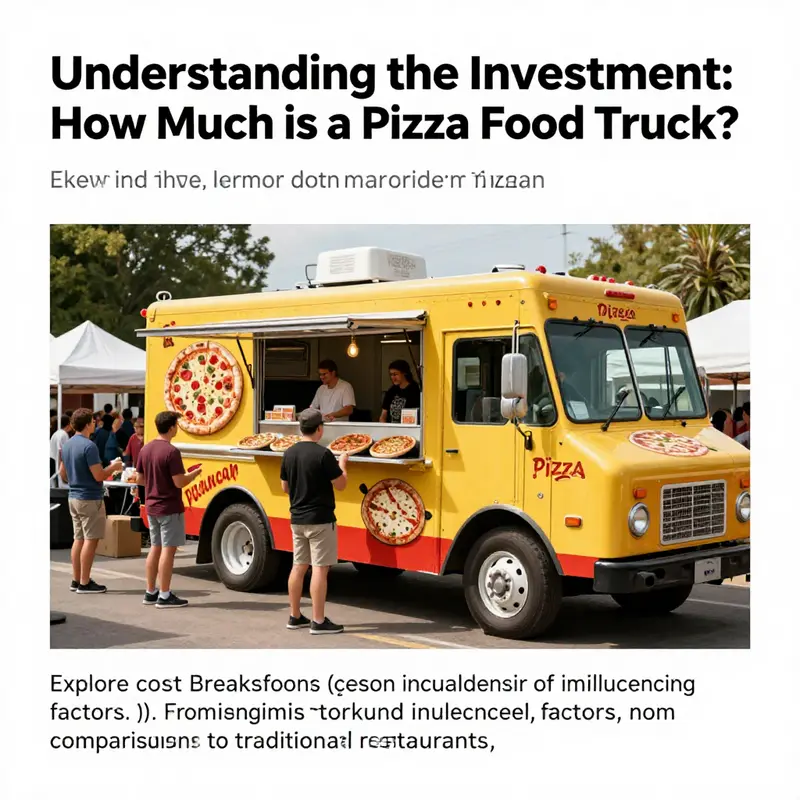
Investing in a pizza food truck offers a unique avenue for entrepreneurs wanting to enter the fast-casual dining scene. Understanding the costs associated with acquiring and operating a pizza food truck is vital for any aspiring business owner. This article delves into the various aspects, including a comprehensive cost breakdown, factors that influence pricing, and a comparative analysis against traditional restaurant setups. By enlightening business owners about these facets, we aim to illuminate the pathway toward a successful pizza food venture.
Pricing on Wheels: Decoding the Costs of a Pizza Food Truck
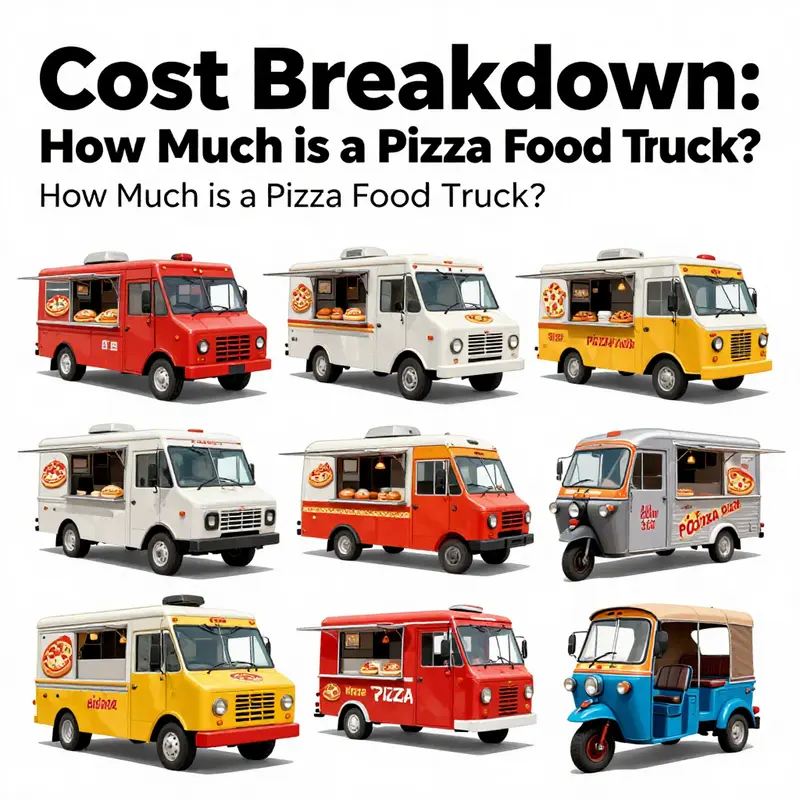
A mobile pizza kitchen sits at the intersection of culinary ambition and practical economics, where the thrill of cooking to order under the open sky meets the realities of capital, depreciation, and compliance. The price of a pizza food truck is never a single number; it is a spectrum shaped by size, the sophistication of the kitchen, the vehicle or trailer’s condition, and the extent of customization. For someone eyeing a first venture, or even a growing brand looking to add a fleet, the most important lesson is that cost is not a fixed barrier but a set of tradeoffs. A smaller unit that carries a capable pizza oven, reliable refrigeration, and a reasonable workspace may sit in a few thousand dollars, while a fully built-out mobile cinema of a kitchen can lean into five or six figures, and sometimes more, depending on the level of finish, the equipment package, and the branding ambitions imagined for the business. The driving question, then, is not merely “how much can I spend?” but “what configuration will sustain me through the seasons and the events calendar ahead?” This question anchors every subsequent calculation, from dough to delivery to insurance and permits.
Prices emerge from a few core variables. The most visible is size. A basic mobile pizza kitchen, often a towable unit or a small van conversion, can be surprisingly compact. It must accommodate a pizza oven, a worktable, a refrigeration solution, a hand washing station, a vent hood, and enough storage for dough, toppings, and serving gear. When a buyer asks for a starting figure, they typically hear a baseline in the low thousands. The range is broad because two other levers—equipment quality and condition—hold as much sway as the chassis itself. Is the oven a modern electric deck, a traditional wood-fired enclosure, or a compact gas-fired unit? Is the refrigeration a single reach-in or a more expansive combination of prep fridge and sandwich station? Each choice alters the price by hundreds or thousands, and can determine whether the setup can realistically sustain a busy weekend or a slow weekday.
A widely cited snapshot of current market options helps translate those questions into numbers. A basic mobile pizza kitchen can be found starting around US$2,500, a figure often tied to entry-level configurations designed to bring a turnkey kitchen into a towable frame. For buyers seeking a larger footprint with more complete capabilities, an outdoor mobile kitchen trailer configured for pizza and more robust service can run around US$8,000 per unit, offering a more substantial cooking surface and a more integrated layout. For those who want something closer to a fully custom installation, a custom-sized pizza food truck with an oven can range roughly from US$3,860 to US$7,560, depending on the degree of customization and the specific equipment included. There is also the tuk-tuk style fast-food option, a compact unit beginning around US$4,900, which trades some capacity for agility and cost efficiency. These figures reflect a mix of new and converted vehicles and are influenced by regional pricing, shipping, and any branding packages that come with the sale. At a practical level, they illustrate the fact that even a “basic” setup is a significant investment, while the “premium” end can easily produce a longer punch list of features that weigh on the price.
These price bands are not isolated anecdotes. They sit atop a broader landscape of offerings that buyers encounter on marketplaces and from specialized builders. The most expansive reality check comes from more general market observations that place a basic towable kitchen in a range that begins around two and a half thousand dollars and climbs to the mid teens for basic configurations. In other words, a simple, functional platform with essential appliances can be secured for a few thousand dollars, but as soon as a buyer adds ovens, refrigeration, ventilation, and front-of-house branding, the bill can ascend rapidly. When the kitchen is integrated into a full truck chassis with a custom interior layout, the distribution of cost expands further still. The elasticity of this price spectrum is a practical reminder that a pizza food truck is, in essence, a customized tool for making a living. It is not a single purchase so much as a platform that must be tuned to the city regulations, event schedules, and the daily rhythm of the operator.
From there, the conversation deepens into the specifics of how the equipment package itself drives price. A professional pizza operation hinges on a reliable oven that can produce consistent crusts, with temperature control, energy efficiency, and a reasonable recovery time between rounds. The oven choice cascades into all other components: the exhaust system must be capable of handling the oven’s output; the ventilation hood must meet local codes; the gas or electrical supply must be sufficient; and the plumbing must support water use and cleanup at the scale of a busier operation. Refrigeration is another major cost driver. A simple prep fridge might be adequate for a handful of toppings, but a busy push-cart scenario or a catering trailer demands more generous cold storage, multiple reach-ins, and perhaps a blast chiller for certain menu items. Each of these elements adds dollars to the sticker price, and each decision has operational implications. A kit that integrates a branded front counter, an ergonomic dough bench, a dedicated wash station, and a compact storage system will naturally carry a higher price tag than a leaner, more utilitarian layout. The lesson is not that you should chase the most expensive package, but that you should expect the equipment modestly to scale with capacity and reliability, because the cost of downtime or a failed service during a peak event can far exceed the savings from a bargain build.
The lifecycle of a pizza food truck also reframes the arithmetic. Some buyers approach the purchase as a one-time capital expense, while others view it as a long-term asset with expected depreciation, maintenance cycles, and eventual resale value. New vehicles present the allure of modern warranties and the confidence of up-to-date equipment, but they command premium pricing that reflects factory guarantees, freight, and potential lead times. Used or refurbished builds offer immediate cost relief and can accelerate time-to-market, yet they come with uncertainty about remaining life, refurbishment quality, and the risk of hidden wear. The decision between new and used frequently reshapes the cost trajectory over the first several years, influencing not only upfront cash outlay but also insurance premiums, financing options, and maintenance planning. A prudent buyer weighs the comfort of a predictable warranty against the opportunity to preserve capital for marketing, staff training, and initial menu development. In practice, many operators strike a balance: a well-maintained, lightly used chassis paired with a carefully selected, purpose-built kitchen module can deliver a dependable blend of cost control and reliability. That balance becomes a practical anchor for budgeting during the scouting phase and when negotiating with builders.
Branding and presentation—how the truck looks on site and how it communicates the concept—are often the second layer of cost after the kitchen itself. The base price typically includes the vehicle frame and a standard kitchen layout, but branding packages—signage, color schemes, wrap designs, interior aesthetic, and menus mounted to the serving window—are frequently treated as add-ons. The impact of branding goes beyond aesthetics; strong branding influences demand by creating recognition and consistency, which in turn affects throughput and revenue potential. In a crowded market, a well-designed, cohesive look can reduce marketing friction at events, drive higher order values, and accelerate the path to profitability. Yet branding costs are again a matter of scale: a simple wrap and a modest interior theme can be relatively affordable, while a premium, fully branded kitchen with custom cabinetry, illuminated signage, and a distinctive service window can significantly lift the total investment. It is essential for the buyer to model branding as part of the total cost of ownership rather than as a one-off marketing expense. The effect on long-term profitability can be meaningful, particularly for operators who plan to scale to multiple units or to pursue recurring event opportunities.
Beyond the kitchen and branding, there are practical, recurring costs that shape the ongoing economics of running a pizza food truck. Delivery and transport costs, for instance, are not merely a one-time shipping expense; they factor into maintenance planning and uptime. Some buyers underestimate the cost of moving a unit from fabrication site to their operating locale, especially when large or heavy configurations require specialized equipment or carriers. Insurance, too, is a steady line item that rises with the vehicle’s value, the complexity of the electrical and gas installations, and the climate conditions in which the truck will operate. Local permits and health department approvals add a modicum of complexity to the budgeting process as well. Regulations can demand specific ventilation, waste disposal, and water supply configurations. The presence of these requirements often pushes the total cost above the base equipment price, making the journey to a functioning, compliant kitchen longer and more expensive than the sticker price might suggest. To avoid surprises, a disciplined buyer factors in a contingency for approvals, inspections, and compliance when evaluating quotes and scheduling the build.
Yet for all the emphasis on upfront price, the ultimate test of a pizza food truck is not the initial invoice but the value it creates over time. The daily economics hinge on throughput, ticket size, and the number of events engaged per week. A compact unit can perform reliably at farmers’ markets, smaller festivals, and neighborhood gatherings, provided that the oven can maintain temperature and the service window remains robust under pressure. In contrast, a larger truck designed for catering and multi-event weekends may achieve higher revenue per appearance, but the operating costs—fuel, labor, maintenance, and insurance—also rise. The precise balance depends on strategic decisions, including where the business concentrates its activity, how many hours of operation per week are feasible, and what the local competition looks like. A seasoned owner will model several scenarios, calculating expected revenue against the sum of all costs, and will then compare the outcomes to a target return on investment. In doing so, they transform the abstract price bands into tangible, day-by-day viability.
A practical takeaway is that the sticker price should be read as a starting point, not a verdict. The mix of basic chassis, kitchen equipment, and branding creates a ladder of options. A buyer who begins with a clear sense of their expected cadence—weekly markets, weekend festivals, or full-scale catering—will find that the price ladder becomes more relevant than any single rung. The incremental costs—upgrades to a larger oven, a second refrigeration unit, or a more ergonomic prep area—can yield disproportionate returns if they enable higher volume or more efficient service. Conversely, overspecifying a unit for a business model that does not demand high output can lock capital in assets that struggle to monetize. The art of budgeting a pizza food truck lies in aligning the configuration with the business plan: the intended menu, the anticipated density of customers, and the regulatory environment in which the truck will operate. The operator must also plan for the unexpected—equipment failures, weather disruptions, supply chain hiccups, and regulatory shifts—that can erode margins if not anticipated with a financial cushion.
To ground these ideas in a concrete reference, it is helpful to consider how buyers actually explore the options, compare quotes, and assess the real-world implications of price tags. A practitioner-to-practitioner approach often begins with a frame of needs: a list of essential equipment, a rough target for daily operating hours, and a sense of the events or venues where the unit will primarily operate. With this scaffold, a buyer can request quotations that itemize the chassis, the oven type, refrigeration, ventilation, water and waste systems, and the installation and commissioning service. The resulting documents reveal not only price but also the timeline, warranty terms, and post-purchase support. It becomes possible to identify a configuration that delivers reliability and consistency without paying a premium for features that do not align with the intended use. If a reader seeks a concise snapshot that consolidates this spectrum, there is a specific resource that highlights the pricing layers involved in different configurations and can serve as a helpful point of comparison. How-much-is-a-pizza-food-truck
Finally, it is worth noting that these price patterns are in tune with broader market dynamics. The market for mobile food vehicles reflects not only the engineering of food-grade spaces but also the logistics of supply, the cultural appeal of street-level dining, and the evolving expectations of customers who value speed, quality, and customization. The price you pay is a reflection of a bundle: the vehicle’s resilience, the kitchen’s efficiency, the branding’s ability to draw crowds, the legal approvals that enable legitimate operation, and the capital discipline that frames the business’s growth. While the numbers may vary by vendor, region, and timing, the underlying principle remains steady: invest in a configuration that reliably delivers good pizza, consistent service, and compliance with local rules, and your capital outlay will align with the value you derive from each sale, each event, and each season. The long view favors thoughtful planning over impulsive upgrades, and cost becomes less a single hurdle and more a continuous axis of optimization.
External reference for a broader view of equipment pricing and configurations can be found in industry listings that illustrate the range of mobile kitchen builds, including detailed examples of basic to premium setups. See the following resource for an external perspective on typical configurations and pricing: https://www.alibaba.com/product-detail/Mobile-Bakery-Pizza-Food-Kitchen-Truck_1600747578872.html?spm=a2700.15984035.0.0.3d1e3b1aKsPpVr
Mobility Meets Craft: Unpacking the Real Cost of a Pizza Food Truck
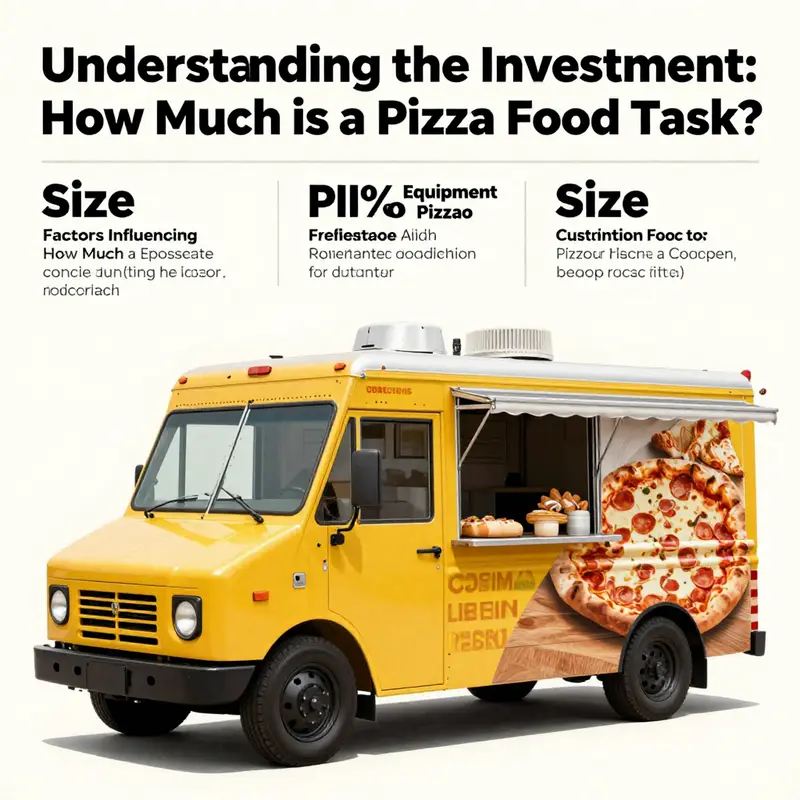
The idea of a pizza on wheels invites images of storefront scale, sizzling ovens, and the freedom to chase events rather than rent a fixed space. Yet the price of that mobility is not a single number but a spectrum shaped by choices that ripple through every hour of operation. The cost of a pizza food truck begins with its chassis and shell, but it accumulates as soon as you power up, order your oven, decide how you want to present your brand, and map out the daily route from a bustling market to a quiet community fair. What you pay for the vehicle in the showroom often isn’t the whole picture; it’s a starting point that branches into a whole ecosystem of equipment, compliance, and logistics. To get a true sense of the investment, it helps to think in terms of the core decisions that govern price and, just as importantly, total cost of ownership over time. For a practical snapshot of current market prices, you can consult the article how-much-is-a-pizza-food-truck.
One of the first axes along which prices diverge is the type of truck and its condition. A brand-new mobile kitchen promises modern features, the latest safety standards, and a warranty that can cushion the cost of future repairs. But that reassurance comes at a premium. The purchase price reflects the guarantees that accompany a new build: better insulation, more efficient layouts, and up-to-date electrical and plumbing configurations that conform to current code expectations. On the other hand, a used or refurbished unit introduces the possibility of immediate savings. Yet those savings are not merely numerical; they carry risk. A pre-owned chassis might require retrofits to comply with local health and safety standards, or it may need a more robust generator and upgraded insulation to handle peak service hours. The price delta between new and used is not simply about depreciation; it’s about how you value certainty versus potential future investment. The decision between new and used can set the tone for the rest of the project, because it often determines the ceiling on customization, the scope of upgrades, and the timeline to launch.
Ovens and kitchen equipment stand as the most visible and often the most consequential cost in a pizza truck. The oven is not merely a heat source; it is a strategic asset that governs your menu, throughput, and the customer experience. A high-end oven—whether gas-fired, wood-fired, or a sophisticated electric model—can dramatically shift the price. The oven’s ability to reach high temperatures quickly translates into faster service at busy events, which in turn can elevate revenue during peak periods. But speed has a price, and in many setups the preheat time becomes a practical constraint. Some ovens demand 30 to 60 minutes of preheating before you can bake with consistent results, and that routine must be factored into your daily scheduling and staffing plans. A long preheat can erode the efficiency that makes a mobile unit profitable, especially at events where time is literally money. In more minimalist configurations, operators might opt for simpler, lower-cost packaging and pre-assembled kitchen modules that reduce upfront risk but may limit the range of offerings. In such cases, the price is lower, but the long-term flexibility is trimmed, potentially constraining growth if demand shifts or seasonal opportunities arise. The balance between oven performance, reliability, and cost is a constant negotiation with every menu you intend to offer.
Customization and branding form another major price lever. A truck can be a blank canvas or a branded medium that churns out a distinctive experience. Interior layouts tailored to a specific workflow—where the dough station, topping prep, oven, and service window align with the way your team works—can optimize efficiency but also add to the build cost. Exterior branding, paint schemes, signage, and customer-facing design elements contribute to the initial price tag and can influence return on investment through stronger foot traffic and a more memorable customer interaction. Some operators argue that branding is not an expense but an essential asset, a visual promise that signals quality and consistency to potential customers. Others test more economical branding approaches that still convey a clear identity without inflating the price. Either way, branding decisions carry a meaningful price signal because they affect not just the aesthetics but also the perceived value, marketing reach, and ease of attracting repeat business.
Beyond the vehicle and the visible kitchen, the practical economics of a pizza truck hinge on permits, licensing, and insurance. These ongoing costs do not appear in the sticker price of the vehicle, yet they are indispensable commitments that every operator must budget for. Local regulations vary widely, and health departments in particular scrutinize mobile kitchens for proper sanitation, ventilation, waste disposal, and food handling protocols. Securing the right permits can involve fees, inspections, and renewals that recur on a monthly or annual basis. Insurance—encompassing general liability, vehicle coverage, and, in some jurisdictions, specialized coverage for food handling or worker injuries—adds another layer of recurring expense. The annual burden of permits and insurance, while not a display on a single invoice, can amount to thousands of dollars and should be weighed alongside the initial purchase. It is in this space that budgeting disciplines reveal themselves: the cheapest upfront truck can become more expensive than a higher-priced option if ongoing compliance costs and the need for frequent renewals outpace revenue.
Location and operational logistics also shape cost in ways that are easy to overlook at the outset. A pizza truck thrives on visibility, accessibility, and the ability to be in the right place at the right time. In practice, this means considering where you park, whether you pay for a fixed space near high-foot-traffic areas, or whether you chase events, farmers’ markets, fairs, and concerts. Urban environments often offer abundant opportunities but come with higher permitting requirements, parking restrictions, and sometimes higher security deposits for event spaces. In rural or suburban settings, the same truck might face fewer regulatory hurdles but encounter fewer lucrative opportunities, making the math of profitability a bit more dependent on seasonality and local demand. The choice of location thus interacts with your brand strategy, menu mix, and pricing approach. It also intersects with the power and utilities plan for the truck. A unit that relies on external electrical hookups can operate smoothly at certain sites, while locations without reliable power push operators toward generators or upgraded battery systems. Each path carries its own cost profile: generators add purchase and fuel costs; high-capacity electrical systems demand sturdier electrical wiring and safety measures; and all options influence maintenance schedules and downtime.
Power and utility requirements, more than any other single factor, define the day-to-day viability of mobile pizza operations. The demand is not just about the oven; it includes refrigeration for ingredients, prep surfaces, lighting, ventilation, and the potential for other devices such as warmers, sauce warmers, or beverage services. A truck built for maximum throughput might incorporate more robust HVAC solutions, larger electrical panels, or parallel generators to ensure consistent performance across events that push capacity. The cost implications here are layered: a more capable energy backbone translates into a higher initial outlay, higher fuel or fuel-equivalent costs, and demand for ongoing maintenance. Conversely, a leaner setup might limit what you can safely store or heat, but it reduces the upfront price and daily operating risk. The balance between power capacity, reliability, and cost becomes especially acute for operators who aim to serve at festivals, street markets, or per-event gigs where hours can stretch long and the ambient temperature can swing dramatically.
As you weigh these dimensions, the economy of scale begins to emerge. A basic mobile kitchen can be surprisingly affordable, reflecting minimal equipment and a streamlined workflow. The price climbs as you introduce higher-quality ovens, more elaborate interior layouts, and more ambitious branding. The tables you see in listings often present a skyline of options: a basic mobile kitchen truck starting at a few thousand dollars, an outdoor mobile kitchen trailer pitched at a mid-range figure, and custom-sized configurations that can stretch toward higher four figures depending on the level of customization and included equipment. The differences are not simply about one-off costs; they translate into daily operating realities. Consider a week of dinner service and weekend events. A faster oven can produce more pizzas per hour, but only if staffing, prep space, and workflow support that throughput. A more elaborate branding package can draw more customers from the first event, which sweetens the sales curve but also elevates the break-even point.
To frame these choices with clarity, imagine three archetypes that often surface in market discussions. The first is a lean, no-frills setup that prioritizes low upfront risk and short time to market. It emphasizes essential equipment, a compact footprint, and a minimalist branding approach. The second archetype is a balanced configuration that blends reliability with some degree of customization—slightly upgraded ovens, a more ergonomic interior, and a branding package that signals quality without overwhelming the budget. The third archetype represents a growth-oriented model: a larger footprint, top-tier oven technology, a premium branding strategy, and robust power and utility architecture to support a broader menu and longer service hours. In each case, the price is not just the number on the invoice; it is indicative of the operational cadence you intend to establish. If your plan centers on high-frequency, high-volume events, the incremental cost of faster throughput can be justified by higher revenue per hour. If you expect to operate mainly at weekend markets with modest crowds, the lean configuration might deliver a more favorable cost-to-serve balance.
Breaking down the cost in this way helps demystify what many buyers experience: the sticker price is only the first chapter. The subsequent chapters of cost—the equipment upgrades, the permitting process, the insurance line items, and the logistics of power and space—compose the rest of the story. The total cost of ownership becomes a function not only of what you buy but of how you run it. A well-planned maintenance regime, a prudent schedule for inspections, and a disciplined approach to energy usage can all reduce the long-term expense and extend the useful life of a truck. In practical terms, this often means investing in better insulation, more durable fixtures, and more reliable cooking hardware upfront, recognizing that these investments reduce the probability of expensive repairs and downtime later.
The market context, as reflected in current listings and buyer reports, shows a wide spectrum of pricing. A basic mobile unit may launch at a few thousand dollars, a complete outdoor trailer can sit around the mid-to-high range, and custom setups with substantive ovens and branding can push well into higher four-figure territory depending on scope. It is important to treat these figures as signals rather than fixed targets. The actual price you negotiate will be shaped by location, vendor, timing, and how much value the seller places on speed to market or on residual equipment. It is equally important to account for taxes, shipping or delivery costs, setup fees, and, in many markets, the cost to register and license the vehicle for mobile operation. In this sense, the journey from concept to rolling kitchen is as much a budgeting exercise as a design one. The upfront price is the tip of the iceberg; the rest of the iceberg extends into daily costs and long-range planning.
As you move from concept toward reality, a disciplined approach matters. Start by listing your essential equipment and your non-negotiables for safety and sanitation. Then map a realistic service model: how many pizzas per hour you aim to sell, the size of your team, the hours you expect to operate, and the typical venues you will serve. This planning clarifies which features are must-haves and which are nice-to-haves, allowing you to negotiate with suppliers with greater precision. It also strengthens your business case when you seek financing or partnerships, because you can demonstrate a coherent plan that ties price to performance. If the market’s price points seem opaque, use them as reference anchors rather than final determinants. It is the ratio of anticipated revenue to anticipated cost that will ultimately guide your choice. For those who want a more precise market pulse, there is value in consulting a dedicated overview of current market prices and technical specifications, which can provide a practical frame of reference for your decision.
In the end, the price of a pizza food truck reflects a blend of hardware, craft, compliance, and strategic timing. It is a reflection of how you intend to work—your pace, your menu, and your ambition. A lean start can be a nimble way into the market, with lower upfront risk and a quicker path to profitability if you select a well-suited site and a tight menu. A more elaborate build, with a robust oven, a custom interior, and a branded exterior, can create a strong selling proposition that differentiates you in crowded markets, provided you couple it with a solid location strategy and a clear plan for maintaining quality and consistency. Either path can become a durable business if the economics are aligned with real demand and a disciplined operating model. The numbers will keep shifting with supply conditions, material costs, and the regulatory environment, but the core principle remains: price is a tool, not a verdict. It should be used to secure the right combination of equipment, efficiency, and brand presence that lets you serve great pizza while earning a sustainable return.
For readers who want to drill down into the market specifics, a broader technical reference can be helpful to contextualize the grades and specifications that shape a truck’s capabilities. External resources that outline grades, technical specifications, and uses in industry can offer a deeper vocabulary for what you are buying and the level of investment a given configuration requires. See the external resource here: https://www.foodtrucknigeria.com/grades-technical-specifications.
Taken together, the pricing landscape for pizza food trucks is less a single price point than a portfolio of choices that reflect risk appetite, speed to market, and the dream of presenting hot, handmade pies to a wandering audience. The right balance depends on your personal goals, your local market, and your tolerance for maintenance and compliance complexity. If you are aiming for a straightforward launch with steady demand, the lean end of the spectrum can be compelling. If your strategy envisions rapid scaling, high-volume events, and a distinctive brand, the higher end can be a worthwhile investment. Either way, the path to profitability is navigated not by chasing the lowest price but by understanding how each element contributes to service quality, reliability, and revenue stability over time. The best decisions emerge from a clear forecast of how many pizzas you expect to move, how often you will encounter downtime due to equipment or power issues, and how your location strategy aligns with consumer appetite for freshly made pizza on the go. As you refine your plan, you will begin to see more clearly how the cost curve bends in favor of efficiency, branding, and dependable throughput, turning a mobility concept into a sustainable, repeatable business.
null
null
Final thoughts
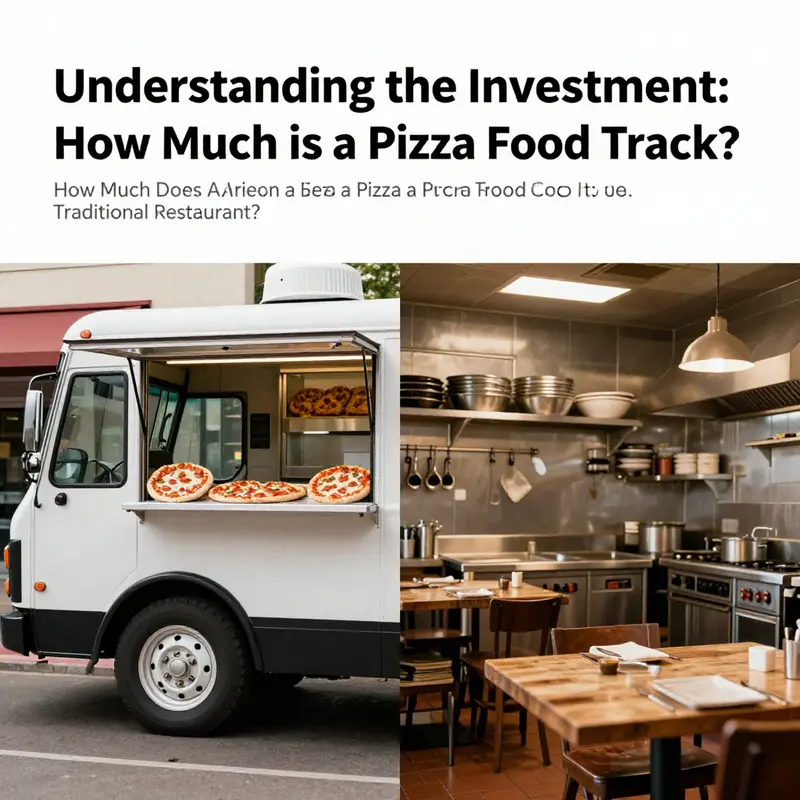
Understanding the costs associated with a pizza food truck—ranging from the initial investment to ongoing expenses—equips business owners with knowledge necessary for informed decision-making. By factoring in customization, equipment quality, and the operational versatility unique to food trucks, entrepreneurs can maximize their potential for profitability. Ultimately, transitioning from a standard restaurant model to a mobile pizza kitchen may reveal substantial benefits that resonate with today’s dining trends.