
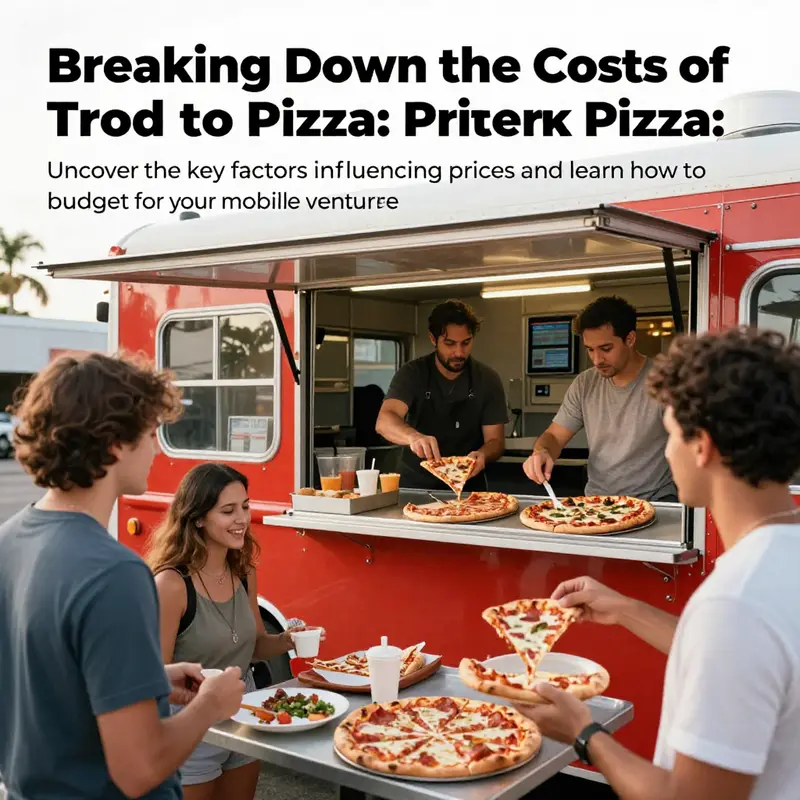
The food truck pizza business is on the rise, attracting entrepreneurs who are eager to tap into this lucrative market. Understanding the costs involved in acquiring a food truck dedicated to pizza is crucial for business owners aiming to operate efficiently and profitably. In the following chapters, we will delve into the variability of food truck pizza pricing, explore the factors that influence these costs, provide a comparative analysis of current market options, and investigate future trends that may affect pricing. This comprehensive approach will equip you with the knowledge needed to make informed purchasing decisions for your pizza venture.
Price on the Move: Decoding the Variability of Food Truck Pizza Costs
When people ask how much a food truck pizza costs, the simplest answer is rarely the truth. A single number cannot capture the appetite of a market that crunches ingredients, equipment, and location into every slice sold from a moving kitchen. The question hinges on a constellation of factors that stretch from the machinery inside the truck to the neighborhood where it rolls. In 2026, a spectrum of price points exists that reflects how much a buyer is willing to invest to achieve a certain scale, capability, and dining experience on wheels. The spectrum starts with no-frills mobility and climbs into fully outfitted trade show kitchens on trailers, with each rung carrying its own justification in terms of durability, speed, and return on investment. Basic mobile bakery or pizza kitchen trucks can start around two thousand five hundred dollars, a price that covers a compact footprint and essential equipment. At the other end, advanced towable pizza food trailers with complete setups may run roughly six thousand four hundred fifty dollars as a ballpark for January 2026. Between these bookends lies a broad landscape where configurations, materials, and sophistication tilt the price upward in measurable steps. The concrete examples from the current market illustrate how divergent a single category can be when vendors respond to different demands and budgets. A street-ready Mobile Street BBQ Fast Food Truck Pizza, for instance, might be priced in a narrow band around five thousand seven hundred to six thousand one hundred dollars per piece, reflecting a compact yet capable platform designed for quick service in busy corridors. A Mobile Bakery Pizza Food Kitchen Truck presents a wider spread, ranging from two thousand five hundred up to fifteen thousand dollars per set, signaling how much the design can scale with features, finishes, and inventory capacity. Other offerings show a similar pattern: a modern trailer with a vintage look, a fully equipped retro electric cart, or a European market unit each carries its own pricing logic that maps to its build quality, the types of appliances installed, and the level of customization demanded by buyers.
All of these numbers share a common denominator: materials and build choices matter. The choice of stainless steel versus aluminum or galvanized sheet influences not only the initial price but also the long-term maintenance and hygiene standards that customers expect in a food service vehicle. The electrical system, plumbing, ventilation, and the type of kitchen equipment installed—whether conventional gas ranges or energy-efficient electric appliances—shape both the upfront cost and ongoing operating costs. In many cases, high-end units include wood-fired ovens or other specialty cooking zones that elevate the menu and the perceived value of the pizza. Wood-fired capabilities, while attractive for branding and flavor, bring with them increased fuel consumption, more frequent maintenance, and stricter ventilation requirements. The price tag then reflects not just the oven itself but the entire ecosystem around it: reliable ignition, heat management, and a kiln of safety measures that must align with local health and safety codes. In contrast, simpler setups deliver a leaner cost profile by relying on more conventional, less ornate equipment. A typical concession-style pizza truck may trim additional costs by using more standard appliances, streamlined storage, and a smaller footprint that reduces both the initial investment and the insurance and permitting burdens that come with a larger unit.
If price is a signal of capability, it also functions as a signal of potential budgets and timelines. The variability is not merely about the physical unit but about the business plan attached to it. A buyer who prioritizes brand storytelling and a premium dining experience may decide to invest in a wood-fired oven, a custom interior finish, and a vehicle upgraded with energy-efficient appliances. That strategy often pushes the price upward, but it can also justify higher menu prices and stronger margins in markets with higher willingness to pay. On the other hand, a startup focused on quick, high-volume lunches in a dense urban core might lean toward a more compact, durable trailer with reliable but less flashy equipment. The goal is to balance speed, reliability, and cost, ensuring that the pizza brand can scale across blocks with a predictable service rhythm. In this sense, price becomes a strategic variable as much as a purchase tag.
Beyond the hardware, there are strategic pricing levers that influence the final sticker price and the economics of running a mobile pizza business. Ingredient quality is a major determinant of unit cost and, by extension, the menu prices customers are willing to accept. Fresh, locally sourced ingredients or organic options can lift the cost per pie, which in turn nudges price points higher to protect gross margins. Labor costs add another layer of complexity. The skill level of staff, wage standards by region, and scheduling efficiency all feed into the long-term profitability of the venture. A truck equipped to deliver fast service with a lean crew may maintain lower operating costs, while a unit designed for a more artisanal offering may rely on higher skilled labor and longer preparation times, pushing labor costs upward. Regional demand patterns also sculpt prices. Trucks in highly coveted urban districts tend to price higher to offset elevated rent, parking fees, and permit costs, while suburban or rural setups might pursue a broader but lower price ceiling to attract a larger customer base. The geographic and regulatory landscape thus participates in the price equation as a set of fixed or semi-fixed costs that can alter the margin profile of a given unit.
The chapter of cost is not merely the chapter of purchase price. It is also a chapter about how a unit fits into a broader operating model. Technical standards—that is, how the vehicle is built and how efficiently it runs—affect both the initial outlay and the ongoing cost of operation. A truck with robust sanitary finishes, corrosion-resistant interiors, and energy-efficient appliances may demand a higher upfront investment but deliver lower maintenance costs and lower energy consumption over time. Conversely, a vehicle with cheaper materials or fewer energy-efficient features may require more frequent repairs and more frequent replacement of components, eroding the long-term value of the initial savings. The decision here is rarely about choosing the lowest price but about selecting a configuration that aligns with the expected volume, menu complexity, and the maintenance capacity of the owner. When a buyer imagines the first year of operations, it is common to account for more than just the price tag. Permits, licenses, fire safety equipment, and insurance all add to the upfront cost and ongoing monthly expenses. The total investment, therefore, is a blend of the sticker price, the cost of fit-out and compliance, and the estimated cash outlays that keep the wheels turning day to day.
This landscape invites buyers to approach the market with a clear budgeting framework. Start with a baseline of two thousand five hundred dollars for a minimal, often used, mobile kitchen—a doorway into the world of pizza on the go. From there, escalate to a more capable platform that can handle consistent, high-volume service, recognizing that each additional feature carries a price. When the oven becomes more specialized, or when the unit’s interior finishes are upgraded to withstand heavy use and to project a premium image, the investment climbs. If the plan includes expanding to multiple routes or festivals, or if the concept hinges on delivering a distinctive dining experience, a buyer should anticipate not only the higher upfront price but also the corresponding lift in ongoing costs and revenue opportunities. The price also becomes a signal of the kind of business you intend to build: a lean, consistent, high-turnover operation, or a more experiential, brand-driven venture that seeks premium pricing and a curated customer journey. In other words, the cost of the pizza on wheels is a proxy for the scale, tempo, and personality of the business that sits behind it.
For readers who want a practical touchstone as they evaluate options, it helps to picture these price bands not just as numbers but as design choices that shape daily life on the road. A basic setup supports a straightforward pizza menu, quick service, and easier compliance with health codes. The more elaborate the build, the more it invites a broader menu, a richer customer experience, and potentially a different audience profile willing to pay for the extra value. The range of prices observed in 2026 reflects this reality: some buyers want off-the-shelf efficiency; others want to craft a distinctive mobile restaurant with a story you can taste in every slice. If you are curious about how these price points translate into an actionable plan, the internal research on cost scenarios and market ranges provides a useful reference point. For a concise overview that aligns with practical budgeting and market realities, you can explore the overview on how much a pizza food truck typically costs and how those costs can shift with design choices. how-much-is-a-pizza-food-truck.
The conversation around price is inseparable from the question of value. A buyer may choose a high-end unit that elevates the brand and justifies a premium price, or opt for a straightforward platform that prioritizes reliability and lower operating costs. Either choice can be sound if aligned with the intended market, the anticipated volume, and the capacity to sustain an ongoing operation across seasons. In this sense, price on the move is less a fixed tally and more a negotiation with what a business can become when it travels the streets. The data from 2026 show that this negotiation happens at multiple scales, from the modestly outfitted bakery truck to the fully equipped, feature-rich trailer. Each price point tells a story about the level of risk a founder is willing to tolerate, the speed at which they want to scale, and the flavor profile they want their brand to deliver to customers. The path from two thousand five hundred to six thousand four hundred fifty dollars is thus not a straight line but a gradient of choices, each with its own trade-offs in speed, consistency, and customer perception.
For readers seeking concrete starting points, the market illustrations offer a practical takeaway. When budgeting for a pizza truck, recognize that price is a function of equipment quality, capacity, and the level of customization. If your plan emphasizes artisanal, wood-fired pizza and a venue-driven brand, anticipate a higher entry cost that may be offset by stronger sales and higher ticket prices in the right markets. If your goal is rapid deployment and steady, repeatable service in a city center or a campus environment, a lean unit with efficient workflow and durable, easy-to-clean interiors can deliver a compelling return with a much lower upfront investment. Either trajectory requires careful attention to the same core elements: build quality, energy efficiency, compliance, and the logistics of keeping a mobile kitchen in motion. The price range documented in 2026, with examples spanning from a few thousand to more than ten thousand dollars across different configurations, underscores the fact that there is no universal answer to how much a food truck pizza costs. Instead, there is a spectrum that reflects the ambition behind the business, the realities of the local market, and the practicalities of turning a dream of pizza on the street into a reliable, repeatable morning, noon, and night.
For those who want to dive deeper into the specific models and configurations that populate this market, the detailed results outline the variability with precise figures across different vendors and build options. The data illustrate not only the price ranges but also how features such as complete kitchen setups, portability, and regional customization push costs in distinct directions. This helps prospective buyers calibrate expectations, prepare more accurate budgets, and approach suppliers with targeted inquiries rather than broad wish lists. If you would like to explore further and see how these price points translate into real-world asset requirements, you can review the product listings and price ranges in the market overview. And to connect this pricing reality to broader industry discussions about launching a food truck operation, the linked internal resource offers practical steps and considerations for turning a plan into a functioning business. (Internal reference: how-much-is-a-pizza-food-truck) .
External resource for further reading on market offerings and procurement options can be found in the supplier data references. This external information helps contextualize the price spectrum shown here and highlights the role of specification details in cost variation. For readers who want a broader sense of the purchasing landscape and to compare options across regions and configurations, the following external resource provides a snapshot of current listings and pricing dynamics: https://www.alibaba.com/product-detail/Pizza-Food-Trailer-Mobile-Food-Truck-with_1601397874974.html Please note that prices and terms vary by supplier, location, and customization, and it is prudent to contact sellers directly for precise quotes and lead times.
The Price Behind the Slice: Decoding What Drives the Cost of a Food Truck Pizza
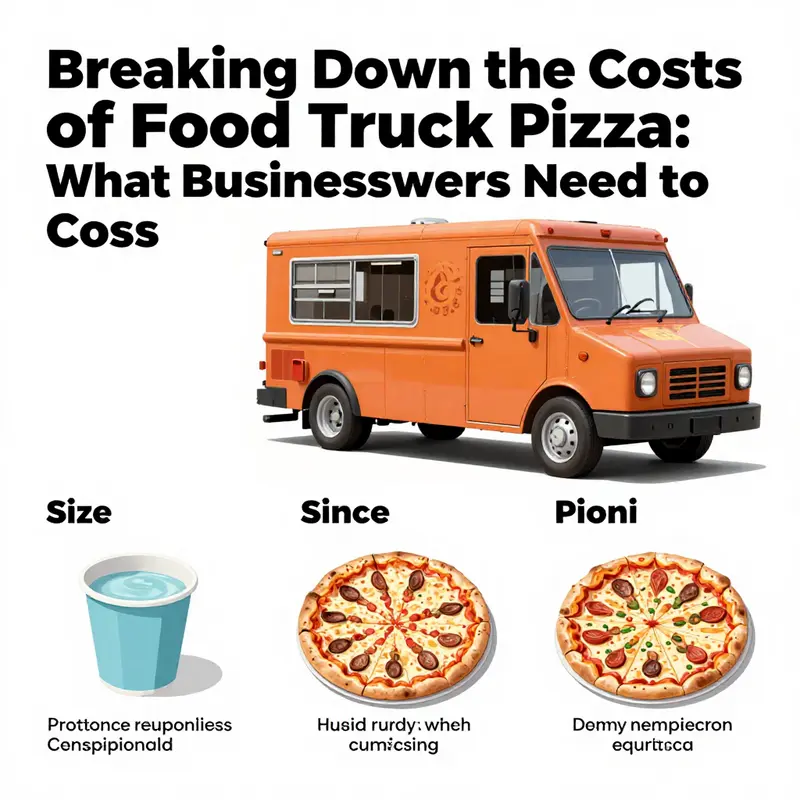
Pricing a food truck pizza is as much about the kitchen on wheels as it is about the market you’re serving. When someone asks how much a food truck pizza costs, the answer isn’t a single figure but a spectrum shaped by many moving parts. In 2026, the market data show a broad range, reflecting how different configurations, locations, and business models can tilt the final price. The key to understanding value lies in unpacking the layers of cost that accumulate from the moment a dough ball is mixed to the moment a customer takes home a hot, slice-ready pie. This chapter unpacks those layers in a way that helps aspiring operators, investors, and curious readers see where the dollars go and how that translates into price on the truck, on the street, and in the pocket after a busy shift.
At the core, ingredients anchor cost, but they do not solo determine it. The type and quality of ingredients set the ceiling for what a pizza can be priced to. Fresh, locally sourced produce and high-quality cheeses can justify a higher menu price because customers perceive greater value. Yet premium ingredients aren’t a universal ticket to higher margins if the volume doesn’t support it. A truck that relies on simple, well-executed classics with careful portion control can still achieve profitability even when the base ingredients are more economical. The ability to price up or down with ingredient choice depends on a consistent customer perception of value, which is shaped by the entire experience, not by a single topping.
Beyond ingredients, size and style pull in different directions on cost. A larger pie naturally requires more dough, more sauce, and more toppings, but it can also command a higher price point if the customer base values generosity in portion size. Conversely, a small, portable crust with a compact topping set may reduce ingredient costs per unit and speed up assembly. The style of pizza—the thickness of the crust, the hydration of the dough, the depth of the cheese pull—also influences both production time and waste, and that, in turn, shapes labor costs and pricing. A Neapolitan-style pie, for example, demands quick, high-temperature cooking and precise oven performance, while a deeper dish or square-cut style may require longer handling and different equipment maintenance. In practice, the price becomes a balancing act: the more you lean into complexity and customization, the more you must accommodate prep time and inventory risk in your pricing strategy.
Customization, often a selling point for mobile concepts, carries its own cost structure. When customers are invited to choose from a broader array of toppings, crust types, or finishing sauces, the kitchen must hold a larger inventory and maintain a system for real-time prep and assembly. That expanded inventory raises both food costs and waste risk if demand shifts. It also elevates labor requirements, since more assembly decisions demand attention from the cook and could slow service during peak periods. From a pricing perspective, customization can justify a premium if customers clearly perceive that they are receiving a tailored product that delivers on both taste and experience. The risk is underestimating the cost of complexity and overestimating a willingness to pay, especially in crowded markets where many vendors offer similar customization options. A careful pricing lattice—base price plus add-ons, with a cap on excessive complexity during busy hours—helps maintain profitability while preserving the customer’s sense of value.
Operational costs extend the discussion from ingredients and customization to the everyday realities of running a mobile kitchen. Labor costs, fuel, insurance, permits, and ongoing maintenance all press on the bottom line and shape the price ceiling. Labor is often the largest fixed component, and in a city with strict labor laws or higher wage standards, the price needed to cover payroll obligations increases accordingly. Fuel consumption is not only a concern for the business’s budget but also a factor in route planning and service windows. The more you travel between events, venues, and neighborhoods, the higher fuel and wear-and-tear costs stack up. Insurance provides protection against liability and property damage, a sound investment for mobility but a cost that needs to be reflected in pricing, especially if coverage is customized for high-risk environments or specialized equipment.
Permits and compliance sit at the intersection of policy and operation. Local regulations may require health inspections, business licenses, parking permits, and vehicle registrations. Each jurisdiction has its own fee structure, so a truck operating in a high-traffic metro zone might carry higher regulatory costs than one serving suburban routes. These costs are often absorbed in the unit price but can also become a strategic consideration when choosing locations, hours, and service formats. Maintenance—of the truck, generators, refrigeration, ovens, and plumbing—ensures reliability but introduces another recurring expense. A well-maintained unit reduces the risk of breakdowns during service, which in turn protects revenue, but it also demands a budget for routine parts, servicing, and unexpected repairs. Crafting a pricing plan that accounts for anticipated maintenance helps keep profit margins steady even when equipment ages or when a component requires replacement.
Location exerts one of the most visible influences on price, but it is not only about prestige. Urban hubs with high foot traffic can support higher price points because customers expect convenience and are willing to pay for quick, hot meals on the go. Parking fees, event costs, and location-specific compliance requirements further complicate the math. A prime street corner in a dense area may permit a higher price, but it also comes with greater competition and higher operating costs in terms of permits or negotiated lease arrangements for curb space. A more modest neighborhood route might achieve steady sales with lower upfront and ongoing costs, but the price point must reflect a different mix of demand, volume, and overhead. The lesson is simple: location sets the ceiling and the floor; pricing must be calibrated to the day-to-day reality of where and when the truck operates, as well as the expectations of the local customer base.
The initial setup and ongoing complexity of the food truck itself dramatically shape cost and, therefore, price. A full-service mobile kitchen that performs all steps of pizza production on site—dough preparation, sauce making, oven operation, and finishing—requires a more robust kitchen layout, more power and water capacity, and a durable workflow. In contrast, a leaner, delivery-focused model with lighter equipment might reduce capital outlay and operating expenses, but could limit the menu to fewer formats or to more rapid turnover. The choice of electrical systems, water supply, waste management, and ventilation further differentiates upfront investment and monthly costs. If a truck uses more energy-intensive equipment or a specialized oven, for example, the energy bill and maintenance obligations rise, and those costs must be seen in the menu prices. Operators often face a trade-off between the flexibility of a highly equipped kitchen and the capital efficiency of a simpler setup. The right choice depends on anticipated volumes, the desired level of on-site cooking, and the ability to sustain consistent quality.
Putting all these factors together reveals why the market for mobile pizza units displays a broad price range. In 2026, buyers could encounter a spectrum that starts in the low thousands for basic, lightly equipped, or used trailers and escalates to several thousand for more capable configurations with better insulation, robust refrigeration, and professional-grade cooking surfaces. On the lower end, a refurbished or basic mobile kitchen might fall between roughly two to seven thousand dollars per unit, depending on condition and included equipment. A mid-range setup—new or well-maintained with essential commercial kitchen appliances, proper ventilation, and adequate electrical capacity—tends to cluster around the four to eight thousand dollar mark. At the upper end, fully equipped, CE-compliant, or professionally customized units with reliable electrical and plumbing systems can approach or exceed ten thousand dollars, especially when they come with extended warranties, standardized layouts, and turnkey compliance features. It’s important to note that the price you see is not just for the chassis or trailer; it’s a package that includes the kitchen configuration, materials, fixtures, built-in safety features, and the vendor’s service support. In other words, every dollar is a reflection of not only what the truck can do on the road but how smoothly it can operate day after day, event after event.
To anchor these ideas in a practical frame, consider how a prospective operator might approach pricing. Start with a careful assessment of the business model: will the truck cook all meals on-site, or will portions be assembled elsewhere and delivered? How often will the vehicle move, and what kinds of locations will it serve? With answers to these questions, you can sketch a baseline price that covers fixed costs and variable costs. Fixed costs include depreciation of the equipment, insurance, and permits, while variable costs cover ingredients, charcoal or gas fuel, and occasional maintenance tied to usage intensity. A thoughtful pricing formula balances the cost per unit against expected sales volume and the competitive landscape in the chosen markets. A well-structured plan also accounts for seasonality, event calendars, and supply chain variability, which can swing both the cost of goods and the price customers are willing to pay. In practice, this means building a flexible menu and price sheet that can adapt to changing supplier prices or shifting demand patterns without compromising the perceived value of the product.
For readers seeking a concise window into typical price bands and how they map to different business needs, a practical baseline is to explore the common ranges reported by sellers and marketplaces. These figures illustrate how initial investment levels align with anticipated output. The difference between a minimal, entry-level mobile kitchen and a fully equipped, high-capacity unit is not merely a matter of taste. It is a statement about what you plan to cook, where you will sell, and how aggressively you want to scale. The economics of pizza on wheels are, in essence, a careful orchestration of input costs, labor efficiency, and the ability to deliver a consistent, high-quality product under varying conditions. A thoughtful operator will not chase the lowest price at the expense of reliability or customer satisfaction; instead, they will map out a pricing strategy that reflects the true cost of operation and a plausible path to profitability over time. If the goal is to understand the landscape more broadly and to connect with a spectrum of pricing realities, the topic of how much a pizza food truck costs provides a useful cross-section of market dynamics, supplier options, and strategic decision points. For a practical baseline on what to expect, see how much a pizza food truck costs, which consolidates typical price bands across different configurations and market segments. how-much-is-a-pizza-food-truck.
As this chapter moves toward a close, the takeaway sits in the balance between cost, value, and strategy. A food truck pizza is never just the sum of its toppings or its shiny exterior. It is a compact business built on a kitchen that travels, a supply chain that competes with local players, and a customer experience that must justify every dollar charged. The most effective pricing approaches recognize that value is more than taste. It encompasses reliability, speed, convenience, and the story you tell about your brand as it rolls from event to curb. The cost of the unit, the quality of the experience, and the scale of demand all converge to determine what customers are willing to pay and what remains in the till after a busy night. In the end, pricing is less about chasing a single optimal price and more about maintaining a sustainable rhythm—one that keeps customers coming back, foot traffic steady, and the business healthy in a landscape where every mile traveled adds another piece to the financial picture.
External perspective for broader context can be valuable when evaluating risk and opportunity beyond a single market. For a broader industry context beyond one region, see this external resource: https://www.naijaglobal.com/food-truck-for-sale-nigeria-grades-technical-specifications-and-uses-in-industry
Pricing Currents on the Street: Reading the Real Cost of a Pizza-on-Wheels
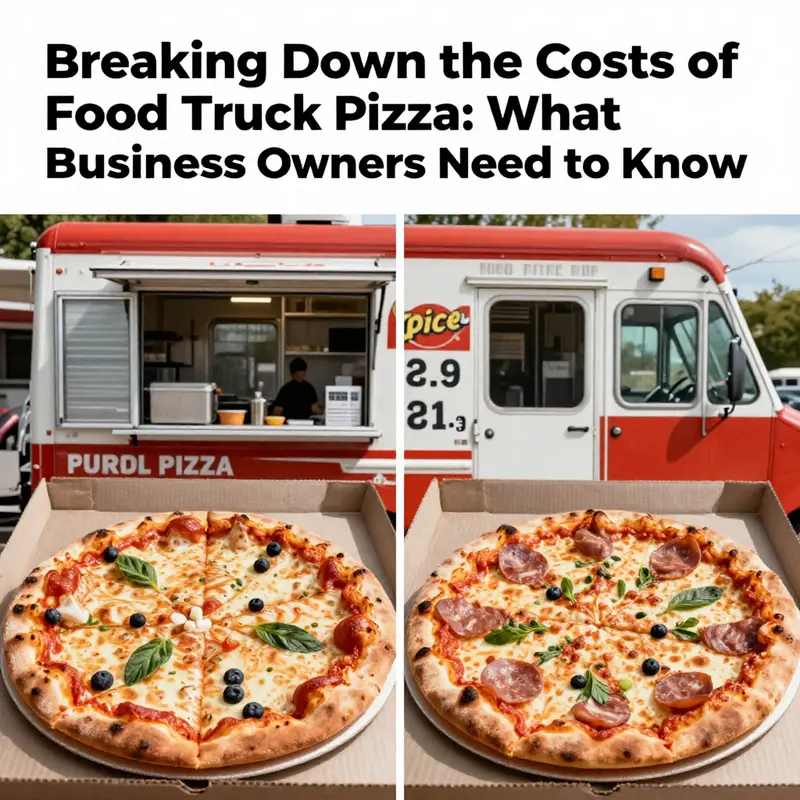
Prices for a pizza-on-wheels do not rest on a single figure. They ripple through choices about chassis, kitchen gear, insulation, electrical systems, and the scale of your ambition. The data from 2026 paints a landscape of wide ranges, where a single decision — to buy a simple trailer or a fully equipped mobile kitchen — reshapes the entry barrier and the pace at which you can start turning a profit. In the simplest terms, you are buying not just a vehicle, but a compact food factory that must meet safety standards, perform reliably in variable weather, and deliver a hot product with enough speed to keep up with demand. Reading these numbers carefully helps potential operators separate dream from reality and plan a path that fits both budget and appetite for risk. On a practical level, the initial investment can swing from a few thousand dollars to well into the tens of thousands, depending on what you require from the unit and how much customization you demand to stand out in a crowded market.
Consider the broad categories you might encounter in the market. Electric tuk tuk style pizza trucks, for example, offer a compact footprint and a surprisingly low entry price for a vehicle that still carries a proper kitchen. The price structure shows a small batch of units at about five thousand two hundred dollars for a pair or single unit, with a bulk discount that nudges the price down to roughly four thousand nine hundred dollars when you buy three to six pieces. This kind of pricing is meaningful for operators testing a pilot concept or opening a second or third location without tying up a huge amount of capital in equipment. It is not, however, a turnkey bakery on wheels; it is a lean, flexible platform that can be scaled as business grows.
In contrast, standard fully equipped mobile kitchens and trailers present a much wider price envelope. The range from two thousand five hundred dollars to fifteen thousand dollars per unit reflects differences in construction materials, equipment loads, and the degree of customization. A basic trailer might carry a single deck oven, a hood, and basic refrigeration, while a more complete setup could include a multi-station oven configuration, a robust ventilation system, high-capacity refrigeration, a dedicated handwashing station, more durable stainless steel finishes, and custom shelving. For operators, that initial spread translates into daily operating realities. A lower upfront cost reduces the immediate hurdle, but it can also mean higher ongoing maintenance or more frequent upgrades to meet evolving health and safety regulations or menu expansion.
European style concession trailers, designed to handle pizza and donut capabilities, push the price higher still. The data places these at seven thousand three hundred to nine thousand dollars per piece. The premium here is driven by design standards that emphasize a clean European aesthetic, heavier insulation for heat retention, and sometimes more sophisticated venting and exhaust systems. These factors matter not just for regulatory compliance but for the customer experience. A trailer that looks and feels substantial signals reliability and professionalism, which can translate into higher perceived value and a willingness to pay a premium. That perception matters in stalls, fairs, and mobile markets where appearance and speed of service can influence the speed of line formation and the overall throughput for a pop-up event.
Vintage style caravans enter the price spectrum a bit lower, ranging roughly from two thousand five hundred ninety dollars to five thousand two hundred eighty dollars per piece. The appeal is clear: nostalgia, character, and a distinct brand voice. For some operators, that character is the strongest draw in a crowded street scene. The trade off often involves more conventional heating and cooking equipment, which can limit efficiency in a busy shift unless additional upgrades are undertaken. Still, the charm of a vintage vessel can generate social media buzz and foster a loyal following in neighborhoods that crave a sense of story and craft with their pie.
Beyond these specialized formats, the baseline option category — general mobile food trailers that are capable of serving tacos, pizza, coffee, and BBQ — typically sits in a broad middle ground. The price range from four thousand five hundred to six thousand five hundred dollars per unit captures a mix of simple, sturdy builds and modestly customized kitchens. Operators who take this route often appreciate the flexibility to swap menu items as demand shifts. The more versatile the trailer, the larger the potential customer base. Yet versatility comes with a price, since equipment for multiple cuisines requires careful layout planning, adequate ventilation, and reliable power management to prevent cross-contamination and ensure consistent product quality.
A final tier worth noting covers electric fully equipped mobile food carts that can handle burgers, BBQ, ice cream, and tacos. The price span here runs from six thousand to about nine thousand five hundred dollars. These units tend to be robust, with higher-capacity electrical systems, longer service counters, and more comprehensive safety features. They are built for consistent, high-volume service over longer shifts, often in locations where a single operator must balance multiple revenue streams and maintain a fast pace. The broader implication of this pricing spectrum is that the decision is not purely about the unit price. It is about the workflow, the risk profile, and the confidence to scale.
A quick reminder sits at the core of any budgeting exercise: the amount you pay for the vehicle is only part of the total cost of bringing a pizza to the street. The operating costs, labor, power, gas, ingredients, and compliance costs accrue as you run. To put it in perspective, the actual price a consumer pays for a slice has its own ceiling. For example, in a major West Coast city in 2026, a single pizza typically sells for roughly twelve to fifteen dollars, depending on toppings and neighborhood. This contrast matters because it highlights a key business truth: the leanest, most constrained start is rarely about the slice price alone. It is the volume and the reliability of the truck that generate profits over time. The end consumer price is set by market expectations, quality, and the speed with which you can produce pies, not just the sticker price on your truck.
The numbers also reflect the material choices and the technology behind the unit. Stainless steel interiors, aluminum skins, or galvanized sheets influence durability and price. Electrical systems—from basic to heavy duty—determine how many ovens, warmers, and hot plates you can run simultaneously. Kitchen equipment, including ovens and burners, vents, and refrigeration, has a long useful life, but it must be maintained and rebuilt as the business grows. In other words, a low upfront price can become a long-term trade-off if the unit is not reliable or adaptable to seasonal demand. Conversely, a higher initial investment can yield a more efficient workflow and greater consistency in product quality, which in turn can accelerate revenue.
Despite the varied starting points, the market narrative remains consistent in one respect: the income potential of pizza on wheels grows with volume, not just with margin on a single pie. A small, nimble unit bought at the lower end of the spectrum may serve a neighborhood market well, but it will need to attract repeat customers and scale up to remain viable across seasons. A larger, fully equipped setup opens doors to events, festivals, and high-traffic corridors but carries higher fixed costs and more complex logistics. The middle ground — a well laid out, versatile mobile kitchen with reliable power and a coherent branding message — often represents the sweet spot for first-time operators. It provides the balance of capability and capital that supports a sustainable growth trajectory.
As you weigh options, the value of a clean, well-planned procurement becomes clear. The best decision aligns your kitchen design with your menu, your target location, and your expected service model. If your plan hinges on rapid service and consistent quality, a unit with robust ventilation, reliable refrigeration, and a practical workflow reduces the risk of delays and waste. If your plan centers on a flexible brand that can adapt to festivals and pop-up markets, the emphasis shifts toward portability, ease of setup, and the ability to service multiple event formats with minimal reconfiguration. Either path should be supported by a clear financial model that accounts for upfront costs, recurring expenses, and expected revenue per shift. The model should also reflect the time needed to reach break-even, a critical milestone for any mobile food business.
For readers who want to drill into the exact numbers and a deeper breakdown of price components, a detailed guide on the cost structure of a pizza food truck can illuminate the options and pitfalls. In particular, the discussion about price points and bulk discounts in the electric tuk tuk style category illustrates how volume purchases can influence the overall capacity to expand. Consider this a reminder that the market rewards a strategy that maps product, price, and delivery to a clear customer experience. If you want to explore how that mapping could work in your city, you can review a focused explainer on the overall cost of a pizza food truck, including the step by step considerations and the practical implications of different equipment choices, at the source linked here: How much is a pizza food truck?.
Adaptability remains a central theme across all price bands. A trailer or cart that can handle multiple cuisines offers a route to diversify revenue. Yet the more you expand the menu, the more you must invest in safety, zoning compliance, and post-purchase maintenance. The economics of this choice hinge on the balance between the incremental revenue from new menu items and the added costs of equipment, electricity, and cleaning. In short, the price you pay for a mobile pizza setup is the starting line. The race itself runs on the speed of service, the reliability of the equipment, and the ability to attract a stable stream of customers who will buy more than one slice per visit.
From the investor contemplating a pilot run to the chef who wants to build a street-level brand, the decision on how much to invest in a pizza truck ultimately boils down to clarity about goals, mission, and appetite for risk. The data indicate a spectrum that accommodates different business models and budgets while underscoring a simple truth: pizza on wheels is a business that relies on volume as much as on taste. The initial cost can be modest or substantial, but the real task is to create a consistent, repeatable experience that draws customers back and helps your vehicle pay for itself over time. If you are considering this path, take the time to inventory your needs, forecast your events, and map your operating costs against the expected customer flow. That approach locks in a plan that can adapt as markets change and as you refine your craft on the road.
External reference and further reading can provide real-world color on the pricing landscape and how operators navigate these choices. For readers who want an external perspective on urban pizza truck dynamics and consumer price environments, consider examining market chatter and real-world outcomes, such as the local reviews that discuss what customers pay and what they expect in a given city. External perspectives like these help anchor the pricing conversation in the day-to-day reality of customers and operators alike. External reference: https://www.yelp.com/biz/top-10-best-pizza-food-truck-in-seattle-wa?osq=Pizza+Food+Truck
Pricing the Slice: How Future Trends Shape What You Pay for a Food Truck Pizza
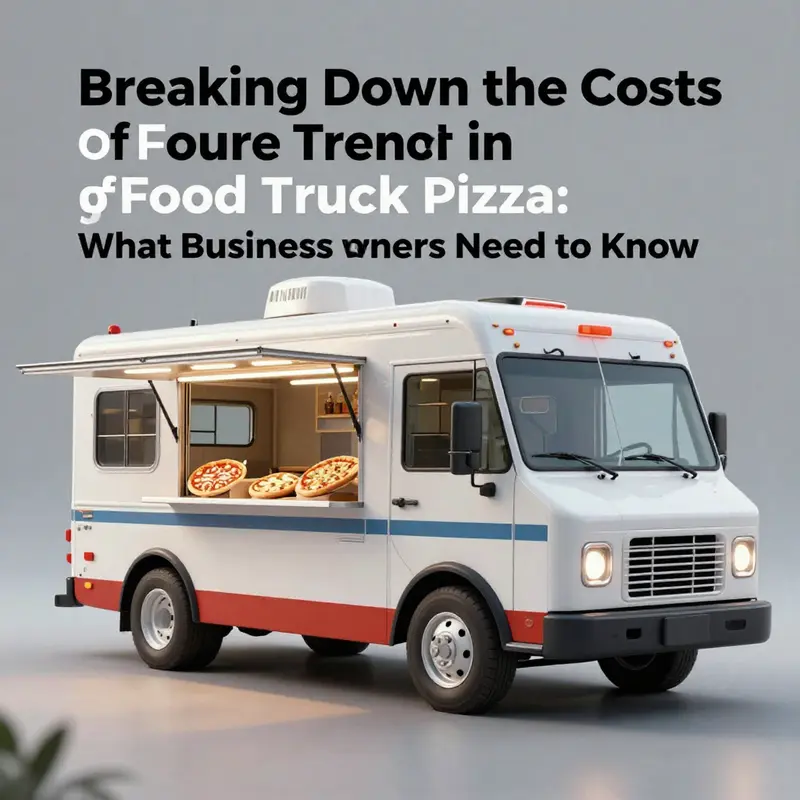
Prices for a food truck pizza are more a moving target than a fixed menu item. What you eventually pay depends on a constellation of choices and constraints: the hardware you bolt onto the truck, the scale of your operation, and the kind of customer experience you aim to create. When you pull back the curtain on the typical price landscape, you see a mosaic of numbers that reflect both different business models and the broader economic forces at play. In 2026, for example, mobility and customization collide with material costs and labor, producing a spectrum that stretches from lean, budget-focused setups to fully equipped, premium configurations. The numbers matter because they act as a starting point for planning, not as a ceiling or a guarantee. A quick look at representative price bands helps ground the conversation. A mobile street BBQ fast-food pizza truck can run roughly between five thousand seven hundred fifty and six thousand one hundred dollars per piece, with the minimum order quantity often set at one unit. A mobile bakery pizza kitchen truck, by contrast, shows even wider dispersion—prices quoted per set can range from a couple of thousand five hundred up to fifteen thousand dollars, depending on design, equipment, and delivery terms. Other offerings land somewhere in between: a white vintage food caravan trailer with pizza functions might be found for about two thousand five hundred to five thousand two hundred per unit, while a more substantial electric or hybrid model with multiple compartments can push the entry point into the seven-thousand-dollar territory when you need seven or more pieces. Across the Atlantic in Europe, new pizza food trucks and trailers are typically priced around four thousand to four thousand three hundred dollars per unit, a range that reflects cross-border labor costs, compliance, and the logistics of importing and outfitting a kitchen on wheels. Then there are customized options branded as CE approved or fully tailored to specific needs, with prices often starting near four thousand four hundred ninety dollars for small- to mid-sized fleets and rising with scale. A retro electric cart that includes pizza capabilities can span roughly four thousand nine hundred ninety-nine to seven thousand nine hundred dollars, depending on configuration, electrical load, and the sophistication of the cooking setup. This mosaic is not arbitrary; it mirrors the varying substrates that make up a mobile pizzeria: the chassis and insulation, the type of oven or heating system, the steel, aluminum, or stainless steel used for work surfaces, and the degree of built-in ventilation, water, and waste management. Each of these components contributes to the dollar figure, but the trend lines behind them are equally telling, because today’s price is a proxy for what you can expect to cost and what you might hope to earn from a given business model. The price you pay for the truck is only the first step. Beyond the purchase price, operating costs play a decisive role in pricing strategies and profitability, shaping how much customers end up paying for a slice. Rising operational costs are not a rumor—they are a practical reality of modern mobile food service. Inventory prices can climb when demand for high-quality, locally sourced ingredients tightens supply, and specialized equipment such as wood-fired ovens or stone hearths adds a premium to both acquisition and maintenance. The cost of electricity, fuel, and refrigeration also ebbs and flows with energy markets, local regulations, and the level of automation you bring into the kitchen. In the short term, operators might absorb some of these pressures to protect volume at peak events, but the long arc usually points toward passing at least a portion of the elevated costs to customers in the form of higher menu prices or more selective pricing on premium items. This is not about price gouging; it is about aligning the value proposition with the true cost of delivering a consistent, safe, on-trend experience. The consumer, in turn, is responding to a growing appetite for premium and gourmet offerings in the street-food space. People are increasingly willing to pay more for pizzas that lean on craft techniques, rare ingredients, or locally sourced produce. A shift toward premium toppings, slower fermentation doughs, or inventive crust ecosystems means some trucks can and will command higher prices without sacrificing demand. It is a market truth that broader consumer confidence in a product often follows perceived value: a thriving pizza-on-wheels scene can pull in crowds who equate price with quality when the product fulfils a distinct culinary story. When you pair that premium pull with a robust menu—think seasonal specials, limited editions, and curated drink or side bundles—the pricing becomes a narrative device as much as a margin tool. The market itself is expanding, too. The global food trucks sector is forecast to grow from about $2.88 billion in 2026 to roughly $4.17 billion by 2034, signaling a compound annual growth rate of around 4.7 percent. That expansion creates more competition, which in turn pressures operators to differentiate through pricing that reflects every distinct value proposition—from speed and convenience to culinary novelty and experiential dining. The multiplier effect of growth is not just in more trucks on the road but in sharper segmentation of offerings. Operators are increasingly adopting diverse pricing strategies tailored to different customer segments and contexts. Tiered menu options—basic, gourmet, and specialty pizzas—allow a broad audience to engage with the brand at a price point that matches their budget and expectations. Seasonal or limited-time specials inject novelty and justify premium pricing by signaling scarcity and freshness. Bundled deals—pizza paired with a drink or a side at a slightly reduced combined price—encourage higher average check sizes while maintaining attractive per-unit economics. Such bundles can also smooth revenue through lower variability, which matters in the festival and event circuit where attendance can swing dramatically from week to week. In the context of a single truck, the operational model matters as much as the menu. A compact, budget-conscious truck that leans on electric ovens, rapid reheat capabilities, and simplified workflows often keeps prices approachable. This is not a compromise on quality; it is a deliberate choice to monetize high-volume throughput and quick turnover, especially during crowded events or in busy urban corridors where foot traffic and weather patterns drive demand. On the other end of the spectrum, trucks that invest in a more immersive dining experience—perhaps with a distinctive cooking method, a curated ambiance, or a chef-driven menu—can command higher prices. These setups are designed for a niche market that values storytelling as part of the meal, along with a memorable service moment. The price tag, in this case, is a reflection of the experience as much as the pizza itself. For readers weighing whether to buy, lease, or partner with a truck operator, a practical note is to ground expectations in a realistic budgeting framework. Start with a baseline acquisition cost for the type of truck and equipment you envision, and then layer in permitting, licensing, insurance, maintenance, and rapid-response spare parts. Add a cushion for the inevitable price fluctuations in ingredients, fuel, and energy, and then refine your menu strategy to balance value and margin. If you want a practical snapshot of how these numbers translate into real-world decisions, consider the following cross-section of current market realities. The range from roughly $2,500 to $15,000 per set or per unit in various configurations demonstrates how much insulation and customization matter. A few configurations sit near four to five thousand dollars, while others push toward the mid to upper tens of thousands. The differences aren’t random; they reflect material quality, cooking capacity, electrical load, and the regulatory and logistics costs that accompany multi-territory distribution. The evolving pricing landscape will push operators to think beyond the sticker price. A robust and dynamic pricing approach will blend base costs with value-added offerings that justify higher tickets, and it will do so in a way that remains competitive within a growing market. To connect this discussion to tangible guidance, a quick reference point is useful. If you’re curious about the current state of the market and want a practical sense of what a pizza truck costs, consider exploring a dedicated guide such as this: [How much is a pizza food truck?]. This resource helps map price bands to specific configurations and use cases, clarifying how much a particular setup might cost in your region and under your preferred specifications. For a broader, research-backed perspective on market dynamics and pricing pressures, the landscape is illuminated by industry analyses that highlight how rising costs, consumer appetite for premium products, and competitive pressures shape pricing strategies across a growing global sector. As you navigate this terrain, two core truths emerge. First, the price tag on the truck is just the opening move in a longer game about value delivery. Second, the smart operator treats price as a strategic lever—one that can harmonize with menu design, service speed, and brand storytelling to create a sustainable business model. The future of food truck pizza pricing will belong to those who align cost discipline with creative positioning. They will leverage tiered offerings, seasonal innovations, and bundles to attract different customer cohorts while maintaining healthy margins. They will also stay agile in response to energy costs, ingredient availability, and regulatory shifts that can tilt the price equation from year to year. For readers who want to dive deeper into market-scale trends, the broader story is documented in industry analyses that project growth and outline the forces shaping the price environment for food trucks worldwide. External resource: Grand View Research’s Global Food Trucks Market Size, Share & Industry Trends Analysis Report (2026–2034) provides a comprehensive, data-driven view of how demand, competition, and capital expenditure are evolving across regions and segments. https://www.grandviewresearch.com/industry-analysis/food-trucks-market
Final thoughts
In conclusion, understanding the factors influencing the costs of food truck pizzas can significantly impact business decisions for aspiring operators. As the market continues to evolve, staying informed about price variations, equipment needs, and emerging trends is essential for setting up a successful mobile pizza business. By grasping these concepts, you can better budget for your investment and enhance your chances of success in this competitive industry.