
For pizza truck owners, ensuring the safety of their mobile kitchen is critical not just for the business, but for the well-being of staff and customers. Fires in pizza trucks can stem from various sources including electrical faults, grease buildup, or improper fuel handling. This article explores these common causes in detail, outlines proactive safety protocols, and presents illuminating case studies of fire incidents to provide valuable insights for pizza truck owners. By revealing essential prevention strategies and lessons learned from past events, we aim to equip you with the knowledge needed to operate safely and efficiently in the food truck industry.
Moving Inferno: The Hidden Fire Dangers Lurking in a Pizza Truck
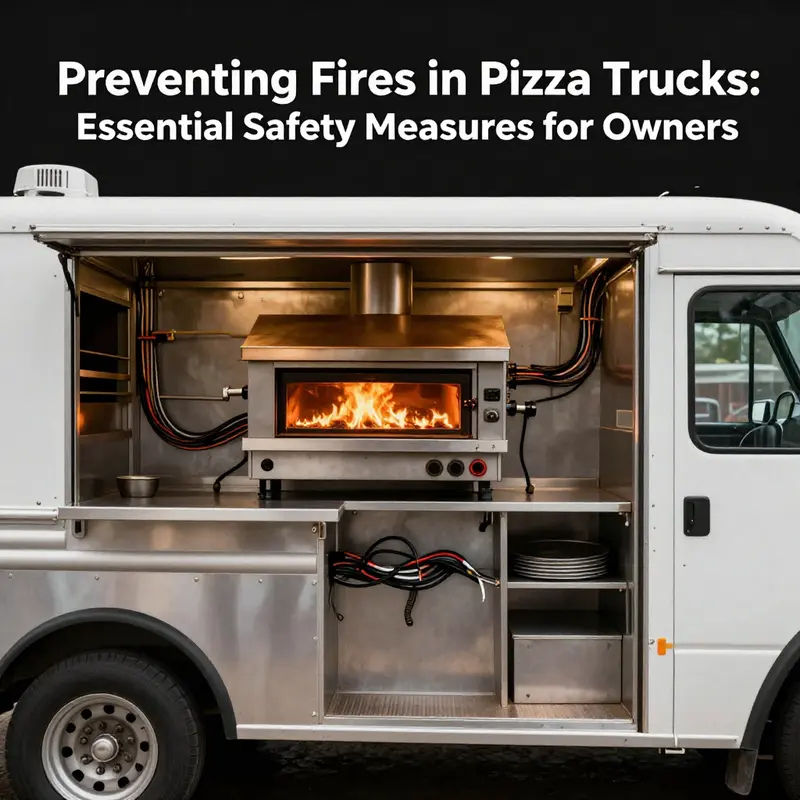
Night settles over the city as a single yellow glow spills from a compact kitchen on wheels. The oven hums, the flame guard flickers, and the scent of garlic and dough threads through a confined space designed for speed, not shelter from danger. A pizza truck is a bright idea in a bustling urban landscape, a portable source of comfort and quick sustenance. But within that cheerful facade lies a paradox: a moving kitchen that concentrates heat, grease, fuel, and electricity into a space barely large enough to turn a pan. The result is a stage where a small misstep can escalate into something far more dangerous than a simple kitchen fire. In these mobile operations, danger is not a distant possibility but a daily shadow, braided into the layout, the routines, and the constraints of a vehicle that travels from event to street corner, bringing hot pies to people who crave immediacy as much as flavor.
To grasp why fires occur inside pizza trucks, it helps to imagine the vehicle as a compact, highlyfunctional ecosystem. The engine bay and the kitchen share a limited footprint, with heat pathways running close to electrical circuits, grease-tinged surfaces, and fuel sources. Every inch of space is precious, which means equipment is stacked, secured, and sometimes tucked into nooks that are not designed for routine maintenance in the same way as a stationary kitchen would be. That combination—tight spaces, powerful heat, and a complex web of systems—creates conditions where a small spark can become a rapidly spreading blaze. The danger is further intensified by the reality that many operators run these trucks as leanly as possible. A single person may handle multiple roles: cooking, order taking, cleaning, and coordinating with the team. In such a setup, lapses become more likely, and the margin for error shrinks to a narrow line.
The most common culprits behind fires in mobile kitchens fall into a few recognizable categories, yet the specifics of a moving kitchen can elevate risk in surprising ways. Electrical faults in ovens, fryers, refrigeration units, and the wiring that powers them are a leading cause. Aging wiring, overloaded circuits, or miswiring can produce heat in places not designed to handle it, with insulation degrading over time and the potential for short circuits that ignite grease-laden surfaces. When these faults occur in a truck, the heat has nowhere to dissipate in the manner it would in a formal restaurant. The metal walls can reflect heat inward, and the hood system, if adequately sized, is still up against the fluctuating ambient conditions of street operating. The grease, a constant companion of any mobile kitchen, adds a second layer of risk. Grease that collects on surfaces, in filters, or around the burners can heat to ignition on the back of a burner or within a poorly cleaned oven. The grease is not just flammable; it is the fuel that can keep a small spark burning long enough to threaten entire compartments of the vehicle when combined with a heat source.
Fuel handling compounds the hazard. Propane, if used as a supplementary heat source or in a gas-burning oven, brings with it the need for careful storage, leak detection, and regulator integrity. A single hose crack or loose connection can release flammable vapor into a pocket where open flames and hot surfaces live side by side. In the mobile setting, where fills and refills occur on the go or in small service bays, the risk becomes a rhythm of handling that must be executed precisely each time. The external environment can offer its own threats: a nearby open flame, proximity to parked vehicles with their own heat and exhaust, or even external heat from the sun that can raise interior temperatures and accelerate the warming of lubricants, plastics, and other volatile elements stored inside. At a minimum, these external factors are reminders that the fire triangle—heat, fuel, and an oxidizer—can be assembled under conditions that keep a small incident from staying small.
A widely cited example from 2017 in China illustrates how a fire linked to a vehicle involved in the operation can arise not from the kitchen’s cooking appliances alone, but from an aging or short-circuited electrical connection in an electric vehicle used at the site. The investigators underscored how even components outside the immediate cooking area can contribute to a blaze when the surrounding environment and equipment interact in unpredictable ways. The lesson from that case remains relevant for mobile kitchens everywhere: assume that any electrical or mechanical connection that powers the truck or its equipment could be a potential ignition source, and design around that risk well before service begins. It is not enough to fix problems after they happen; prevention begins in the planning and ongoing maintenance phases.
Discerning the risk in a moving kitchen is not just a matter of ticking boxes on a safety checklist. It demands an appreciation for how material choices, layout decisions, and human behavior interlock to shape safety outcomes. A reflective operator asks not only whether a mechanism works in theory but whether it will withstand the tempo of a night’s service, the vibration of the vehicle, and the heat load generated by a busy grill. The physical design of the vehicle matters. Stainless steel interiors, noncombustible wall coverings, and well-sealed cabinetry act as a first line of defense by limiting ignition opportunities and confining a fire to a smaller footprint for longer margins of time. Ventilation is another critical factor. A properly engineered venting and fire suppression system can clear heat and smoke quickly, maintaining a survivable environment for staff and crucially reducing the risk to customers and bystanders. The absence of a capable suppression system can turn a minor incident into a vehicle-damaging event with far-reaching consequences for the operator’s livelihood and for public safety.
In the push to keep menus sharp and service fast, operators may cut corners that seem minor at the time but enlarge risk when the truck is in motion and under pressure. A few concrete patterns recur in the field. First, the presence of flammable materials in ways that make ignition more likely. Fuel and grease are the obvious hazards, but other items—improperly stored lighters, aerosol sprays, or even plastic bottles that can deform and release flammable vapors—can compound the problem when illuminated by a hot surface or direct sunlight. Second, the practice of leaving charging devices and lithium-ion batteries in direct sunlight on dashboards or near heat sources. Lithium-ion batteries, when overheated, can experience thermal runaway, potentially igniting nearby materials. This is not purely hypothetical: recent reports describe incidents where sunlight focus and heat buildup led to ignition in vehicles storing such devices, particularly where charging cables and portable power packs are left in exposed positions.
The role of sunlight in ignition is a surprising but real hazard, and it underscores a broader truth about mobile kitchens: the risk landscape shifts with the day’s light and the vehicle’s orientation. A bottle of water or a stray lighter might seem innocuous when parked, yet their placement in a hot, sunlit cockpit can transform them into ignition sources. Water bottles, when left on the dashboard, can become tiny lenses that concentrate sunlight onto low-ignition materials, especially if those bottles have bright labels or reflective surfaces. The 2025 incidents that drew attention to this pattern reinforce a pragmatic point for operators: avoid storing any sun-sensitive or heat-sensitive items where sunlight can intensify their effect on neighboring substances. The prudent response is to store such items in shaded compartments or dedicated cabinets away from any heat source and not within the vehicle’s most sun-exposed zones.
All of these factors—the electrical infrastructure, the grease management, the fuel handling, and the often-overlooked sunlight dynamics—converge to shape a practical risk profile for a pizza truck. The chapter’s thread is not to paint a picture of doom but to illuminate how fires arise and why prevention must operate on multiple fronts. The NFPA’s transportation fire safety resources emphasize a layered approach: structural protections that limit ignition, equipment and wiring that meet high standards of maintenance, and operational discipline that keeps high-risk tasks out of a rush environment. For operators, the takeaway is clear: safety is not a feature added after the fact. It is a design principle built into every decision—from choosing interior materials to deciding where to store the day’s fuel and how to route cables and hoses within the vehicle.
This is where the practice of thoughtful design intersects with daily procedure. A well-planned kitchen on wheels treats the vehicle as a single operational system rather than a collection of independent appliances. The layout should minimize the distance heat travels to ignition-prone materials, and it should include physical barriers or shieldings that can slow a flame’s advance. Noncombustible materials for interior construction reduce fuel availability in the event of an ignition. A hood and venting system sized to the truck’s cooking load can evacuate hot air and smoke rapidly, diminishing heat levels where staff must work and where a potential fire could gain a foothold. Automatic extinguishing systems, often integrated into the hood, provide a critical safety net when human response is delayed by the bustle of service. Training rounds out the design by equipping staff to identify hazards before they become fires and to respond with practiced precision if one does occur.
To translate these principles into practice, many operators turn to the planning phase as the moment to embed safety into the business model. As you plan your operation, consider the legal steps for launching a food truck to ensure safety is embedded from the start. The planning mindset emphasizes layout reviews, maintenance schedules, and clear emergency procedures. It is not enough to react when an incident happens; the aim is to preempt risk through design choices, documentation, and practice. A safety-conscious operator will insist on regular inspections of electrical components, including the wiring harnesses that connect to ovens, refrigeration units, and auxiliary devices. They will establish a maintenance calendar that includes lubricant checks, gasket replacements, and vent hood cleanings on a routine basis so that grease does not accumulate unnoticed in hard-to-reach corners.
But even with the best plans, human factors remain central. In the pressure of a busy shift, shortcuts can appear tempting. A drop in attention can lead to items being stored near heat, cords left unsecured, or an oven left running longer than necessary. The best safeguards acknowledge these realities and build redundancy into the system. Regular drills on fire response, clearly posted exit routes, accessible extinguishers, and a culture that encourages staff to speak up when something seems off—all contribute to resilience. With a mindset that values prevention as a core business practice, a pizza truck becomes not just a source of food but a moving beacon of safety.
The larger arc here is that fires in pizza trucks are not simply accidents awaiting someone to blame; they are the product of a system where heat, fuel, and electricity are concentrated in a small, mobile space. Solutions must be equally distributed across that system: robust equipment standards, disciplined maintenance, careful interior design, and disciplined human behavior. When all these layers align, the risk of a small issue escalating is dramatically reduced. When they don’t, the consequences can be severe, with damage to property, injury to staff, and disruptions to the business that are costly to recover from.
In closing, the fire risk inside a pizza truck is a practical lesson in how modern mobile commerce operates. It challenges operators to think about safety as a continuous, integrated practice rather than as a one-time compliance exercise. The knowledge drawn from investigations and authoritative safety guidance points toward a holistic approach: design and install with containment in mind; maintain with a discipline that tolerates no complacency; operate with procedures that anticipate human error; and train teams to act with calm and competence when heat, grease, or fuel threaten to break the surface. The moving kitchen, who feeds communities with warmth and sound taste, must also move with a pledge to protect. A fire is a rare but possible intruder on a night shift; safety is the ongoing defense that keeps that intruder out of the building after the sound of the first sizzle fades.
External factors, internal decisions, and the way people respond in moments of stress all shape the outcome when a spark finds a path. The steps are practical, repeatable, and within reach for operators who are ready to invest in a safer operation. From wiring checks to grease management, from prudent storage to vigilant training, the path to safer throughput is a path built one habit at a time. And as the night wears on and traffic moves through the city, the truth remains that a well-protected moving kitchen can deliver not only hot pizzas but also a shared sense of security to the communities it serves. For those steering these mobile ventures, safety is not a burden but a foundation—a continuous, evolving commitment that keeps the fire outside the truck and ensures the focus remains on the flour and the flame where it belongs: in the cooking, not in the cabin of a vehicle.
Further reading on transportation fire safety can deepen this understanding and provide actionable guidance for ongoing prevention and response planning. For access to detailed, official standards and statistics, explore the NFPA Transportation Fire Safety resources.
On the Move, Safe and Sizzling: Fire Prevention in the Mobile Pizza Kitchen
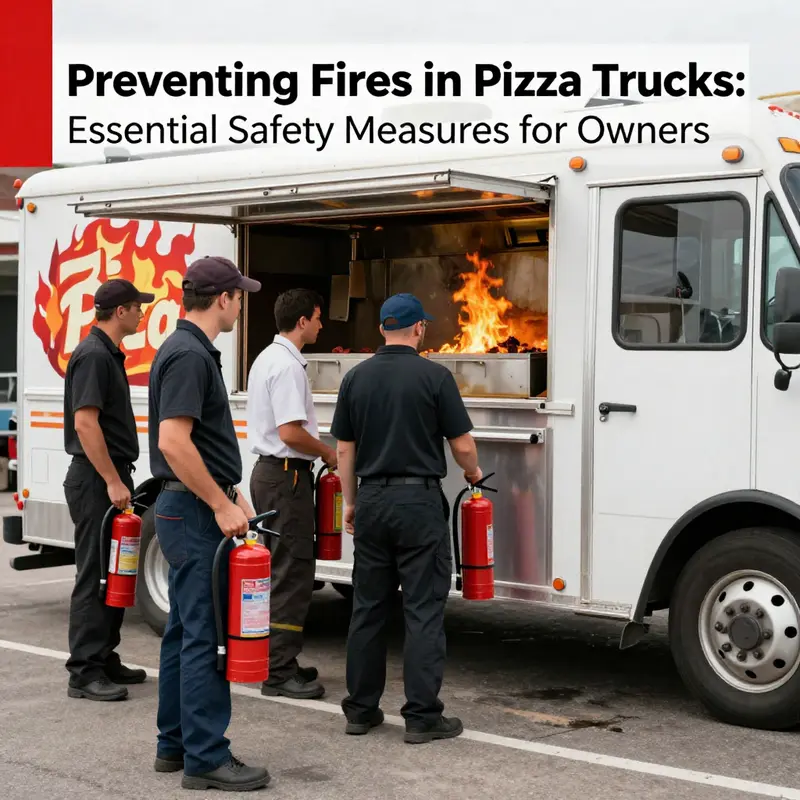
The street lights flicker over the chrome and enamel of a bustling pizza truck, the air perfumed with garlic, steam, and the faint, almost tangible hum of heat. In that moment, the kitchen on wheels feels ordinary and extraordinary at once: a compact stage where dough takes the shape of a city’s appetite, where a flame dances to transform raw ingredients into something shared and warm. Yet beneath that warmth lies a heightened risk profile. A fire inside a pizza truck is not merely a dramatic moment; it is a collision of multiple hazard vectors—open flame and hot oils, propane and electrical systems, confined spaces, and the pressure of maintaining service in minutes that feel like life and death for a business and for the people who rely on it. The risk is real, but so is the capacity to prevent it when safety becomes second nature rather than a checklist stitched into a tense moment.
This is not a sermon on fear but a narrative of operational discipline. A mobile kitchen is a laboratory in which ingredients, appliances, and human beings share a single environment that can quickly escalate a problem into catastrophe. The very design that enables a pizza truck to arrive at a festival, a neighborhood block party, or a busy curbside corner also concentrates a constellation of ignition sources in a space that requires meticulous management. When the oven is hot and the oil is bubbling, when a propane line snakes along a stainless chassis, and when grease laxly accumulates in a hood plume that never quite reaches its required maintenance cadence, a spark or an overpressure event can set off a fire that is difficult to control in a vehicle or near a crowd. Understanding this tension helps us move from fear to forethought, from reaction to prevention, and from improvisation to procedure.
The central premise of fire safety in a mobile pizza operation is simple in theory and demanding in practice: reduce ignition sources, isolate potential fuel paths, keep ignition from spreading, and ensure rapid, orderly response by trained staff. It is a holistic approach that begins with maintenance and extends through daily routines, storage practices, staff training, and the physical design of the vehicle. In a world of variable weather, shifting locations, and the unpredictable duration of events, the discipline must be continuous and embedded in the culture of the operation. There is value in looking at the embedded lessons of past incidents, of which a notable example from 2017 in China serves as a sober reminder. Investigators found that an aged or short-circuited electrical connection in an electric vehicle used at the site likely triggered the fire, underscoring how even components that seem peripheral can become central ignition points when proper safeguards are not in place. If that incident teaches anything, it is that danger often hides in places we think of as ordinary—an electrical connector, a forgotten propane valve, a neglected grease trap—precisely the places where vigilance must live every day.
To translate theory into practice, the architecture of prevention must be built to endure the pressures of mobile service and the realities of busy operation. Consider the core domains that form the backbone of effective fire prevention: maintenance, storage, training, and vehicle management, all within a framework guided by respected standards. Maintenance is the bedrock. Regular inspection of the propane system—tanks, hoses, and connections—matters not only for the prevention of leaks but also for the early detection of wear that could precipitate a flash flame. A simple, time-honored test—using soapy water on connections—belongs on every shift checklist. Bubbling indicates a leak that must be addressed immediately. Tanks should be securely mounted and, when the truck is not in service, kept outside. The same meticulous care must be given to grease management. The grease trap and exhaust hood require cleaning on a schedule that aligns with usage patterns. When grease accumulates, it becomes a fuel source and a liability; a clean hood with a clear path for exhaust is not a luxury but a life-preserving feature. The same principle extends to the electrical system. Wires and outlets should be free from fraying and overloading; extension cords should be avoided in favor of properly rated, dedicated circuits for each appliance. A dish of caution here: do not chain multiple cords in a daisy chain, and ensure all equipment is grounded and rated for commercial use. These technical checks are meaningful only if paired with disciplined cooking practices. The kitchen is crowded and alive with activity, and thus cooks must never leave grills or ovens unattended. When a service window closes and the crowd disperses, the memory of a quiet moment is a poor shield against a sudden incident. Turn off gas and electricity as soon as a cooking task ends, and keep a fire extinguisher within easy reach of the heart of the operation. To that end, a Class K extinguisher—the specialist for grease fires—along with an ABC extinguisher for general use, should be present and accessible. Fire safety is not about preventing every spark; it is about ensuring staff can respond promptly, with the right tools, and with methods that minimize risk to life.
Grease potential is a constant companion for any kitchen that uses hot oils and high flame. A mobile unit concentrates this risk because the cooking surface is close to all other functions, and the hood and exhaust system are tasked with expelling not just heat but a stream of airborne particles that can ignite if a secrecy of maintenance is neglected. That is why grease management cannot be delegated to a weekly ritual when the line is humming during a Saturday night. It must be done frequently enough that grease does not accumulate to a critical level. If the schedule is loaded with back-to-back events, consider reconfiguring the workflow so that a dedicated team member can perform a mid-shift sweep of the hood and a post-shift wipe-down of surfaces. The human element cannot be separated from the machinery; in fact, it is the human element that often determines whether a risk compounds or collapses.
The storage of fuel and chemicals is another pillar of safety. Propane should be stored outside the vehicle whenever possible, with attention paid to the environment—never near heat sources or in direct sunlight where pressure can rise. Inside storage should be minimized and highly controlled; containers should be sealed and appropriately labeled, and flammable liquids kept away from the cooking zone and the exhaust. The rule that no flammable items should be onboard applies with particular force in a mobile kitchen, where small items such as aerosol sprays, lighters, matches, or disposable lighters can become ignition sources if they are not eliminated from the operational environment. It is remarkable how small an object can trigger a devastating event if placed in the wrong conditions, and that is why the policy of “no flames near heat sources” is not an abstract guideline but a practical standard that threads through every decision the operator makes.
All prevention is housed within the frame of training. Fire response drills, conducted with regular cadence, ensure that staff can quickly shut off gas and power, summon appropriate aid, and, crucially, evacuate people safely. Evacuation routes must be clear and free from obstacles; doors and exits must never be blocked by equipment or inventory. Emergency contacts should be posted visibly in the truck so that in a moment of chaos, there is no hesitation about who to call. The pedagogy of drills is not to frighten but to create familiarity with panic-inducing situations so that muscle memory can guide rational action. In practice, this means rehearsing a sequence of steps—from activating the shutoffs to deploying extinguishers, to guiding a customer crowd to a perimeter where heat and smoke will be less dangerous. The emphasis on emergency response is complemented by a culture of accountability and teamwork, where every employee knows their role and accepts that safety cannot be outsourced to a single person or to luck.
The physical environment of a pizza truck—the vehicle itself, its parking location, and the surrounding space—also demands careful attention. Overheating is a legitimate risk, particularly on hot days or under direct sun. Parking choices matter. A shaded area is preferable to eliminate some of the heat stress that can compromise equipment and escalate the likelihood of an electrical or mechanical fault developing under stress. The no-smoking policy transcends etiquette and becomes an operational imperative, because discarded cigarette butts can ignite debris or flammable residues that are common on cooking floors and under vehicle frames. Regular cleaning, too, is a safety discipline that keeps ignition sources thin on the ground. Debris and dust can accumulate in seams and crevices; a crew that sweeps and wipes surfaces daily reduces one of the most common ignition sources and helps keep the interior environment predictable.
Emergency preparedness, even when risk feels manageable, deserves an explicit, structured approach. Fire extinguishers—both Class K for grease fires and ABC for general use—should be installed in proximity to the cooking area and have their maintenance dates visible at a glance. A fire blanket, similarly placed near the stove, serves to smother small grease fires before they flare, while a smoke or heat detector, although not universally mandated in every mobile kitchen, can provide an early warning that buys precious seconds. The integration of detectors with a communication plan and emergency procedures can create a chain of safety that moves beyond the possibility of individual vigilance. In many ways, these measures reflect broader codes and standards that have been refined through decades of practice in both stationary kitchens and mobile units.
The contemporary discussion of fire safety for mobile food operations is not merely an accumulation of do-this, do-that tips, but a synthesis of best practices shaped by experience and the evolving understanding of risks. It is a discipline that seeks to minimize the frequency of dangerous events while preserving the essential function of the business—the ability to serve hot, fresh pizza where people gather. The story of a fire inside a pizza truck is a reminder that the city’s appetite for convenient, artisanal food does not absolve operators from the obligation to anticipate and mitigate hazards. The truck is a microcosm of a broader ecosystem that must balance speed, efficiency, and safety. In that sense, the safety protocols described here—maintenance, safe storage, training, vehicle management, and emergency readiness—are not a static checklist but a living practice that evolves as technology, standards, and the understanding of risk evolve. They require continual attention, investment, and a culture that prioritizes life and property alongside the thrill of serving a community on wheels.
Indeed, the continuity between safety and service is a subtle but powerful harmony. Preventing a fire is not about sacrificing speed or efficiency; it is about weaving safeguards into the rhythm of operating. It is about training every employee with the same care given to perfecting a sauce or a dough mix. It is about the quiet discipline of checking connections, wiping surfaces, and aligning the fire suppression system with the flow of a busy shift. It is about recognizing that even a well-built, well-staffed operation can still face the unexpected, and that preparedness is what turns potential catastrophe into a contained event. When a truck rolls away from a crowded event with piping hot pizzas and a crew that feels confident in their safety plan, it reflects not a complacent calm but a robust, practiced safety culture.
For readers who want to see practical demonstrations of how these ideas translate into everyday operations, there are resources that illuminate the lived experience of running a pizza truck. In the spirit of practical, hands-on experience, operators can draw from stories in resources like the Pizza Truck Experience article. This kind of narrative offers concrete examples—lessons from real shifts, the adjustments made when a schedule changes, and the way teams build routines that support both quality and safety. It is through these stories that the philosophy of fire prevention becomes accessible and actionable, not merely theoretical. The aim is to make the steps second nature, so that when the engine hums and the oven roars, the crew can focus on delivering comfort and joy rather than worrying about a fire breaking out in the middle of a service.
As we reflect on what makes a pizza truck both a marvel of mobility and a potential hotspot for ignition, the answer rests in a blend of design considerations, procedural rigor, and a culture of shared responsibility. Operators should not see safety as a static obligation but as a continual practice woven into every shift. The truck’s interior should be conceived with non-combustible materials and careful routing of hoses, wiring, and storage to minimize heat buildup and ensure clear access to exits and extinguishers. The exterior safety footprint—the manner in which the vehicle is parked, the attention given to neighbors and pedestrians, and the guidelines for fuel handling—also plays a decisive role. The aim is not to eliminate risk entirely—that is an impossible standard in any bustling urban setting—but to reduce it to a manageable level, where a well-trained team can act decisively, the fire suppression system can perform as intended, and the event can proceed with a clear understanding that safety is the shared foundation of culinary delight on wheels.
In sum, fire prevention in a mobile pizza operation demands a comprehensive, integrated approach. Maintenance and inspection of equipment, prudent storage of fuels and chemicals, disciplined training, deliberate vehicle management, and proactive emergency preparedness work in concert to reduce the likelihood of ignition and to limit consequences if a fire does occur. The mobile kitchen is a beacon of flavor and community, but it must also be a model of safety leadership. When operators treat safety as a living standard rather than a series of one-off actions, the unlikely becomes possible: a world where customers enjoy hot slices and the people who serve them return home safely at night, every night. The flame that cooks the crust should never become a flame that endangers lives; and with attention to maintenance, storage, training, and readiness, that balance is not only possible but repeatable, day after day, shift after shift.
For readers seeking a framework that connects these practices to broader standards, the National Fire Protection Association’s guidance on Mobile Food Vending Operations remains a critical reference, illustrating how professional codes shape the everyday realities of pizza trucks and other mobile kitchens. External resource: https://www.nfpa.org/Code-Updates/NFPA-101-Life-Safety-Code/Articles/Article-18-Mobile-Food-Vending-Operations
Toward Safer Wheels: Lessons and Reflections from Fires Inside Mobile Pizza Kitchens
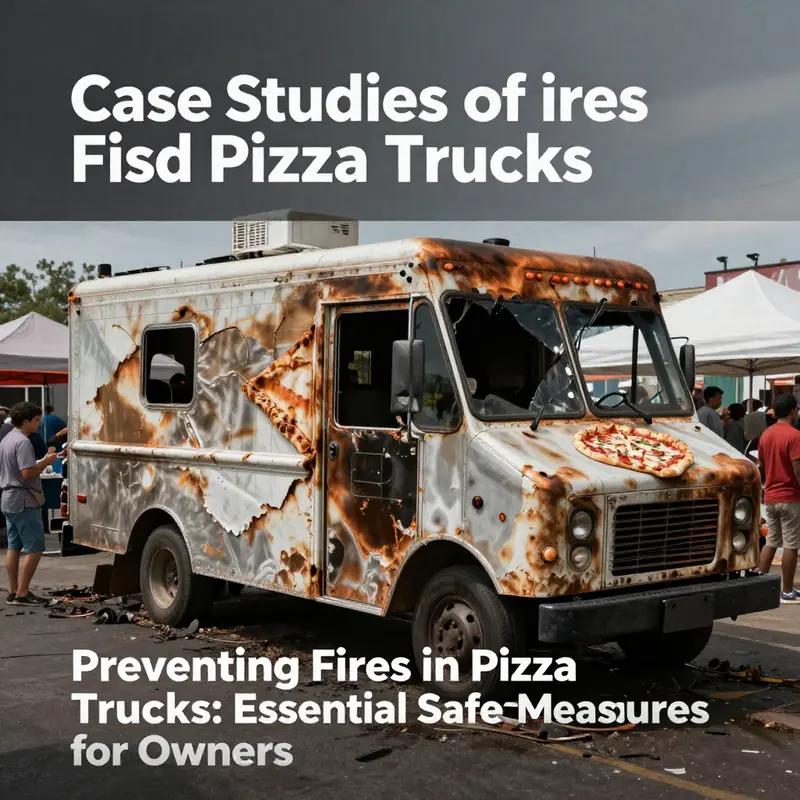
A fire inside a pizza truck is not a dramatic headline alone; it is a test of a portable kitchen’s resilience, a microcosm of risk that blends high heat, moving logistics, and tight quarters. When metal walls, greasy ovens, and electrical circuits share a compact footprint, a single lapse can cascade into catastrophe. In the quiet hours of the night or the crowded lunch rush, a flame can travel from a single burner to the hood, to the ductwork, to the exterior, and beyond. The scene challenges not only the crew but also the emergency services that must reach and control the blaze in a vehicle that may be parked on a busy street or jammed into a curbside corridor. The absence of widely publicized, granular case studies does not soften the reality: the fire risk is real, and it is embedded in the design, operation, and environment of every mobile kitchen.
From the inside, the hazards are easy to name and easy to forget when the day hums along. High-temperature cooking devices, whether gas-fired or electric, generate radiant heat, hot grease, and a wake of vapors that must be vented effectively. Grease buildup inside ovens and ducts is not just a cleanliness issue; it is a fuel source that can ignite when heat rises or when a spark finds a corner with little airflow. Aging electrical wiring multiplies that risk. A cord that softens with vibration, a connection that wears out after thousands of starts and stops, or a switch that hasn’t been tested for years can deliver a spark in a place where it is easy for it to escalate. Poor ventilation compounds the problem by concentrating heat and smoke, making it harder for firefighters to work and for crew members to retreat to safety. And the very mobility of the operation creates a paradox: the vehicle may be a moving workshop with equipment that must be ready for continuous use, yet it must also accommodate rapid evacuation and safe shutdown in moments. All these factors can join in a single event that begins with a flame and ends with a loss of life or a business, depending on the speed and quality of responses.
In this light, a widely cited but not extensively documented incident from 2017 in China becomes a cautionary tale. Investigators pointed to an aged or short-circuited electrical connection in an electric vehicle used at the site as a likely factor. The point is not to draw alarm from a single case but to emphasize that probes of mobile kitchens look beyond the oven and stove. The car frame, the battery protection, the wiring harness, and the energy supply for commensurate loads all become potential ignition sources when neglect intersects with heat, oil, and fuel storage. This broader lens underscores that safety cannot be reduced to a single device or a single room inside the truck. It requires an integrated approach that covers the electrical system, the cooking appliances, the ventilation chain, and the fuel handling practices that keep propane or other fuels away from heat sources and confined spaces.
To translate risk into practice, many lines of defense converge. First, the equipment itself must be kept in reliable condition. Regular maintenance routines should address the oven’s seals, the thermostat’s calibration, the ignition system, and the electrical wiring connected to each major device. Second, grease and exhaust management cannot be left to chance. A well-maintained hood and filter system that is cleaned on a routine schedule reduces not only fire hazard but also the smoke density that can endanger crew members and customers alike. Third, ventilation must be engineered to pull heat and vapors away from the crew and toward a safe exhaust, ideally with a fire suppression system that can automatically activate if the temperature rises or if smoke is detected. These measures become even more crucial in a mobile kitchen where space constraints limit manual intervention and where any delay in suppression can widen the fire’s footprint.
Operational environments present their own challenges. Pizza trucks frequently operate along congested streets or in makeshift markets, sometimes parked where access for fire crews is constrained or where nearby structures or vehicles could act as fuel or ignition amplifiers. In such settings, the presence of a dedicated suppression system is not optional; it is a life-saving asset that operates even when crew members are overwhelmed. Access to water may be uncertain, and the closest hydrant might be blocked by a crowd or a delivery truck. Fire safety planning in this context is not a theoretical exercise but a practical design discipline that anticipates these constraints and prescribes routes, staging areas, and communication protocols to keep the response coordinated and timely.
Policy and regulation have begun to reflect these concerns. By 2026, several jurisdictions have introduced prohibitions or tight restrictions on mobile food operations in certain zones or under specific conditions. The underlying motive is not to punish entrepreneurial energy but to acknowledge fire risk in a setting where controls can be harder to enforce and where public safety hinges on rapid, effective suppression. For operators, this means that compliance must be viewed as a core operational discipline, not a back-end administrative requirement. It also means that safety features must be visible and accessible to inspectors and the public—clear labeling, accessible extinguishers, functioning alarms, and posted emergency procedures. When a mobile kitchen can be quickly inspected and verified for readiness, the odds of a preventable fire climb sharply in its favor.
Across industries that share a kitchen environment, the most transferable lessons come from a consistent pattern: automatic suppression, disciplined cleaning, robust training, and a culture that treats every safety check as a nonnegotiable habit. An automatic fire suppression system mounted in the cooking area can extinguish a blaze before it grows, buying critical seconds for crew members to evacuate and for responders to arrive. Regular cleaning of exhaust ducts and removal of grease build-up must be scheduled with the same rigor as fuel deliveries or equipment calibration. Fire extinguishers—suitable for commercial kitchens and rated for grease fires—should be readily accessible and tested regularly. Training should cover how to shut down power and gas, how to use the extinguishing equipment, how to evacuate, and how to call for help with precise location information. Such training should be reinforced with periodic drills that simulate real-life conditions, including smoke and heat, to build muscle memory for both seasoned operators and new staff.
Material choices inside the truck also deserve attention. Using non-combustible or limited-combustibility interior finishes reduces the fuel available to a flame that might start in a hot corner. Seals, gaskets, and insulation should resist ignition and avoid trapping heat. The interior layout should support safe movement, with clear pathways to the exits, unobstructed access to the fire suppression system, and plenty of distance between heat sources and flammable storage. The placement of fuels—such as propane or other portable energy sources—must follow strict separation guidelines, with secure storage away from heat and from any ignition points, and with valves closed when not in use. Even the choice of cleaning solvents and maintenance lubricants matters; nonflammable or low-flammability products can reduce the risk profile without compromising performance.
At the end of the day, the intent is not to panic customers or to stigmatize the mobile pizza model. It is to acknowledge a realistic risk and to embed safety into the fabric of daily operations. The absence of widely publicized, granular case studies should not be mistaken for the absence of risk. Instead, it points to a need for ongoing information sharing, robust standards, and practitioner-led safety culture. In practice, operators can turn safety knowledge into daily routines. Morning walk-arounds, checklists, and briefings before the day’s service can enforce discipline without slowing service. A well-designed risk assessment should map out worst-case scenarios, identify escape routes, specify who will do what, and locate the nearest fire suppression control and utility shutoffs. In addition, a simple, well-rehearsed incident communication plan can keep everyone informed and calm should an emergency arise.
To readers seeking hands-on guidance, the narrative of real-world operators can be instructive. The experience of those who view safety as workmanship rather than compliance can be captured in practical accounts that blend technique with judgment. For those curious about the lived side of running a mobile pizza operation, the piece titled Pizza Truck Experience provides a grounded look at daily operations, risk, and the balancing act of keeping customers fed while managing safety. It is not a guarantee of safety, but it offers a candid handle on what works and where crews still struggle. Pizza Truck Experience.
Ultimately, this chapter signals a broader truth. Fires inside pizza trucks are not merely hypothetical hazards pinned to a single piece of equipment. They arise when systems fail to talk to each other—when electrical health, cooking practice, ventilation, fuel handling, and human decision-making do not align. The preventive architecture described here—maintenance, ventilation and suppression, disciplined handling of fuels, and a culture of continuous learning—offers a path to reduce risk without sacrificing the energy and mobility that characterize the mobile kitchen economy. As cities reexamine where and how food is prepared in public spaces, the conversation about safety in mobile kitchens becomes more urgent, but also more actionable. Operators who adopt a holistic, proactive stance will not only protect their teams but also reinforce confidence among communities that enjoy convenient, flavorful meals on the go.
To close this circuit of thought, consider that the information landscape around fire safety for mobile kitchens is evolving. The NFPA standards, industry guidance, and regulatory developments together form a living framework. While a single incident can be devastating, it can also catalyze improvements that reduce risk for many operators in the years ahead. The real measure of progress is not a headline but a day-by-day commitment to check, clean, train, and rehearse. In this sense, every shift spent inspecting hoses, testing alarms, and reviewing emergency plans is a quiet victory that keeps fire away from the sizzling ovens and the smiling customers who wait for their order.
For formal guidelines, consult the safety standards that address mobile food preparation vehicles and fire protection. These references help translate the narrative of risk into actionable practice and provide inspectors, operators, and researchers with a shared baseline to pursue safer operations across cities and regions. NFPA 1: Fire Code – Chapter 17.
Final thoughts
Fires in pizza trucks can be devastating, affecting not only the business’s finances but also the safety of its employees and clients. By understanding the common causes of such incidents, implementing rigorous safety protocols, and learning from past experiences, owners can significantly reduce risks and ensure a more secure and successful operation. Snowballing advancements in safety measures help assure that pizza trucks can remain a beloved choice for food lovers everywhere. Prioritizing safety will not only safeguard your business but will also enhance your reputation as a responsible operator.