

The allure of a pizza truck at a party resonates with many, offering guests a unique culinary experience right on the spot. As a business owner considering this mobile option for events, understanding the costs associated with renting a pizza truck is crucial. Prices can differ based on several variables including the truck’s features, type, and operational costs. This article breaks down the expenses involved, explores the types of pizza trucks available, highlights additional costs you should anticipate, and offers best practices for securing the right truck for your gathering. By the end, you’ll be equipped with knowledge to make an informed decision.
Rolling Feasts: Unpacking the True Cost of a Pizza Truck for Your Party

A pizza truck rolling up to a party is more than a culinary gimmick; it is a portable kitchen that blends spectacle with choreography, turning an ordinary gathering into an experience guests remember. The idea of a mobile oven firing pizzas in front of your eyes appeals to many hosts because it promises freshness, speed, and a talk-worthy centerpiece. Yet behind the theater lies a spectrum of costs shaped by the truck’s type, size, features, and how you plan to use it. In practical terms, the price you should expect to pay depends on whether you are purchasing a unit to own, renting for a one-off event, or locking in a turnkey service that includes staffing and setup. Understanding these options—along with the realities of delivery, fuel, and the labor required to keep a busy pizza line running—helps you budget with confidence rather than chase the lowest sticker price or drift toward a vendor that seems to offer everything for nothing. When you start from the premise that pizza is not merely food but a moving experience, the pricing picture becomes clearer and more manageable, even as it broadens to include ancillary costs that matter as much as the oven itself.
At its core, the cost of a pizza truck for a party hinges on three broad questions: what kind of vehicle you need, what the oven and kitchen setup can deliver, and how long you need the truck on site. The simplest, most common entry point is a basic mobile pizza unit. These are designed for easy mobility and straightforward operation, packing a fully equipped kitchen into a compact footprint. The purchase price for a basic mobile unit typically falls within a wide band—from a few thousand dollars to well into five figures, depending on the build quality, insulation, oven type, refrigeration, and prep space included. It is not unusual to see a price range that begins around the low thousands and climbs toward the mid five-figure mark when a unit promises greater durability, more robust insulation, and a larger work area. The range exists because “basic” can mean a stripped-down setup that prioritizes mobility and speed, or it can mean a compact but fully capable kitchen that still includes essential gear like a pizza oven, warming stations, a small prep area, and power and water connections.
Beyond the baseline lie more specialized configurations. A true artisanal or gourmet pizza truck often centers on a Neapolitan-style experience, where the oven, the warmth of the kitchen, and the precise airflow within the oven chamber become as much a part of the product as the dough itself. The cost here climbs higher not simply because a gourmet oven costs more, but because the vehicle must be engineered for high performance and consistent throughput. Think of advanced insulation that minimizes heat loss and keeps the outside of the truck cooler for staff and bystanders, combined with ovens designed for quick preheating and rapid recovery between pizzas. In these setups, the price can reflect a suite of performance features—rectangular steel chamber ovens with efficient airflow, better heat retention, and controlled environmental systems—that collectively translate into higher upfront investment. For a party, those enhancements are most valuable when the event requires steady, high-volume service, multiple pizzas per minute, and a visually compelling cooking show that keeps guests engaged.
Another axis of cost lies in the broader kitchen ecosystem that accompanies the oven. A simple wooden-fired or stone-fired unit may deliver authentic flavor, but it also demands careful design to maximize fuel efficiency and safety. A truck that integrates a wood-fired oven with robust insulation, dedicated smoke management, and a cleanable, compliant workflow tends to command a premium because it can sustain long service periods without overheating the surrounding space or compromising fuel economy. The added value shows up not only in better pizza quality and faster service, but in longer-term reliability. For hosts planning repeated events or seasonal parties, investing in a unit with durable components and an efficient, well-documented maintenance protocol is often prudent. These considerations move the conversation from sticker price to total cost of ownership, a lens that reveals how the truck performs across multiple years of use rather than just the first weekend.
Intertwined with the core purchase price are the ancillary costs that can dramatically shift the final math. Delivery and setup fees, for instance, are not universal; some vendors build these into a single package price, while others itemize them as a separate line item. If you are buying a truck, installation is not merely about parking the vehicle and turning on the oven. It includes checks for electrical and gas hookups, licensing and inspection needs, and travel time to your venue. A few hours of setup can become a substantial portion of the day’s cost when the destination is remote or when the venue requires careful planning around access, loading zones, and reinforced pathways for a large, heavy truck. On the fuel side, every mile traveled to and from the event adds to the burn rate. The efficient operator, one who can optimize route planning and minimize idle time, has a direct impact on cost, especially for multi-site events or parties spanning longer distances.
Labor is another critical but sometimes overlooked driver of cost. If you purchase a truck, you may need a crew to operate it—someone to manage dough production, another to monitor the oven and pizzas, and perhaps a server for toppings and ticketing. Even if you already have staff, a mobile unit often requires specific skill sets in high demand: dough readiness, dough handling on a moving platform, and the discipline to manage multiple orders with real-time coordination with a front-of-house team. The staffing model you choose matters, because it translates into per-hour costs that accumulate over the duration of the event. If you hire a full-service vendor, they may bundle labor into a turnkey price that includes setup, service, and cleanup. This convenience comes at a premium, but it also reduces your planning load, letting you focus on guest experience rather than the logistics of keeping a mobile kitchen humming.
To ground these considerations in practical terms, a commonly cited range for a ready-to-use, party-ready option tends to lie between about five and ten thousand dollars. This band is a useful target for hosts who want a balance of solid capability and sensible price: a wood-fired oven and full kitchen setup that can deliver reliable throughput, without the premium of a top-tier artisanal truck that prioritizes ultra-high-end materials or elaborate custom fabrication. This recommended band acknowledges that many parties benefit from a unit that can handle the flow of a mid-to-large guest list, with enough insulation to manage heat and fuel efficiency to keep operating costs in check. It also accounts for the reality that some vendors will offer bundled packages designed for events—often including a cook, helper, basic toppings assortment, a service counter, and the necessary disposables—creating a predictable, capped budget for the host.
One important caveat to any price discussion is that rental versus purchase creates a fundamentally different financial arc. If your party is a one-off affair, renting a truck might be the most economical path, particularly if you factor in the cost of ownership, insurance, maintenance, and storage. Rental can span from hundreds to more than a thousand dollars per day, depending on the truck’s capabilities, the geographic market, and the supplier’s premium for premium service. The data you collect from multiple local vendors is essential here, because rental rates vary widely by region and by the exact configuration of the truck. If you anticipate future events—holiday parties, family gatherings, charity fundraisers—the long-term cost of ownership can be justified, especially if the truck becomes a repeatable, reliable feature in your event program. In this sense, the most prudent approach is to model two or three scenarios: a single-event budget, a seasonal or multi-event budget, and a longer-term ownership plan. Each scenario reveals different breakpoints where buying makes sense, or where the benefits of a turnkey rental simply outweigh the obligations of ownership.
To help translate these numbers into a practical decision, consider the event’s scale and logistics. For a smaller evening gathering with perhaps 20 to 60 guests, a compact unit with a capable oven and a lean prep setup can deliver a satisfying experience without overwhelming the budget. The price tag in this case might lean toward the lower end of the spectrum, but you should still expect to account for delivery, setup, two to three staff members, and a modest toppings station. For a mid-sized party—say 60 to 150 guests—the need rises for faster throughput, better oven efficiency, and more expansive prep and service areas. You would reasonably see a price drift toward the middle or upper end of the commonly cited range, with additional value arising from better workflow design and perhaps a more polished service aesthetic. For truly large events or celebrations that desire a chef-driven performance, with multi-station service or a large-volume output, the price can climb further. In these cases, the investment pays off in the form of shorter wait times, higher guest satisfaction, and the flexibility to switch between pizza styles or sizes during the event without sacrificing quality.
Even as you size up the base price, you should also measure the return on investment in terms of experience and guest engagement. A pizza truck offers more than meals; it creates a shared moment—the spectacle of dough spinning, the aroma of baking crust, the glint of the oven’s heat—as a focal point of conversation. This experiential value can translate into social currency for the party: more photos, more conversations, and a sense that the event is unique rather than ordinary. If your guests include food enthusiasts or you want to emphasize a custom culinary theme, the right truck can become the event’s centerpiece, elevating your party from a simple catering need to a memorable occasion. In economic terms, that experiential value can justify higher spend if it markedly enhances guest perception and the overall success of the gathering.
If you are curious about the practical step of obtaining cost information or moving from concept to quotes, there is a straightforward approach. Start by clarifying your event window—the date, the time frame, and the number of service hours you expect. Then outline the key features you want: the oven type, the minimum production capacity (for instance, how many pizzas per hour), the inclusion of refrigeration for toppings, and a prep area for dough or toppings. It is also essential to specify whether you want the vendor to supply staff and whether they will handle setup, service, and cleanup. With these details, you can request multiple quotes and compare apples to apples. When you receive proposals, pay attention not only to price but to what is included in each package. A higher price may bring advantages such as more staff coverage, longer service hours, or better quality ingredients and toppings, while a lower price may reflect fewer included services or a leaner kitchen footprint. A careful comparison helps you decide whether a given offer represents true value rather than a superficial financial advantage.
For hosts who want to arm themselves with practical know-how, there are reliable reference points you can consult. A widely cited guidance point is the general price band for a ready-to-operate mobile pizza unit, which often falls within the broader range discussed above. When evaluating options, it is wise to verify the vendor’s experience with event catering and request references from past clients who hosted similar events. A strong portfolio—photos of setups, a description of service style, and feedback from organizers—gives you confidence that the unit can perform under event conditions. This is especially important if your party is set in a venue with unique challenges, such as outdoor locations with unpredictable weather, limited electrical infrastructure, or strict timelines that require precise coordination. A vendor who has navigated these realities before will be better equipped to deliver a smooth, on-time service that aligns with your expectations.
The decision to buy or to hire is not simply financial; it also reflects your comfort with owning a rolling kitchen. Ownership offers long-term flexibility, allowing you to reuse the truck for future celebrations without recurring rental fees. It can also enable you to tailor the setup to your evolving tastes or to experiment with different pizza styles and menu configurations. Conversely, hiring a pizza truck for a one-time event minimizes upfront commitment, avoids the responsibilities of maintenance and compliance, and shifts risk to the vendor. In either case, the central truth remains: the cost of a pizza truck for a party is a function of the oven’s capability, the kitchen’s comprehensiveness, and the level of service that accompanies the unit. When you assemble these elements into a coherent plan, the numbers start to fit into a narrative: a party becomes not merely a delivery of food, but an orchestrated experience that reflects your taste, your guests’ expectations, and your willingness to invest in a memorable occasion.
If you want a starting point for framing your plans, a practical rule of thumb is to look for a mobile setup priced between roughly five and ten thousand dollars if you want reliable performance with a wood-fired oven and a full kitchen footprint suitable for parties. This range acknowledges that you are shopping for a unit that balances quality and value, with enough capacity to service a mid-sized guest list efficiently. It also accommodates the realities of delivery, setup, and staffing that often accompany event catering. As you move from consideration to commitment, remember that the final price will depend on the specifics of the truck’s configuration, the presence of premium insulation and energy-efficient features, and the degree of turnkey service you choose to accompany the unit. The goal is to arrive at a package that yields consistent cooking performance, a clean and safe work environment for staff, and a guest experience that feels cohesive and special rather than improvised.
For readers who want to translate these ideas into immediate quotes, the process is relatively straightforward. Reach out to suppliers or marketplaces that list mobile catering units and share your event details—guest count, venue type, date, service hours, and any dietary or menu preferences you expect to accommodate. Ask for a breakdown that includes the base price, added costs (such as delivery, setup, and staffing), and a clear description of what equipment and features are included. It is perfectly reasonable to request references and to ask about average service volumes, peak-hour performance, and reliability in similar event settings. In doing so, you’ll not only gauge price but also evaluate the vendor’s capacity to deliver the experience you envision. The more transparent the vendor’s plan, the easier it will be to compare options and decide which path—purchase or rental—best fits your goals and your budget. For those who want a quick primer on the financial implications, a helpful resource discusses the practicalities of hiring costs and what to expect in terms of day rates and included services; you can start by exploring the section titled how much to hire a pizza truck, which provides direct guidance on this step of the planning process. how much to hire a pizza truck
As you consider all these elements, remember that the pizza itself is the centerpiece, but the truck is the vehicle that carries the entire experience. The cost you pay is not just for dough and toppings; it is an investment in a controllable theater that can deliver warmth, aroma, and connection on a scale that fits your party. A well-chosen truck does not simply feed guests; it creates a shared moment, a story they tell after the event, and, for the planner, a return on investment that extends beyond the day itself. In the end, the question of “how much is a pizza truck for a party?” resolves into a practical, thoughtfully constructed estimate built from the oven up: the base unit, the kitchen and insulation, the heart of the operation—the oven—and the human hands that turn raw ingredients into hot, fragrant pizzas that travel from oven to plate with speed and care. The journey from price to party becomes a narrative of planning, expectation, and the pleasure of watching guests delight in something as simple, joyful, and universally beloved as a slice of pizza.
External resource: For further insights into standards and performance considerations that influence wood-fired pizza trucks, you can explore industry guidance at https://www.foodtrucks.com/insights/wood-fired-pizza-truck-sale-standards-performance.
The Oven Dilemma: Wood-Fired vs Convection for Your Party Pizza Truck

Choosing a pizza truck for a party blends culinary theater with budgeting, logistics, and guest experience. It is not simply about chasing the lowest daily rate or picking the first oven that seems shiny. The oven type and truck design drive differences in flavor, speed, staffing needs, and the memory guests carry from the event. The goal is to balance culinary spectacle with practicality for your venue and timeline. This chapter compares two common archetypes: wood fired ovens and gas or electric convection ovens, and it outlines how to translate those differences into a workable budget.\n\nWood fired pizza trucks aim to recreate a Neapolitan vibe: blistered crusts, a smoky aroma, and quick turnaround. Ovens can reach very high temperatures, often around 900°F (482°C), with pizzas ready in roughly 60 to 90 seconds. That speed and theater come with higher base costs, specialized staffing, more fuel handling, and greater upkeep. If your goal is a dramatic centerpiece that invites guests to watch the pizza being made, wood fired can deliver a memorable moment. But the premium shows up in rental or purchase costs and in ongoing fuel and maintenance.\n\nGas or electric convection ovens offer reliability, consistent baking, and a more predictable workflow. These trucks tend to cost less to operate, require less fire management, and can be run by a wider range of staff. They produce a well balanced crust with decent chew and toppings that appeal to a broad audience, but without the dramatic flame and smoky edge. For many parties, schools, corporate events, or weddings where throughput and predictability matter, convection based trucks can be the smarter value.\n\nBeyond the oven itself, total cost is shaped by delivery, setup, fuel, insurance, permits, and staffing. Per person pricing may be used, or a package price that covers prep, service, and cleanup. A wood fired setup may include higher staffing levels and longer event timelines, while a convection system may emphasize speed and efficiency. When budgeting, consider the full service ecology: the truck footprint, electrical or water needs, any refrigeration, and the potential for add ons like toppings stations or dessert pizzas. A practical rule of thumb is to expect mid range options to run in a framework that reflects both the theater and the reliability the event requires, often with a noticeable difference between wood fired and convection in both upfront and ongoing costs.\n\nTo compare quotes effectively, ask vendors about what is included in the base price, how long the truck can operate at full capacity, and what staffing model is recommended for your guest count. Inquire about safety, insurance, permits, and any additional equipment or services that affect the bottom line. If you are trying to keep the budget predictable, request a clear breakdown of line items and a ceiling for extras. Finally, remember that the experience is not only about the pies; the overall service, timing, and coordination with other vendors has a meaningful impact on guest satisfaction and perceived value.
Beyond the Base Rate: Navigating Hidden Costs When Hiring a Pizza Truck for Your Party
Choosing to fuel a party with fresh pizza from a mobile oven is a surefire way to spark energy, conversation, and appetite all at once. The initial numbers—price tags on basic to mid-range mobile pizza trucks, or the premium feel of wood-fired setups—often dominate the decision-making process. Yet, the sticker price on the rental or purchase is only the beginning. For anyone planning an event, the total cost of “pizza on wheels” hinges on a second, broader ledger: the array of ancillary charges that ride along with the promise of hot pies and memorable moments. The practical reality is that a party budget must accommodate more than a simple daily rate. It must absorb logistics, permits, power needs, staffing, and a handful of practical contingencies that can turn a straightforward catering option into a carefully choreographed operation. In this chapter, we explore those costs in a way that helps you translate the vendor’s quote into a true bottom-line figure, so you can align your culinary vision with your financial plan without surprises.
When you first approach a pizza truck vendor, the base rental or purchase price frames the scope of possibilities. Basic to mid-range mobile pizza trucks are commonly priced in a wide band, from a few thousand dollars to well into the teens, depending on size, mobility, and equipment quality. A vendor may advertise a price range such as $2,500 to $15,000 per set, with a minimum order quantity of one set. In practical terms, that broad spectrum is not just about the truck itself. It also hints at the level of outfitting inside—compact kitchens with a couple of ovens, or more robust configurations with full-size prep areas, refrigeration, and perhaps a wood-fired oven for cooks who want artisanal results. For a party, a realistic target range to aim for is often in the mid tier: roughly $5,000 to $10,000 for a ready-to-use option that balances reliability, quality, and performance. In many cases, including a wood-fired oven and a full kitchen setup adds value that justifies the higher end of the range. This is where the conversation should begin, not end. The objective is to anticipate what lies beyond the quoted price so the final figure mirrors the actual experience you want to deliver. When you discuss the menu and service style, you’ll see why a like-for-like quote can shift as you refine the scope of service and the level of sophistication you expect from the truck.
The first layer of supplementary costs centers on logistics—delivery to your venue and the time required to set up the operation. Delivery fees are a common upcharge, particularly if your event is outside the vendor’s standard service area. Some operators charge a flat delivery fee, while others calculate by mileage or distance bands. Setup fees may apply when the truck needs to be positioned, wired into a power source, or when specialty electrical connections and permits are involved. The nuance matters: a service that promises rapid, clean setup with minimal disruption may cost more upfront, but it can save you time and stress on the day of the event. If the site requires a generator, a power drop, or a dedicated electrical circuit, these elements can add a separate line item or be bundled into the package. As you review quotes, note whether power needs are included in the base price or billed separately. Clarifying this early avoids shocks at the contract stage and prevents last-minute scrambling as the event day approaches.
Permits and licenses are another terrain that often surprises hosts. Mobile food operations frequently require temporary vendor licenses, health department approvals, and local business permits to operate legally at events—whether in public spaces or private venues. The cost and complexity of these approvals vary widely by city and state, and some venues may require proof of insurance or specific certifications. The time and money invested in obtaining the right paperwork translate directly into reliability on event day. If a permit is needed for a street closure, a shared location, or noise restrictions related to the ovens, expect it to be handled in the planning phase. The prudent host treats permits as a non-negotiable line item rather than an afterthought, ensuring that the culinary show runs smoothly without interruptions caused by regulatory hiccups. This is not merely about compliance; it’s about safeguarding the entire experience so guests remember the food, not paperwork mishaps.
Utility costs tie directly to how you plan the venue’s infrastructure around the truck. Ovens, warmers, refrigeration, and lighting demand steady power. Some trucks operate with integrated electrical systems and assume access to a nearby outlet or a generator. Others require you to supply a generator capable of meeting the truck’s full power draw. In either case, you should anticipate additional costs: rental or purchase of a generator, fuel for that generator, and potential electrician or technician labor to ensure safe, compliant connections. When vendors bundle power into the base price, you gain clarity and convenience. When power is extra, it’s essential to compare the generator’s capacity and operational runtime against the event’s schedule. A longer service window or a multi-hour service with peak cooking times can exhaust a generator, leading to performance dips or the need for a larger, more expensive unit. Your goal is to match the energy requirements of the kitchen with the event’s timeline, so the pizza stays hot without compromising safety or comfort for your guests.
Labor and staffing introduce another layer that can shift the financial equation significantly. Some trucks come with a crew that handles cooking, serving, and cleanup; others require you to supply your own staff or negotiate a hybrid arrangement. Labor costs can reflect the regional cost of living, the skill level of the staff, and the duration of service. For a party, consider the number of hours the crew will be on site, including setup, service, and teardown. Wages, overtime, and tips all contribute to the total. If a vendor provides a chef, a line cook, and front-of-house staff, you should expect a premium on labor charges. If your event runs past a scheduled end time, overtime policies can apply, and those charges can accumulate quickly. Clear discussions about hours, shifts, and responsibilities can prevent surprises. It’s also wise to understand whether staff are trained in food safety and customer service standards, as well as whether they will be responsible for interacting with guests or simply cooking and presenting the pizzas. The human element matters as much as the oven’s heat. A well-trained crew can elevate the experience, ensuring consistency in crust texture, topping quality, and service tempo, thus aligning with your party’s vibe and pace.
Insurance plays a non-negotiable role in the safety net of event planning. Many venues and organizers require liability insurance that covers food vendors and mobile operations. The coverage typically addresses product liability, bodily injury, and property damage. Insurance premiums can scale with event size, location, and the complexity of the menu. Even if a host is not legally obligated to carry special insurance beyond their personal policy, working with a licensed vendor who carries appropriate coverage helps reduce risk and reassure guests. Confirm the scope of coverage, whether it extends to on-site prep areas, transportation, and the interaction between the vendor and other vendors at the event. If the host or venue requires additional insured naming, or higher coverage limits for large gatherings, that adjustment should appear in the contract. Insurance is not a luxury; it’s a prudent safeguard that protects your investment and the event’s peace of mind.
Beyond the core service, additional equipment and supplies can quietly accumulate. Some trucks provide a basic setup with minimal serving gear, while others include plateware, napkins, disposable cutlery, condiments, signage, and branded materials. If you want a particular presentation—custom signage, specialty toppings stations, or unique serving displays—you may incur extra rental or purchase costs. It’s common for hosts to need replenishment supplies during longer events, especially if guests are returning for seconds or thirds. If the truck lacks certain conveniences, you’ll want to arrange rental or purchase of these items, and those costs should be reflected in the final bill. Remember that small add-ons, like extra olive oil, garnishes, or specialty sauces, can escalate quickly if you’re feeding a large crowd.
A crucial expense category, particularly for longer events or venues with strict time windows, is extended hours and overtime. Some operators charge a premium if service extends beyond an agreed window. This policy is usually spelled out in the contract, sometimes with a cap on hours or a tiered pricing structure once you exceed the baseline. Planning for potential overage, especially in outdoor events that stretch into evening hours or late-night gatherings, is essential. It’s better to negotiate an all-inclusive coverage or a clearly defined overtime rate from the start than to discover mid-event that you’ve crossed into pricey overtime territory. This is one of those practical details that can save you from tension and ensure staff remain professional and the pizza remains fresh and served at the right temperature.
Cleaning and waste disposal sit at the boundary between vendor responsibility and host duties. Some pizza truck operators include cleanup in their service level, sweeping up, breaking down, and removing the last of the cardboard and packaging. Others rely on hosts to arrange post-event trash removal or recycling services. If your venue has limited waste capacity or a strict disposal policy, you’ll need to factor in fees for extra containers, dumping, or hired cleanup staff. The goal is to leave the site as you found it, or better, with minimal post-event friction. Clarifying who handles what kind of trash and whether there are any surcharges for waste beyond a standard allotment can prevent disputes when the event winds down and the invoices are settled.
Menu customization and special requests offer another avenue for cost variation. If you want artisanal toppings, non-standard ingredients, or unique crust options, these preferences can carry surcharges. The more customized the menu, the more the kitchen must adapt, which may involve additional ingredients, labor, and time. A straightforward pizza lineup with standard toppings might be priced differently from a bespoke tasting menu that treats guests to multiple crust varieties or premium toppings. If you anticipate dietary restrictions or a mixed crowd with diverse tastes, you may also see price adjustments for gluten-free, vegan, or other special offerings. The key here is to discuss these possibilities early and confirm how they affect the quote. A well-communicated plan can keep the event cohesive while still delivering the culinary experience you envision.
Taxes and service fees are the final layer of which guests and hosts should be aware. Depending on location, sales tax or service charges can push the total by 10–15 percent or more. Some quotes itemize taxes separately, while others embed them in a global price. Service fees, administrative charges, or delivery surcharges may appear as distinct line items or be folded into the overall rate. The variability across jurisdictions means that even a neat, all-inclusive price can behave differently when you operate in a new market. The practical takeaway is to request a fully itemized quote that shows every potential charge, and then verify how tax and service fees are calculated. A transparent vendor will walk you through each line, explaining why it exists and under what conditions it could change. If you’re comparing multiple proposals, ensure you’re comparing apples to apples by aligning the same inclusions and exclusions across providers.
The practical path to a well-budgeted event is to approach the quote as a dialogue rather than a fixed price. Start with the base rate that aligns with your appetite for quality and scale. Then, walk through each cost category with your vendor: delivery and setup, permits, power, labor, insurance, extra equipment, overtime, cleaning, and menu customization. Ask for an itemized breakdown and request illustrations of how each cost would apply at your actual event size and time window. A reputable provider will welcome this scrutiny, recognizing that a well-planned event reduces confusion, speeds execution, and protects the experience you’re curating for your guests. It’s also wise to read the fine print about cancellation terms and weather contingencies, particularly for outdoor events. In many cases, a rain plan or a backup date can carry its own fees if the truck must be rescheduled or if staffing needs to be rearranged at the last moment.
To bring these considerations into a practical frame, you can leverage a resource that helps translate a rough quote into a meaningful planning figure. For instance, you can explore guidance on how much to hire a pizza truck, which provides a clearer sense of expected pricing and the scope of services you should anticipate. This kind of information is a helpful compass when negotiating with vendors and when mapping your guest experience to a specific budget. When you’re ready to see how your party’s needs add up, you can review a detailed quote alongside a menu draft and a timeline, then ask for refinements until the numbers align with your financial plan. And, if you want to read about this topic in more depth from a practical standpoint, the linked article offers a concise, targeted overview that complements the broader discussion here: How much to hire a pizza truck.
Beyond the immediate planning cycle, it helps to keep a finger on the pulse of the market’s larger context. Current market pricing for fully equipped mobile pizza trucks can give you a frame for both purchase and rental conversations. While purchase prices on platforms that cater to production and catering equipment can range from roughly four thousand dollars to over nine thousand dollars for a fully equipped unit, the rental landscape can vary even more widely depending on the region, the truck’s capabilities, and the length of the event. This kind of external market context can inform your expectations and your negotiation stance, helping you discern whether you’re paying for durability, speed, and reliability or simply for a flashier presentation. It’s worth noting that the numbers tied to purchase do not automatically translate to rental costs, but they illuminate the scale of investment vendors must recover through service and maintenance. For broader market context, a market overview discusses equipment specs and trends that influence rental rates and operational capacity. See the external resource for a general sense of how the equipment investment translates into service capabilities: https://www.alibaba.com/product-detail/Pizza-Truck-Sale-Overview-Composition-Standards_1600397756132.html?spm=a2700.100176.0.0.5a4d7c8bNlWkOx.
When you assemble all these threads—the base rate, the logistics, the permits, the utilities, the labor, the insurance, the consumables, the time extensions, the post-event responsibilities, and the inevitable line items like taxes and service charges—what you’re really calculating is the true cost of a party’s centerpiece that happens to be a pizza kitchen on wheels. It’s tempting to rely on a single figure because it is neat and easy to compare. But a party built around a pizza truck is a demonstration of how a flexible, hands-on service delivers value in ways that a fixed catering setup sometimes cannot. The magic of a pizza truck at a party isn’t only the hot crust and the aroma; it’s the tempo it creates—the way a steady stream of pizzas keeps conversation moving, the way guests can customize toppings on the fly, and the way staff can engage with guests as part of the overall event experience. When you budget with expansion and contingency in mind, you’re not merely avoiding surprise costs; you’re enabling the kind of dynamic, interactive experience that makes a party memorable.
In sum, the budget you craft for a pizza truck is a tapestry woven from multiple threads. The base price gives you a doorway into the possible, but the true cost of delivering a satisfying, seamless event depends on how many of the ancillary costs you’re willing to absorb or negotiate. The most successful planners approach the vendor conversation with curiosity and clarity, requesting detailed, line-item quotes and asking pointed questions about every potential add-on. They also prepare to balance a mid-range investment with a high standard of safety, sanitation, and guest experience. If you view the pizza truck as not only a cooking device but as a mobile hospitality platform, the extra fees begin to feel less like surcharges and more like essential investments in event quality. When you have this mindset, the final cost becomes a thoughtful sum that reflects the event’s scope, the guests’ expectations, and the joy of sharing a meal with friends and family around a pizza oven that travels to you.
Best Practices for Renting a Pizza Truck for Your Party
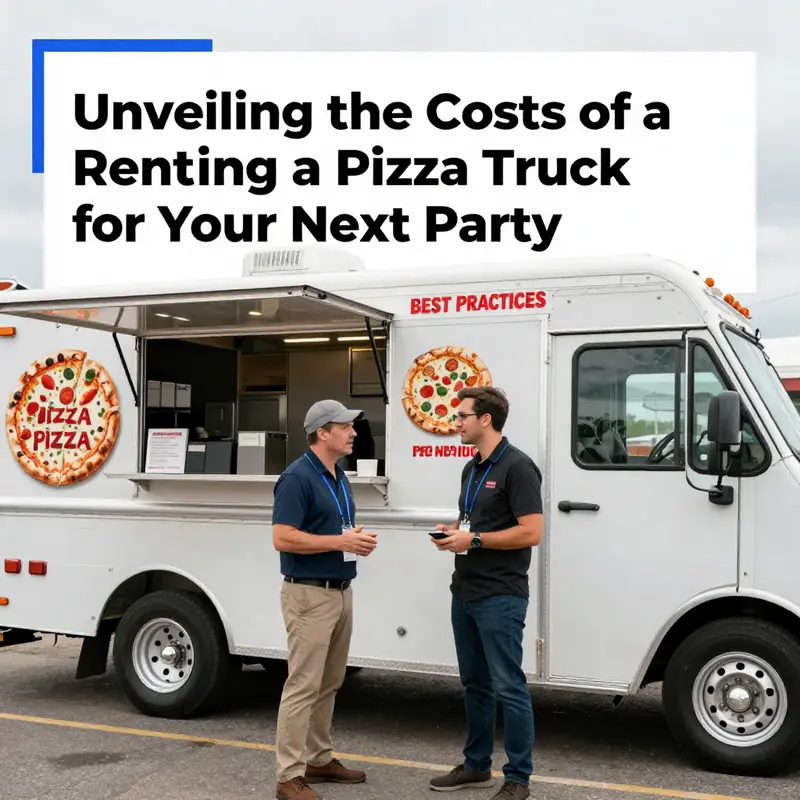
Planning a pizza truck rental for a party is like staging a small culinary production. The centerpiece is the oven on wheels, but the value comes from service timing and teamwork that make it feel effortless for guests.
Pricing for a pizza truck rental varies widely. Basic to mid range units can be found in a broad band from a few thousand dollars to the mid teens, depending on equipment and build quality. A common practical bracket is roughly 2,500 to 15,000 per booked event, with a minimum service set.
For hosts seeking a premium experience, a wood fired or specialty pizza truck can push costs higher. A certified wood fired Neapolitan oven, strong insulation, and efficient workflow can raise the baseline but deliver faster service and superior crust.
Mobile bakery and kitchen trucks widen the utility, offering multiple ovens, prep space, and cooling areas. More capability means higher price, but also greater flexibility for diverse menus and dietary needs.
Beyond the truck cost, consider delivery, setup, fuel, staffing, and potential surcharges. Some vendors charge per hour or per pizza, while others use a flat service fee. Read the contract for line items and cancellation terms.
A pragmatic baseline for many parties falls in the 5,000 to 10,000 range for a ready to use unit that includes an oven and a full kitchen footprint. This range often balances immediate usability with reliability, while still allowing for additional charges like travel and setup.
Create a clear scope of service by defining guest count and expected pizzas per guest. Decide whether to offer a single style or a few variations to accommodate dietary needs. The chosen style affects oven temperature, airflow, and cadence. In practice, a wood fired plan can deliver pizzas in 60 to 90 seconds, a pace that keeps lines moving during peak moments.
When engaging with vendors, expect delivery promises and arrival windows to matter as much as finish. Some trucks require external electrical or water hookups, others are off grid with on board tanks and generators. Parking availability can constrain service speed and staff efficiency.
Pricing structures vary widely. Some vendors price by duration, others by pizza counts or a flat service fee. Watch for hidden costs such as fuel surcharges, cleaning fees, or minimums that trigger extra charges. A transparent contract with contingency terms helps prevent surprises.
Experience matters. A credible vendor provides references, permits, insurance certificates, and evidence of food safety training. The social value of a well run mobile pizza service extends beyond food, enhancing the party atmosphere and guest engagement.
To ground planning, start with a self check on guest count and desired pizza count per guest. Consider whether Neapolitan or other styles fit the event and budget. Compare quotes with apples to apples by checking oven type kitchen footprint service hours and staffing levels.
Negotiation tips: define arrival window and service duration in clear terms; insist on a written menu with portions and ingredients; ask for references and verify health and safety credentials; request a weather contingency plan; evaluate the overall guest journey from arrival through cleanup.
The right pizza truck can be a memorable centerpiece that blends culinary craft with event storytelling while staying within budget. By clarifying scope, researching credible providers, and maintaining open communication you can secure a plan that delivers hot, well made pies at a pace that suits your event and keeps guests engaged.
Final thoughts
With the variety of options and costs associated with renting a pizza truck, business owners can cater memorable parties that delight guests. The key lies in understanding the specific needs of your event and planning for additional expenses beyond just the truck rental itself. Each segment of this article has unveiled different aspects of the costs and considerations to factor in, guiding you toward making a smart investment. Ultimately, the right pizza truck can elevate your party experience, ensuring delicious moments that keep guests talking long after the event concludes.