
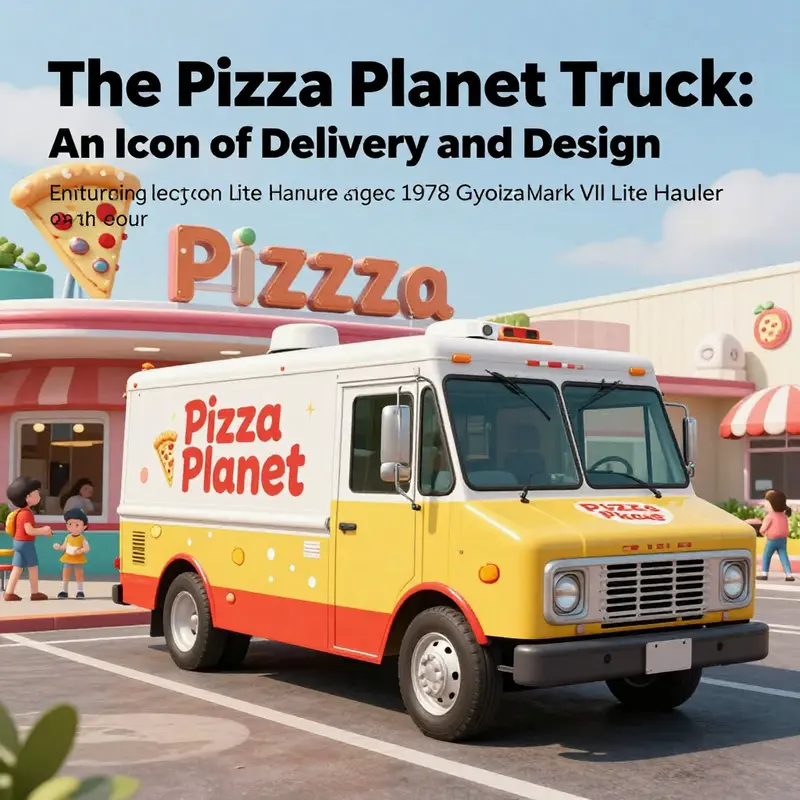
The Pizza Planet Truck, a memorable feature of Pixar’s Toy Story and subsequent films, serves as a celebrated symbol of creativity and nostalgia. Designed primarily for pizza delivery, this 1978 Gyoza Mark VII Lite Hauler encapsulates a vibrant aesthetic that appeals to audiences of all ages. In the following chapters, we will dissect the design and purpose of this iconic truck, delve into its remarkable cultural impact within Pixar’s universe, examine its status as a nostalgic fan favorite, explore the technical specifications of the vehicle, and analyze the community engagement surrounding its LEGO tribute. This exploration will provide insights into how such a whimsical creation resonates deeply with both fans and business owners alike.
Rolling Nostalgia: A Deep Dive into Pixar’s Pizza Planet Truck Design and Purpose
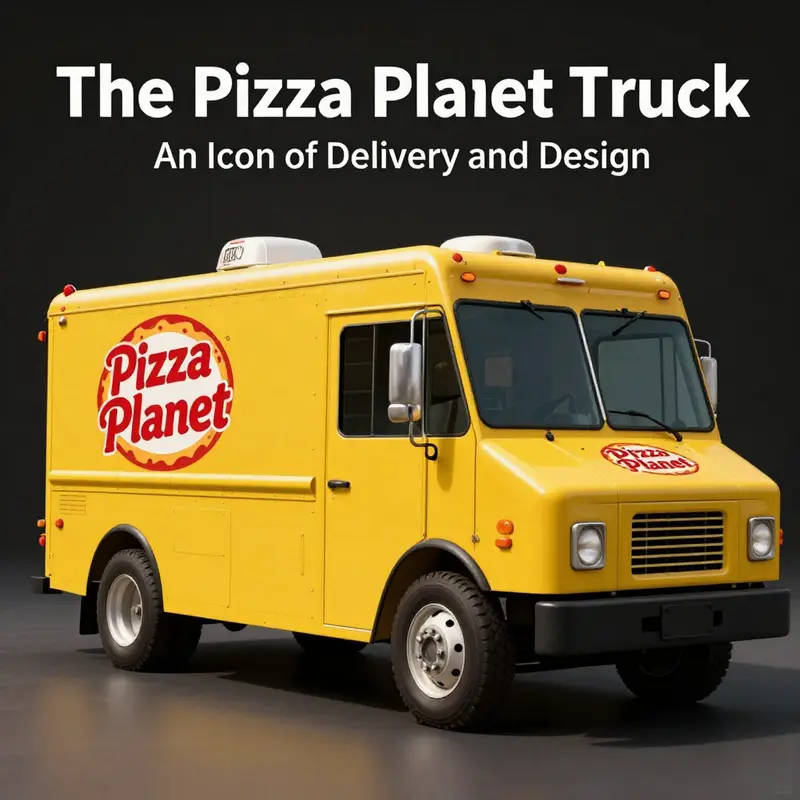
In the sandbox of Pixar’s storytelling, the Pizza Planet Truck operates on two quiet levels at once. It is a delivery vehicle in a kid-friendly world, yes, but it is also a roaming emblem that threads through films with a wink to the audience. Introduced in Toy Story, the 1978 Gyoza Mark VII Lite Hauler isn’t just a prop; it becomes a portable nostalgia capsule, a bright splash of color and character that travels with the cast as if it were a second, smaller universe riding on four wheels. Its signature palette—a sunlit yellow body punctuated by bold red and white Pizza Planet branding—immediately signals a friendly, approachable service persona. The large front grille and distinctive wheel hubs contribute to an aesthetic that readers can recognize instantly, even in a frame where the truck is merely parked on a street or glimpsed in the background of a bustling scene. The design reads as both practical and playful, a combination that aligns with Pixar’s core interest in making objects feel alive within a story world. The truck is understated in its mechanical footprint yet exuberant in its personality, a contrast that mirrors how a good joke in animation lands: seen, felt, and remembered long after the credits roll.
The truck’s visual language is a deliberate homage to mid-century Americana—the roadside diner, the promise of quick comfort, the sense of an open road that invites a kid’s imagination to wander. The bright yellow finish evokes sunlit summers and big smiles, while the red-and-white logo and stylized starburst emblem reference a retro-futuristic confidence. This is more than color and shape; it’s a cultural shorthand. Across Toy Story and later Pixar productions, the truck appears as a recurring Easter egg, a familiar beat in an evolving score that rewards attentive viewers. The effect is cumulative: even when the truck is not central to the plot, its presence anchors scenes in a shared world, a signal that the Pixar universe is a connected ecosystem where a single object can travel through time, genre, and tone. The consistency of this symbol—the yellow chassis, the logo, the signage—transforms a logistics vehicle into a storytelling instrument, a reminder that in animation, form often foreshadows function and memory.
From a design standpoint, the Pizza Planet Truck blends nostalgia with practicality. Its exterior carries the charm of a retro diner on wheels, but there is more under the hood than meets the eye. The cargo area is not a mere empty hold; it is a deliberately equipped space that reproduces the feel of a working pizza delivery setup. A built-in pizza delivery box nods to the task at hand, and the rotating wheel hub is a playful mechanical detail that aligns with the animators’ love of tangible, tactile elements. The sliding side door, the opening rear window, and the hidden interior features—such as a cleverly concealed pizza box, a fish-shaped cup holder, and a bottle-shaped decoration—become touchstones for fans who adore digging into the world-building. These features aren’t just gimmicks; they’re design choices that invite interaction, whether through on-screen storytelling or through fan-made recreations in the real world. They encourage curiosity and play, transforming a simple vehicle into a miniature stage where narrative possibilities can unfold. It’s in these details that the truck earns its place not just as a delivery van, but as a storytelling apparatus that can be explored, replicated, and reimagined in countless ways.
The cross-film appearances of the Pizza Planet Truck amplify its significance beyond Toy Story. In films such as A Bug’s Life, Monsters, Inc., and Inside Out, the truck reappears as a familiar signpost—a link to childhood weekends, family meals, and the long drive home after a long day. This recurring presence turns the vehicle into a narrative thread, a visual shorthand for home, memory, and the comfort of a shared kid-centered universe. The iconography travels between mood and plot with ease, contributing to a sense of continuity that rewards repeated viewings. The truck’s design details—its bold logo, its starburst motif, and the overall proportion that reads at a glance as cheerful and trustworthy—become a cultural touchstone for fans who crave a tangible link to the world they’ve come to love. The object itself, through its consistent look and playful features, becomes a kind of ambassador for Pixar’s storytelling philosophy: that even everyday machines can carry meaning, history, and emotion when crafted with intention.
A closer look at the functional design reveals how the Truck manages playability while preserving its cinematic credibility. The cargo area is conceived as a stage for tiny narratives, where a pizza box can become a prop for a comedic misadventure or a device for a quiet moment of character interaction. The rotating wheel hub is more than a kinetic detail; it signals motion, possibility, and the sense that nothing in this world is merely decorative. The sliding side door offers a practical action that mirrors real-world delivery life, while the openable rear window hints at a peek into the interior that fans can imagine filling with quirky gear and improvised accessories. This mix of realism and whimsy helps justify the truck’s place in a world where even the mundane is infused with character. The detailed interior elements—like the pizza box itself and the fish-shaped cup holder—extend the world beyond the factory line of a simple truck. Playful props transform the vehicle into a tiny theater of daily life, inviting children and adults alike to imagine the stories that happen when a customer receives a slice hot from the oven and a world full of possibilities along the road.
The Truck’s design has also inspired real-world interpretations, where retro aesthetics intersect with modern mobility. Some contemporary food-van concepts evoke the Pizza Planet aesthetic, translating that bright, welcoming color scheme and distinctive branding into street-level experiences. The aesthetic remains flexible enough to accommodate contemporary safety codes, interior efficiency standards, and the evolving expectations of mobile vendors. In the fan culture around the truck, the conversation often circles back to the same core idea: how did a quirky delivery vehicle become a vehicle for memory? Across communities, creators reimagine the truck in different media—sketches, sculpture, digital art, and even full-scale replicas—keeping the vehicle alive as a living emblem rather than a static prop. This ongoing conversation preserves the sense that the truck belongs to an expanded universe, one that invites fans to participate in the process of world-building rather than simply observe it.
The influence of the Pizza Planet Truck also extends into fan-driven projects that celebrate its design and mechanics. A widely admired LEGO Ideas submission—crafted with care around the same mechanical details that define the onscreen vehicle—demonstrates how enthusiasts translate film props into tangible play experiences. The project honors the pizza-delivery origin while translating it into a modular, collectible model, complete with a detachable pizza box and a few playful accoutrements that echo the screen version. These tributes remind us that the truck’s appeal lies not only in its look but in its invitation to recreate, experiment with form, and tell new mini-stories with familiar props.
In sum, the Pizza Planet Truck operates on multiple planes at once. It is a vivid artifact of a particular moment in American design—yet it remains a flexible, evolving symbol within a broader cinematic ecosystem. Its form is a compact anthology of color, geometry, and signage; its function is a gateway to imagination; its cultural resonance is a testament to Pixar’s knack for stitching memory into motion. For readers who want to explore the broader filmography surrounding this iconic vehicle, the Pixar films offer a continuous thread—one you can trace through multiple titles, each appearance reinforcing the idea that a simple delivery truck can carry the weight of a shared childhood. For more on the Truck’s appearances across Pixar movies, see the discussion here: Pizza Planet Truck in Pixar Movies.
External reference: https://disney.fandom.com/wiki/PizzaPlanetTruck
Yellow Beacon Across a Pixar Multiverse: How the Delivery Truck Weaves a Shared Narrative
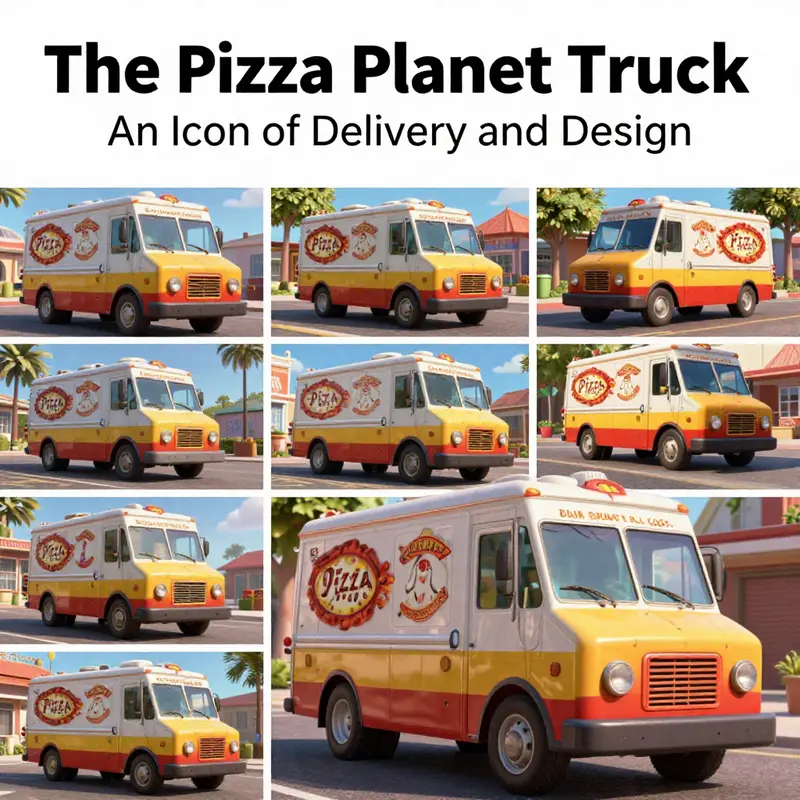
Across the vast tapestry of Pixar’s animated worlds, there is a bright, stubbornly cheerful delivery truck that refuses to stay in the background. It appears again and again, tucked into corners and mid-scene set pieces, a small but luminous sign of connection between films. This is not just a prop; it is a cultural touchstone that invites viewers to treat the studio’s universe as a living, interwoven ecosystem. From the first whispered moment in a late-90s feature to subsequent appearances decades later, the truck acts as a cheerful bridge between characters, places, and times. Its presence offers a kind of cinematic treasure hunt—an Easter egg hunt that rewards careful watching, rewatching, and the patient curiosity of fans who like to trace a path through a shared, evolving world. In a studio tradition that prizes continuity and playful storytelling, the truck stands as a compact icon with outsized meaning, a yellow beacon in a universe that otherwise moves with the pace of swiftly changing screens and new stories. It is a deliberately modest object, yet it becomes a vivid reminder that the Pixar universe is less a collection of standalone films than a sprawling, interconnected landscape where small details matter as much as grand plot turns.
Design is the first, inviting hint of the truck’s character. It reads as a practical, aging delivery vehicle—boxy enough to feel real, with a silhouette that signals durability and utility. The exterior leans into a bold, instantly legible color scheme that catches the eye in a crowd of visual information: a bright yellow body that gleams under studio lighting, paired with a red-and-white motif that frames the sides and roof. A pizza-themed roof dome and a prominent, legible sign contribute to a sense of playful purpose; these elements are not mere decoration. They encode a business identity, a mission, and a wink to viewers who know exactly what kind of service this vehicle represents. The truck’s front end carries a large grille and sturdy stance that read as practical rather than flashy, the kind of design that signals reliability on the road. Its wheel hubs, robust and slightly oversized, convey a sense of momentum, as if the truck could burst forward at a moment’s notice to fulfill a delivery no matter the season or setting. Yet the design also signals whimsy: the outline of a delivery mission meets a child-friendly imagination. The vehicle’s form becomes a canvas for character and story, an object that can carry meaning in a glance as a scene shifts from comedy to pathos to wonder.
Inside, the truck reveals a level of attention that fans have long celebrated. Rotating wheels, sliding doors, and an openable rear window suggest an internal life beyond the exterior. If a viewer looks closely, there is a hidden interior—enough space to imagine a pizza delivery box and a few quirky, almost Easter-egg-like trinkets tucked away in corners. Those tiny details matter because they invite viewers to imagine the daily life of a courier whose work is so mundane and so miraculously cinematic at once. The interior conceit mirrors a broader storytelling philosophy: even the most ordinary object in a movie world can be layered with personality and possibility, especially when it becomes a recurring visitor across scenes and screens. This is not simply a vehicle; it is a portable emblem of the kind of world-building Pixar champions, where the ordinary can become extraordinary through a generous, narratively aware lens.
The truck’s presence across multiple films is not accidental. It operates as a subtle but steady thread that ties disparate adventures into a single, shared fabric. This is the heart of what fans refer to as the studio’s tradition of hidden continuity. The truck appears in moments of quiet background action and in sly, almost mischievous cameos that reward careful viewing. Each appearance offers a moment of recognition, a nod to attentive fans who know that a certain red-and-yellow shape on the horizon signals a familiar, almost welcomed chorus in the studio’s evolving chorus of stories. The effect is cultural rather than plot-driven: it creates a sense of a Pixar Multiverse in which characters and objects drift in and out of focus, only to reappear with a knowing wink. The truck becomes a shared memory—a little canvas on which audiences of different ages can project their own connections to a film’s themes, humor, and emotional cues.
This recurring prop has not only deepened audience engagement but also resonated beyond the screen. Real-world resonance has shown up in fan art, community gatherings, and a range of tribute pieces that celebrate the vehicle’s charm. The phenomenon speaks to the power of a simple design to spearhead a broader cultural conversation: a vehicle on screen can become a signifier for a studio’s storytelling philosophy, a shorthand between creator and viewer about the nature of a connected, affectionate universe. In this sense, the truck functions as a visual signature—one that signals a consistent tone, a shared playful sensibility, and a willingness to invite audiences to look for the familiar even as new stories unfold. The ongoing fan enthusiasm, including organized tributes and discussions around the truck’s repeated appearances, demonstrates how a single prop can crystallize a fan community’s devotion and imagination. It is a testament to how a modest object, when placed with care, can carry the promise of a larger, ongoing narrative conversation.
At its core, the question of what kind of truck this is becomes a doorway to a larger conversation about design, meaning, and storytelling strategy. The vehicle is an everyday delivery craft, rendered with an eye toward both realism and whimsy. Its function in the films—carrying a delivery mission through a world of talking toys, sentient emotions, and evolving landscapes—frames ordinary work as a conduit for wonder. The truck’s design choices emphasize reliability and approachability, ensuring it never eclipses the main action while still offering moments of visual delight. In this way, the truck embodies a balance that Pixar pursues in its broader approach to world-building: the ordinary can be extraordinary when treated with care, and an unobtrusive prop can become a symbol that helps knit together the studio’s diverse storytelling tapestry.
Fans and scholars who trace the truck’s appearances across films have often cataloged its journey as a kind of visual breadcrumb trail, guiding viewers through a shared cinema history. The experience is not only about recognition; it also mine-works the emotional resonance of familiar details. The truck’s recurring presence encourages a habit of close looking, a kind of active spectatorship that deepens attachment to characters and settings. It invites audiences to notice how space and design participate in character dynamics, how a small vehicle can reflect a larger sense of purpose, and how a brand of storytelling that loves to play with continuity can reward patient attention. The value lies less in the vehicle’s specific make than in its role as a steady, cheerful reminder that in Pixar’s universe, small details can carry the weight of memory, connection, and belonging.
For readers curious to see how these threads connect across the studio’s catalog, a concise overview of the truck’s cross-film appearances is available here: Pizza Planet Truck in Pixar Movies.
External resource: https://www.pixar.com
null
null
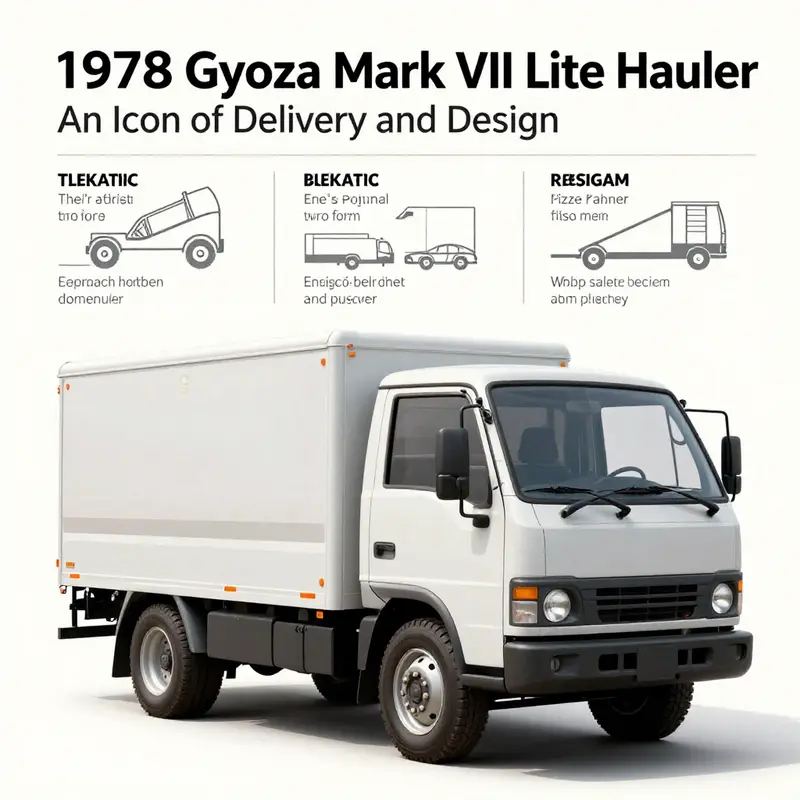
Technical Echoes: The 1978 Gyoza Mark VII Lite Hauler Behind the Pizza Planet Truck
For readers seeking a direct thread through the fan and academic conversations around this icon, a convenient entry point can be found in the analysis of its appearances across Pixar projects. The link below provides a focused look at how the pizza planet truck has threaded through the studio’s filmmaking and merchandising, reinforcing why it remains one of Pixar’s most enduring Easter eggs. pizza-planet-truck-pixar-movies
From Screen to Brick: The Pizza Planet Truck as a Fan-Driven LEGO Icon
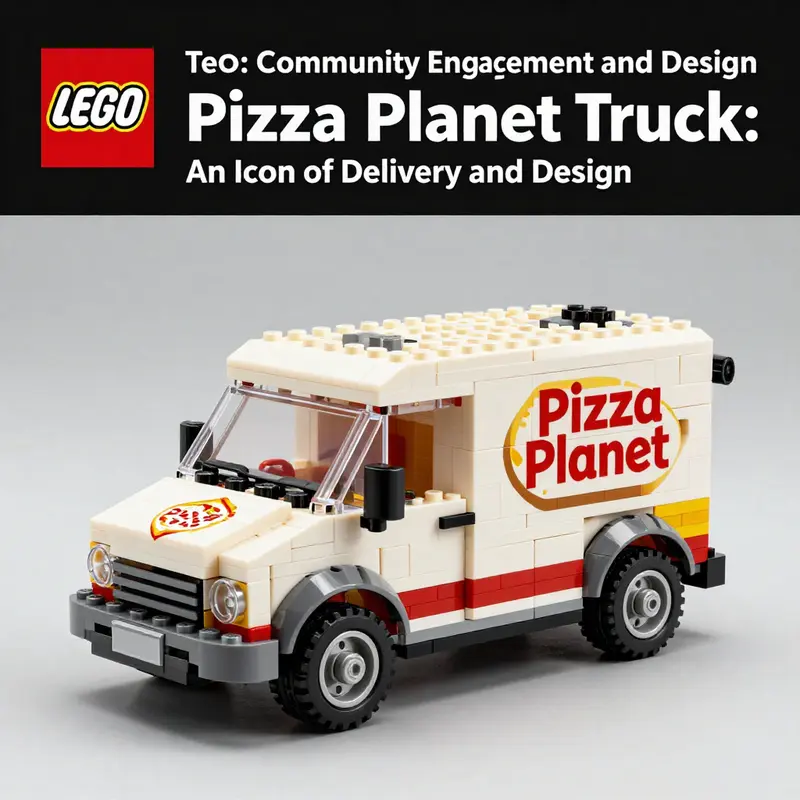
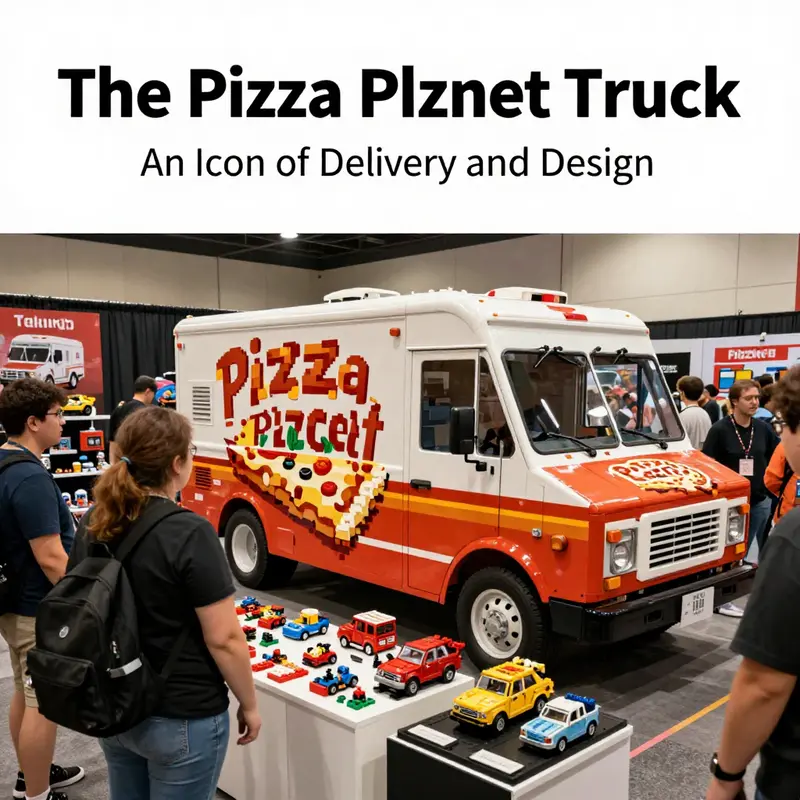
The Pizza Planet Truck has long inhabited a special corner of popular culture, a bright yellow beacon that signals not just delivery but a shared memory among fans. Within the Pixar universe, the vehicle exists as more than a mode of transport; it is a touchstone that signals whimsy, a little blue-sky joke that travels from film to fan imagination. In the catalog of iconic cinema props, the Pizza Planet Truck stands out because it invites play as soon as the screen goes dark. Its gleaming paint, bold red-and-white lettering, and oversized front grill announce a personality more than a utility. The Lego Ideas project that reimagines this truck in bricks is not merely a replication; it is a translation of a cinematic mood into tactile, collectible form. The project captain, SeñoraBocaLoca, and her collaborators translate movement, texture, and humor into a build that feels both faithful to the screen and alive with the energy of a fan community that loves to remix familiar scenes into shared experiences. The LEGO Ideas submission has become a case study in how a single vehicle can anchor a wider ecosystem of memory, craft, and collaboration. It demonstrates how fans respond not only to what is on the screen but to what can be built around it when a community is invited to participate in the making of new artifacts from old favorites. The movement from screen to brick is not a simple one-way transfer. It is a dialogue between designer, audience, and platform, a process that invites critique, iteration, and, ultimately, a sense of ownership over a beloved icon.
The design on display in the LEGO Ideas project is meticulously attentive to the camera-ready details that fans recognize in the films. The truck’s double-door layout, authentic spray-painted branding, rotating wheel hub, sliding doors, and an openable rear window are not mere gimmicks; they are a conscious effort to mirror the truck’s quirky functionality in a medium famous for its constraints. Each choice speaks to a particular value in this fan-made construct: the idea that a small, well-built model can carry a big, cinematic mood. The rotating wheels evoke motion and acceleration even when the model sits still on a shelf, a reminder that this is a vehicle designed to carry more than pizza — it carries a memory. The sliding doors contribute to a sense of realism, offering a tactile invitation to explore what lies inside, while the openable rear window teases the same playful spirit that characterizes the Toy Story universe’s sense of possibility.
Yet the most revelatory aspects of the build come from what the cargo holds: a fully functional pizza delivery box and the sly, humorous touches that fans so often adore. A fish-shaped cup and a wine bottle appear not as winks to adult humor but as reminders of the toy-like eclecticism that defines the Pizza Planet world. This is a space where utility and whimsy collide, where a delivery vehicle becomes a tiny theater of personality. In brick form, the truck becomes a stage on which lighthearted storytelling can unfold, and the design team behind the project has consciously preserved that storytelling potential. The interior is not merely a container for bricks; it is a miniature stage that invites the solver to imagine the moment when the doors slide open, a courier leaps into the vehicle, and the city air hums with the engine’s soft purr. The level of detail demonstrates why LEGO Ideas projects resonate so deeply with pop culture fans: the model becomes a portable memory, a lens through which we revisit a shared cinematic moment and re-create it in our own hands.
The fan-driven energy around the Pizza Planet Truck is, in itself, a story. The project’s momentum rests on a simple but potent formula: a beloved prop, a platform that encourages public voting, and a creator who translates love for a movie into a tangible, tactile object. Crossing the 10,000-support threshold is no small feat in the LEGO Ideas ecosystem; it signals broad recognition, not just among a few ardent fans but across a diverse, global audience who can see the project as a bridge between childhood recollection and adult craftsmanship. The ongoing success of SeñoraBocaLoca’s submissions — this project marks the sixth time she has reached the Ideas review stage — highlights how persistent, thoughtful design can sustain long-term engagement. It speaks to a broader truth about fan culture: when an idea is well-suited to a platform that rewards collaboration and iteration, it becomes a living conversation rather than a static homage. The Pizza Planet Truck, in its LEGO incarnation, thus becomes more than a model; it becomes a shared artifact that invites others to contribute their own touches, to refine a common reference point, and to imagine new stories unfolding around a familiar yellow cab with a red-and-white logo.
In the wider arc of the Pizza Planet Truck’s cultural footprint, LEGO Ideas represents a particular moment when fans were invited to take control of a gesture from the screen and translate it into a social object. The project’s attention to authentic branding, structural play, and interior detail is not merely technically impressive; it is a testament to the power of fan labor to shape a narrative around a prop. The process invites speculation about how official sets might one day echo this kind of fan-driven design, not by copying a moment from a film, but by translating its spirit into a form that can be built, displayed, and shared. The community’s response to the project underscores a growing trend: audiences want to participate in the making of the objects that populate their cinematic memories. They want to see nostalgia become craft, and craft become memory. The Pizza Planet Truck on LEGO Ideas is a vivid demonstration of that loop in action, where the line between fan and designer blurs into a shared creative space. Fans bring the energy; platforms bring the possibility; the final model becomes a symbol of what happens when a story is allowed to breathe in the hands of many makers rather than a single author.
For those who want to explore the project directly and feel the contours of the design in their own terms, the LEGO Ideas page offers a close-up look at the craftsmanship and the decisions behind every brick. The project’s page is a portal into the process: a place where curators, builders, and dreamers share progress, critique, and praise in a collaborative space. This is the kind of community engagement that has become a hallmark of modern fan culture, where a screen moment becomes a portable, buildable memory that can be reimagined, rebuilt, and reinterpreted by people around the world. The Pizza Planet Truck in LEGO is more than a tribute; it is a living example of how fans can extend a film’s universe beyond its frames, keeping alive the sense that stories are never truly finished as long as someone is willing to connect the dots with bricks and imagination.
For readers who want to trace back to the source material that sparked such playful reinterpretation, a detailed reference is available that chronicles the truck’s cinematic origins and its many appearances. See the official Disney Wiki page for the Pizza Planet Truck to learn about its design cues, its recurring appearances in Pixar’s catalog, and the tiny storytelling cues that make it a beloved Easter egg across films. This external resource complements the LEGO-driven exploration by anchoring the brick interpretation in the broader film lore and reinforcing how iconic props evolve through fan reinterpretation and official storytelling alike. https://disney.fandom.com/wiki/PizzaPlanetTruck
Within this dynamic, the Pizza Planet Truck stands as a bridge between screen and brick, between nostalgia and invention. Its LEGO realization is a public invitation to participate in a conversation about what a prop can become when fans are allowed to reframe it through their own hands. The result is not simply a toy or a model, but a shared memory made tangible, a reminder that the language of cinema can travel as easily through a bag of bricks as it does through cinema’s silver screen. The brick is now a vehicle for memory, a small yellow courier carrying stories across rooms and generations, and the community that supports such projects proves that the most enduring icons are those that invite us to build beside them, not merely admire them from a distance.
Final thoughts
The Pizza Planet Truck’s legacy transcends mere animation; it embodies a blend of imaginative design, cultural significance, and communal nostalgia. As we have explored, this iconic vehicle not only enhances the storytelling in Pixar films but has also sparked a vibrant community of fans and creators alike, from LEGO enthusiasts to collectors of memorabilia. Understanding its role within Pixar’s universe allows business owners and brand creators to appreciate the power of design and cultural resonance in their own ventures.